Contents:
- Why Tropical Flowers Demand More Than Just Warmth
- The 30 Best Tropical Flower Types and Where They Grow
- Hibiscus (Hibiscus rosa-sinensis)
- Bird of Paradise (Strelitzia reginae)
- Plumeria (Plumeria rubra)
- Heliconia (Heliconia psittacorum)
- Bougainvillea (Bougainvillea spectabilis)
- Anthurium (Anthurium andraeanum)
- Torch Ginger (Etlingera elatior)
- Passionflower (Passiflora incarnata)
- Ginger Lily (Hedychium coronarium)
- Bromeliad (Guzmania lingulata and related)
- Canna Lily (Canna indica)
- Bird’s Nest Anthurium (Anthurium hookeri)
- Oleander (Nerium oleander)
- Mandevilla (Mandevilla sanderi)
- Frangipani (Plumeria obtusa)
- Costus (Costus speciosus)
- Allamanda (Allamanda cathartica)
- Ixora (Ixora coccinea)
- Amazon Lily (Eucharis grandiflora)
- Lobster Claw (Heliconia rostrata)
- Rangoon Creeper (Combretum indicum)
- Vanda Orchid (Vanda coerulea)
- Calathea (Calathea crocata)
- Kahili Ginger (Hedychium gardnerianum)
- Strelitzia nicolai (Giant Bird of Paradise)
- Gloriosa Lily (Gloriosa superba)
- Torch Lily / Red Hot Poker (Kniphofia uvaria)
- Lantana (Lantana camara)
- Pentas (Pentas lanceolata)
- Portea (Portea petropolitana)
- Tropical Flower Types at a Glance: Quick Comparison
- Tropical Bloom Calendar: What Flowers When
- How to Choose the Right Tropical Flower Types for Your Garden
- Match Zone First, Aesthetics Second
- Consider Water and Sustainability
- Container Gardening Expands Your Range
- Factor in Scale and Space
- Eco-Friendly Growing Practices for Tropical Gardens
- Frequently Asked Questions About Tropical Flower Types
- What are the most common tropical flower types grown in the US?
- Which tropical flowers can grow in Zone 8 or colder?
- What tropical flowers bloom all year in warm climates?
- Are tropical flowers hard to grow?
- Which tropical flowers attract pollinators and butterflies?
- Building a Tropical Garden That Actually Works
What separates a thriving tropical garden from a disappointing one? Usually, it comes down to knowing which tropical flower types actually belong in your climate — and which ones are just pretty pictures in a catalog. This guide covers 30 species with the specifics you need: hardiness zones, bloom windows, light requirements, and where each plant genuinely performs best.
Why Tropical Flowers Demand More Than Just Warmth
Most tropical flowers originate within 23.5 degrees of the equator, where humidity, soil drainage, and consistent temperatures dictate everything. Dropping a hibiscus into dry, alkaline soil in Phoenix without amendments is a recipe for failure. Understanding a plant’s native environment — rainforest floor, volcanic hillside, coastal mangrove — tells you exactly what it needs to bloom reliably.
USDA Hardiness Zones 9–13 cover most of the continental US tropics, but microclimates matter. South Florida gardeners in Zone 10b can overwinter species that Zone 9a growers in Houston must treat as annuals. Always cross-reference zone AND humidity requirements before purchasing.
The 30 Best Tropical Flower Types and Where They Grow
1. Hibiscus (Hibiscus rosa-sinensis)
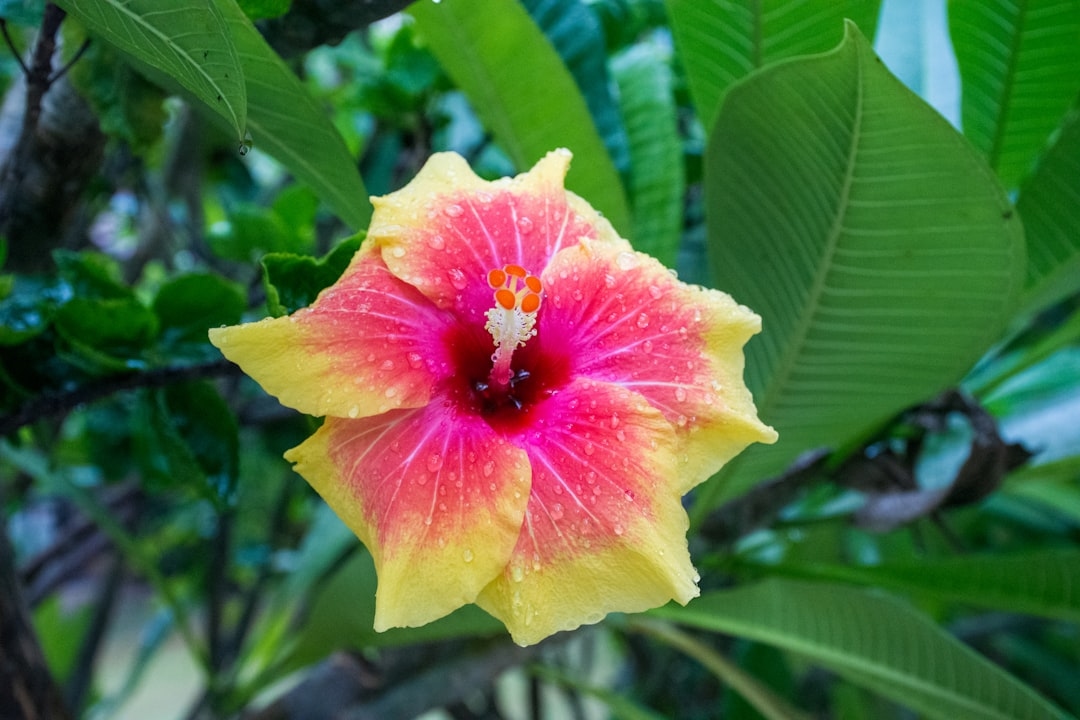
The tropical hibiscus is the benchmark for showy blooms. Individual flowers reach 6–12 inches across and last only 24 hours, but the plant produces continuously from late spring through fall in Zones 9–11. Full sun and well-draining, slightly acidic soil (pH 6.0–6.5) are non-negotiable. In Zone 8 and below, grow it in containers and bring it indoors when temperatures drop below 50°F. Prune back by one-third in early spring to encourage dense, prolific flowering.
2. Bird of Paradise (Strelitzia reginae)
Native to South Africa, Bird of Paradise thrives in Zones 10–12 and tolerates Zone 9 with protection. The orange-and-blue blooms appear most reliably from September through May — a trait that makes it invaluable for winter-interest gardens in warm climates. Plants typically take 3–5 years to bloom from seed; divisions bloom in 1–2 years. Needs at least 6 hours of direct sun and tolerates drought once established.
3. Plumeria (Plumeria rubra)
Plumeria’s waxy, intensely fragrant blossoms are iconic in Hawaiian leis. In the US, it performs best in Zones 10–12 — Hawaii, South Florida, and Southern California coastal zones. Blooms appear June through November. Plumeria is surprisingly drought-tolerant; overwatering causes root rot faster than underwatering. Allow soil to dry between waterings. Cuttings root easily in summer, making propagation simple and cost-free.
4. Heliconia (Heliconia psittacorum)
Heliconias are among the most structurally dramatic tropical flower types available to home gardeners. Their waxy, lobster-claw bracts in red, orange, and yellow persist for weeks. They demand Zones 10–12, consistent moisture, and partial to full shade. In the ground, clumps spread aggressively — give them at least 6 feet of space. Dwarf varieties like ‘Lady Di’ max out at 4 feet and work well in large containers on patios.
5. Bougainvillea (Bougainvillea spectabilis)
Technically, it’s the papery bracts — not the tiny white flowers — that give bougainvillea its explosive color. Zones 9–11. The key to maximum bloom: stress the plant. Reduce watering significantly during late winter (allow soil to dry for 3–4 weeks), then resume regular irrigation. This drought stress triggers a prolific bloom cycle that can last 3–5 months. Available in over 300 cultivars from magenta to gold.
6. Anthurium (Anthurium andraeanum)
Anthuriums produce waxy, heart-shaped spathes in red, pink, white, and bicolor. Indoors, they bloom year-round with proper care; outdoors they perform best in Zones 11–12 or sheltered Zone 10 spots. They need bright indirect light — direct sun bleaches the foliage and spathes. Maintain humidity above 60% for continuous blooms. As houseplants, they’re among the longest-lasting cut flowers, staying fresh up to 6 weeks in a vase.
7. Torch Ginger (Etlingera elatior)
One of the tallest tropical blooms available, torch ginger sends up spectacular waxy pink or red flower heads on stems reaching 15–20 feet. Zones 10–12 only; it cannot tolerate frost. Blooms appear primarily in summer and fall. The flower heads are edible and used extensively in Southeast Asian cooking — the buds are sliced raw into salads. In the garden, it needs consistently moist, organically rich soil and protection from strong winds.
8. Passionflower (Passiflora incarnata)
The native American passionflower is more cold-hardy than most tropical relatives, surviving in Zones 6–10. It dies back to the ground in cold winters but resurfaces reliably from the roots. Blooms appear June through September. The intricate lavender flowers are also a primary host plant for Gulf Fritillary and Zebra Longwing butterfly larvae — an excellent sustainability choice for pollinator gardens. Fast-growing vine; can cover a 10-foot trellis in a single season.
9. Ginger Lily (Hedychium coronarium)
Ginger lily produces clusters of intensely fragrant white flowers from July through October. Hardy in Zones 7–11, it’s one of the most accessible tropical-looking plants for mid-South gardeners. Plant rhizomes in spring in moist, humus-rich soil. Full sun in the North; partial shade in the Deep South to prevent leaf scorch. Cut stalks back to the ground after flowering to encourage fresh growth the following season.
10. Bromeliad (Guzmania lingulata and related)
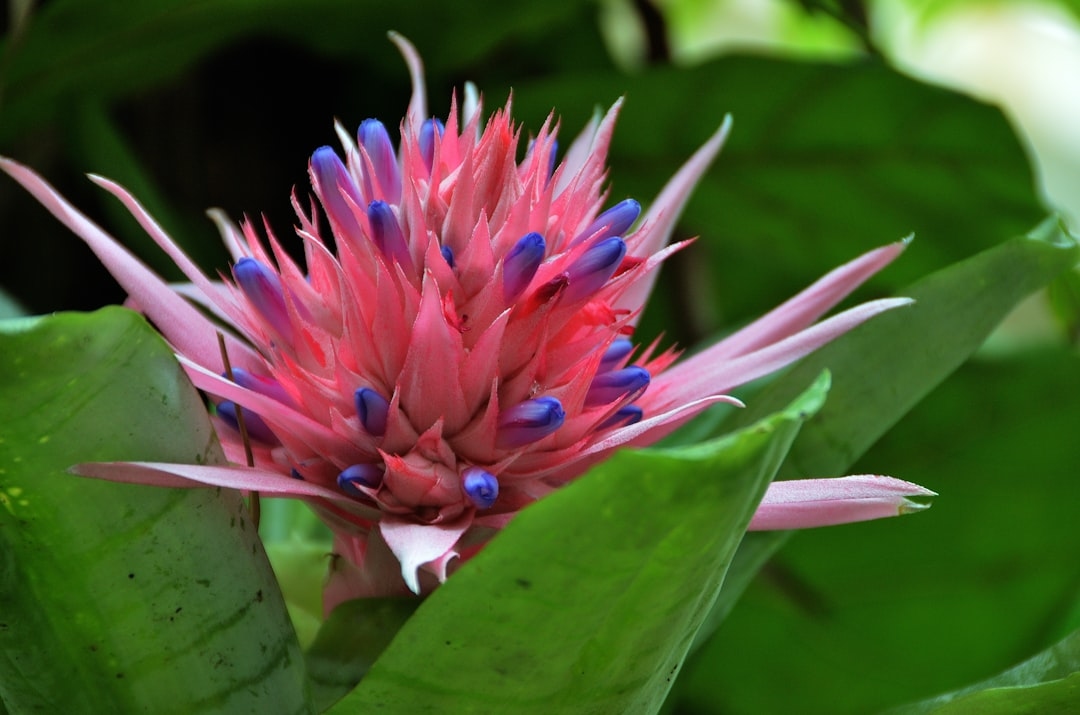
Bromeliads encompass over 3,500 species, but Guzmania and Vriesea are the most popular for garden and container use. Zones 10–12 outdoors; elsewhere as houseplants. Most bloom once per plant, then produce pups (offsets) that bloom 18–24 months later. They are epiphytic — their roots anchor rather than absorb nutrients. Water by filling the central cup, not the soil, and flush weekly to prevent stagnation and mosquito breeding.
11. Canna Lily (Canna indica)
Canna lilies are among the most heat-tolerant tropical flower types for American gardeners. Zones 7–11; in Zone 6, dig and store rhizomes over winter. Blooms appear July through first frost in vivid reds, oranges, and yellows. Plants reach 2–8 feet depending on variety. ‘Tropicanna’ is particularly prized for its striking bronze-striped foliage in addition to orange blooms. Plant in full sun, and divide clumps every 2–3 years to maintain vigor.
12. Bird’s Nest Anthurium (Anthurium hookeri)
Unlike its more common spathe-bearing relatives, Bird’s Nest Anthurium forms a dramatic rosette of glossy, paddle-shaped leaves up to 3 feet long, with inconspicuous flowers along a central spadix. Grown primarily as a foliage plant in Zones 11–12 or as an indoor statement piece. Thrives in high humidity and filtered light. In Florida landscapes, it’s increasingly used as a low-maintenance ground cover under tree canopies, replacing more resource-intensive turfgrass.
13. Oleander (Nerium oleander)
Oleander blooms prolifically from May through October in Zones 8–11, tolerating heat, salt spray, and drought that kill most tropical-looking plants. Single and double-flowered varieties are available in white, pink, red, and yellow. Note: every part of the plant is highly toxic — avoid planting near areas where children or pets play. Despite this, it remains one of the most widely used highway median plants in Florida, California, and Texas for its toughness and flower power.
14. Mandevilla (Mandevilla sanderi)
Mandevilla’s trumpet-shaped blooms in deep pink, red, and white make it a top-selling container vine across the US. Hardy only in Zones 10–11, it’s grown as an annual or overwintered indoors throughout Zones 4–9. Blooms continuously from late spring through fall with full sun and consistent fertilization — use a high-phosphorus fertilizer (like 10-30-10) every two weeks during the growing season. Sales of Mandevilla at US garden centers exceed $100 million annually, reflecting its mainstream popularity.
15. Frangipani (Plumeria obtusa)
Singapore Frangipani is the evergreen counterpart to the deciduous Plumeria rubra, holding its leaves year-round in frost-free climates (Zones 11–12). Flowers are white with yellow centers and carry a classic sweet fragrance strongest in the evening. It grows more slowly than its deciduous cousin, reaching 15–25 feet at maturity over several decades. Excellent as a street tree or large specimen in South Florida and Hawaii landscapes.
16. Costus (Costus speciosus)
Spiral ginger, or Costus, produces delicate white flowers emerging from waxy red bracts in summer. The spiraling leaf arrangement around the stem is architecturally distinctive. Hardy in Zones 9–12; grow as an annual container plant in cooler zones. Reaches 6–9 feet. Costus is notably eco-friendly: it’s a documented host plant for multiple bee and wasp species, and its fruit attracts birds. Plant in partial shade with consistent moisture.
17. Allamanda (Allamanda cathartica)
Golden trumpet’s butter-yellow flowers bloom nearly year-round in Zones 10–12, making it a continuous-color solution for warm-climate landscapes. As a vine, it can reach 20 feet; shrubby cultivars like ‘Hendersonii’ stay more compact at 5–6 feet. Prefers full sun and moderate moisture. It’s slightly salt-tolerant, which makes it viable for coastal Florida and Gulf Coast gardens. All parts are mildly toxic and a skin irritant — wear gloves when pruning.
18. Ixora (Ixora coccinea)
Ixora is a South Florida staple, producing dense clusters of tiny tubular flowers in red, orange, pink, and yellow from spring through fall. Hardy in Zones 10–12. It demands acidic soil — pH 5.0 to 6.0 — and will develop iron-deficiency chlorosis in alkaline soils common in South Florida’s limestone substrate. Apply chelated iron twice yearly to maintain leaf color and flowering. The ‘Nora Grant’ cultivar is particularly heat-tolerant and blooms reliably even in Zone 9b with frost protection.
19. Amazon Lily (Eucharis grandiflora)
Amazon lily produces nodding clusters of pure white, daffodil-like flowers with a rich, sweet fragrance in late spring and again in fall — one of the few tropical bulbs with reliable reblooming. Zones 9–11 outdoors; elsewhere as a container plant. Requires partial shade; direct sun causes leaf scorch. Allow the bulbs to slightly dry out between waterings to trigger the second bloom cycle. Plants reach 18–24 inches and work beautifully as understory flowers beneath larger tropical specimens.
20. Lobster Claw (Heliconia rostrata)
The hanging heliconia, nicknamed lobster claw, produces pendulous inflorescences up to 3 feet long in red, yellow, and green. It’s strictly a Zone 11–12 plant outdoors, though large containers moved under cover extend its range. Blooms primarily in summer. Unlike its upright relatives, it needs overhead clearance for the hanging flower stalks — position it where stems can dangle freely. Cut flowers last up to 2 weeks in a vase, making it commercially significant in the tropical cut-flower trade.
21. Rangoon Creeper (Combretum indicum)
Rangoon Creeper’s flowers open white, shift to pink, and deepen to red over three days — creating a tri-color effect on a single plant simultaneously. Zones 9–12. Blooms appear in summer, with fragrance strongest at night, attracting hawkmoths as primary pollinators. This makes it a powerful addition to moon gardens or evening seating areas. It’s a vigorous climber reaching 30 feet; prune hard in late winter to control size and encourage branching that produces more flower clusters.
22. Vanda Orchid (Vanda coerulea)
Vanda orchids are the aerial-root workhorses of tropical orchid culture. Unlike potted orchids, most Vandas prefer to grow in bare-root baskets, suspended in high-humidity environments. Outdoors year-round in Zones 10b–12; elsewhere in greenhouses or climate-controlled spaces. They bloom 2–3 times per year in blue, purple, pink, and white — the true-blue Vanda coerulea is among the rarest natural blue flowers in the plant kingdom. Water daily in hot weather; reduce to every other day in cooler months.
23. Calathea (Calathea crocata)
Flowering Calathea, also called Eternal Flame, produces upright orange-yellow flower spikes above dramatically patterned foliage from late winter through spring. Grown primarily as a houseplant across the US; outdoors only in Zones 11–12. Calatheas are among the most humidity-sensitive of all tropical species — consistent levels below 50% cause brown leaf edges within days. Notably, they are non-toxic to cats and dogs, making them a go-to recommendation for pet-owning gardeners seeking tropical aesthetics indoors.
24. Kahili Ginger (Hedychium gardnerianum)
Kahili ginger produces cone-shaped clusters of fragrant yellow flowers with prominent red stamens in late summer. Hardy in Zones 7–10. While stunning, it’s listed as invasive in Hawaii and New Zealand — in native Hawaiian ecosystems, it outcompetes indigenous plants in wet forest understories. Gardeners outside Hawaii can safely grow it, but should never introduce it to Pacific island ecosystems. On the mainland, it spreads moderately and is manageable with annual rhizome division.
25. Strelitzia nicolai (Giant Bird of Paradise)
The Giant Bird of Paradise grows to 30 feet with blue-white-and-black flowers that emerge from a dark burgundy spathe. Zones 9–12. Unlike its smaller orange relative, it can handle partial shade — useful under taller trees or building overhangs. It’s dramatically faster-growing, gaining 2–3 feet per year under ideal conditions. Leaf tips brown in dry or salty conditions; regular deep watering during summer prevents this. The large paddle leaves are easily wind-shredded — site in sheltered positions.
26. Gloriosa Lily (Gloriosa superba)
Gloriosa lily produces flame-colored, reflexed petals in red and yellow on a tendril-climbing vine from summer through early fall. Zones 8–12; tubers can be dug and stored in Zone 7. The climbing habit — using leaf-tip tendrils — makes it ideal for growing through shrubs or on open wire fencing. Highly toxic tubers resemble sweet potatoes, so label and store them carefully. In the cut-flower industry, Gloriosa sells wholesale for $2–$4 per stem, reflecting its high ornamental value.
27. Torch Lily / Red Hot Poker (Kniphofia uvaria)
Though technically South African rather than equatorial tropical, Kniphofia’s bold flower spikes — graduating from red at the top to yellow at the base — deliver a convincing tropical aesthetic. Hardy in Zones 5–9, it outperforms true tropicals in cold-climate gardens. Blooms June through August. Hummingbirds visit the tubular florets relentlessly. Divide clumps every 3 years in early spring to prevent overcrowding and maintain flowering density. Full sun and well-draining soil are essential.
28. Lantana (Lantana camara)
Lantana’s multicolored flower clusters shift from yellow to orange to red as they age, creating constant visual movement. Zones 8–11 as a perennial; grown as a prolific annual throughout the US. Blooms continuously from spring through fall with full sun and heat — it actually blooms harder as temperatures climb above 90°F. Extremely important for monarch butterflies and Gulf Fritillaries as a nectar source during fall migration. However, it’s invasive in Florida’s natural areas; use sterile cultivars like ‘Bandana’ or ‘Luscious’ series in Zone 9–11.
29. Pentas (Pentas lanceolata)
Pentas is the underrated workhorse of the tropical annual garden. Dense clusters of star-shaped flowers in red, pink, white, and lavender bloom nonstop from late spring through fall frost with almost no maintenance. Hardy in Zones 10–11; grown as an annual everywhere else. Exceptional butterfly magnet — a single 4-foot-wide plant can host dozens of swallowtails and skippers on a warm afternoon. Available in dwarf (12-inch) and standard (24–36-inch) forms. One of the most budget-friendly tropical annuals at $3–$6 per plant at garden centers.
30. Portea (Portea petropolitana)
Portea is a large, terrestrial bromeliad producing dramatic 3-foot-tall flower spikes of blue and pink in fall, persisting through winter. Zones 9–12 outdoors; works as a large container specimen in colder climates. Unlike most bromeliads, Portea tolerates full sun in coastal climates and is notably salt-tolerant. It produces pups prolifically after flowering, making it an excellent, cost-efficient plant for filling large landscape areas over time. Water in the central cup; fertilize lightly in spring with a balanced granular fertilizer.
Tropical Flower Types at a Glance: Quick Comparison
| Flower | USDA Zones | Bloom Season | Sun Needs | Water Needs |
|---|---|---|---|---|
| Hibiscus | 9–11 | Spring–Fall | Full | Moderate |
| Bird of Paradise | 10–12 | Sep–May | Full | Low–Moderate |
| Plumeria | 10–12 | Jun–Nov | Full | Low |
| Heliconia | 10–12 | Summer–Fall | Part–Full | High |
| Bougainvillea | 9–11 | Spring–Fall | Full | Low |
| Passionflower | 6–10 | Jun–Sep | Full | Moderate |
| Canna Lily | 7–11 | Jul–Frost | Full | Moderate |
| Mandevilla | 10–11 | Spring–Fall | Full | Moderate |
| Ginger Lily | 7–11 | Jul–Oct | Part–Full | High |
| Vanda Orchid | 10b–12 | Year-round | Bright Indirect | High |
| Lantana | 8–11 | Spring–Frost | Full | Low |
| Pentas | 10–11 | Spring–Frost | Full | Moderate |
Tropical Bloom Calendar: What Flowers When
Planning for continuous color requires layering bloom times. Here’s a practical seasonal framework for Zone 9b–11 gardens:
- January–March: Bird of Paradise, Anthurium, Amazon Lily (second flush), Portea
- April–June: Plumeria (first blooms), Mandevilla, Hibiscus, Ixora, Allamanda
- July–September: Heliconia, Torch Ginger, Canna Lily, Rangoon Creeper, Costus, Gloriosa Lily, Ginger Lily
- October–December: Bougainvillea (peak with drought stress), Pentas, Lantana, Lobster Claw Heliconia, Kahili Ginger
In Zones 5–8, treat most of these as annuals or container plants and concentrate the bloom window in June through September, when heat accumulation supports tropical growth rates.
How to Choose the Right Tropical Flower Types for Your Garden
Match Zone First, Aesthetics Second
Start with your USDA zone and local humidity data — not the color palette you want. A stunning plant that dies at the first frost is an annual expense, not a garden investment. Gardeners in Zones 9–11 have the widest selection of true perennial tropicals. Zones 6–8 should focus on cold-hardy performers like Passionflower, Canna, Ginger Lily, and Kniphofia as the backbone, then supplement with annuals like Pentas and Mandevilla for tropical flair.
Consider Water and Sustainability
Several tropical species — particularly Plumeria, Bougainvillea, Lantana, and Torch Lily — are drought-tolerant once established. In drought-prone regions like Southern California, Arizona, and Texas, prioritizing these over water-hungry heliconias and gingers reduces irrigation load significantly. Using native pollinator plants like Passionflower as structural companions also reduces the need for synthetic pesticides, since the diverse insect populations they support naturally control aphids and thrips on adjacent plants.
Container Gardening Expands Your Range
Containers allow Zone 6–8 gardeners to grow tropical flower types like Hibiscus, Mandevilla, Plumeria, and Bromeliads as seasonal showpieces. Move them outdoors after the last frost date (typically May 15 in Zone 6), and bring them in when nighttime temperatures drop below 50°F in fall. Use a quality, fast-draining potting mix with added perlite (25% by volume) to prevent the root rot that kills containerized tropicals more often than cold does.
Factor in Scale and Space
Torch Ginger at 20 feet and Giant Bird of Paradise at 30 feet are simply wrong choices for a 10×10 patio bed. Measure your available space and cross-reference mature plant sizes before purchasing. Small-space gardeners should look at dwarf Heliconia cultivars (4 feet), Pentas (12–36 inches), Anthurium, Calathea, and compact Hibiscus like ‘Cajun Belle’ (3–4 feet) for manageable but genuinely tropical results.
Eco-Friendly Growing Practices for Tropical Gardens
Tropical gardens have an outsized opportunity to support biodiversity. Native pollinators, migratory butterflies, and hummingbirds all depend on flowering plants that provide nectar across the full growing season. Choosing species like Passionflower, Lantana (sterile cultivars in Florida), Pentas, and Rangoon Creeper creates a sequential nectar corridor that benefits wildlife from late spring through fall.
Mulching tropical beds with 3 inches of wood chips conserves moisture — reducing irrigation by up to 30% — and improves soil structure as it breaks down, which is directly beneficial to heavy feeders like Heliconia and Canna. Avoid synthetic mulches; they trap heat and degrade soil biology in the high-temperature environments where tropicals thrive.
Frequently Asked Questions About Tropical Flower Types
What are the most common tropical flower types grown in the US?
The most widely grown tropical flower types in the US include Hibiscus, Bougainvillea, Bird of Paradise, Plumeria, Canna Lily, and Mandevilla. Of these, Canna Lily and Passionflower are the most cold-hardy, surviving in USDA Zones 6–7 with minimal protection.
Which tropical flowers can grow in Zone 8 or colder?
Passionflower (Passiflora incarnata) survives in Zone 6. Ginger Lily (Hedychium coronarium) and Kahili Ginger grow in Zone 7. Canna Lily, Lantana (as a perennial), and Kniphofia are reliable in Zone 8. Most others should be grown in containers and overwintered indoors in these zones.
What tropical flowers bloom all year in warm climates?
In Zones 10–12, Anthurium, Allamanda, and Ixora bloom nearly continuously. Vanda orchids produce 2–3 flower cycles per year. Hibiscus blooms from spring through fall with only a brief winter pause. Pentas and Mandevilla bloom spring through frost, which equates to year-round in frost-free climates.
Are tropical flowers hard to grow?
Difficulty depends on climate match. In appropriate USDA zones, many tropical flowers — including Bougainvillea, Lantana, Plumeria, and Canna — are low-maintenance once established. The challenges arise when gardeners attempt to grow Zone 11–12 species in Zone 8, which requires container management, winter storage, and consistent humidity control.
Which tropical flowers attract pollinators and butterflies?
Lantana, Pentas, and Passionflower are standout choices for butterfly gardens. Lantana and Pentas provide critical nectar during monarch migration in September and October. Passionflower is the host plant for Gulf Fritillary caterpillars. Hibiscus and Mandevilla attract hummingbirds, while Rangoon Creeper’s night fragrance draws hawkmoths as primary pollinators.
Building a Tropical Garden That Actually Works
The gardeners who consistently produce lush, blooming tropical landscapes do one thing differently: they observe before they plant. Spend a season tracking the sun patterns, drainage spots, and frost pockets in your yard. Then choose species whose native habitat mirrors those exact conditions. A South Florida gardener who maps their property’s afternoon shade and selects Heliconia and Anthurium for those spots will outperform the gardener who installs full-sun hibiscus in the same location and wonders why it sulks.
Start with 5–7 well-chosen species rather than 20 experimental ones. Nail the soil prep, fertilization schedule, and watering rhythm for those plants first. Once they’re thriving, expanding becomes straightforward — and far less expensive than replacing failures.