Contents:
- What Makes Daffodils So Special?
- Choosing the Right Daffodil Bulbs
- Size and Grade Matter More Than You Think
- Top Varieties by Use Case
- Budget Breakdown: What to Expect to Spend
- The Complete Daffodil Planting Guide: Timing and Soil Prep
- When to Plant Daffodil Bulbs
- Choosing the Right Location
- Soil Preparation and Amendments
- How to Plant Daffodil Bulbs: Step-by-Step
- Planting Depth and Spacing
- Planting Methods for Different Scales
- Watering After Planting
- A Story From the Garden: What One Missed Step Can Cost
- Daffodil Care Through the Growing Season
- Spring Care: Feeding and Watering
- Deadheading and Foliage Management
- Summer Dormancy
- Naturalizing Daffodils: Long-Term Success
- How Daffodils Multiply
- Best Naturalizing Varieties
- Growing Daffodils in Containers
- Container Selection and Setup
- Chilling and Forcing Container Daffodils
- Post-Bloom Container Care
- Troubleshooting Common Daffodil Problems
- Daffodils Not Blooming: The Most Common Causes
- Pests and Diseases
- Yellowing or Streaked Foliage
- Cutting and Arranging Daffodils
- When and How to Cut
- The Crucial Conditioning Step
- Daffodils for US Climate Zones: Zone-Specific Advice
- Cold Climates (Zones 3–5)
- Transitional Climates (Zones 6–7)
- Warm Climates (Zones 8–9)
- Practical Tips for Buying Daffodil Bulbs in the US
- Frequently Asked Questions About Daffodil Planting
- How deep should I plant daffodil bulbs?
- When is the best time to plant daffodil bulbs in the US?
- Why are my daffodils not blooming?
- Can I plant daffodils in spring instead of fall?
- Are daffodils toxic to pets?
- Planning for Next Year, Starting This Season
You planted them in fall, waited all winter, and then — nothing. Or maybe just a few sad, floppy leaves with no flowers. If that sounds familiar, you’re not alone, and the fix is usually simpler than you’d think. This daffodil planting guide covers everything from bulb selection to post-bloom care, so this season you’ll finally get that explosion of yellow, white, and orange you’ve been picturing.
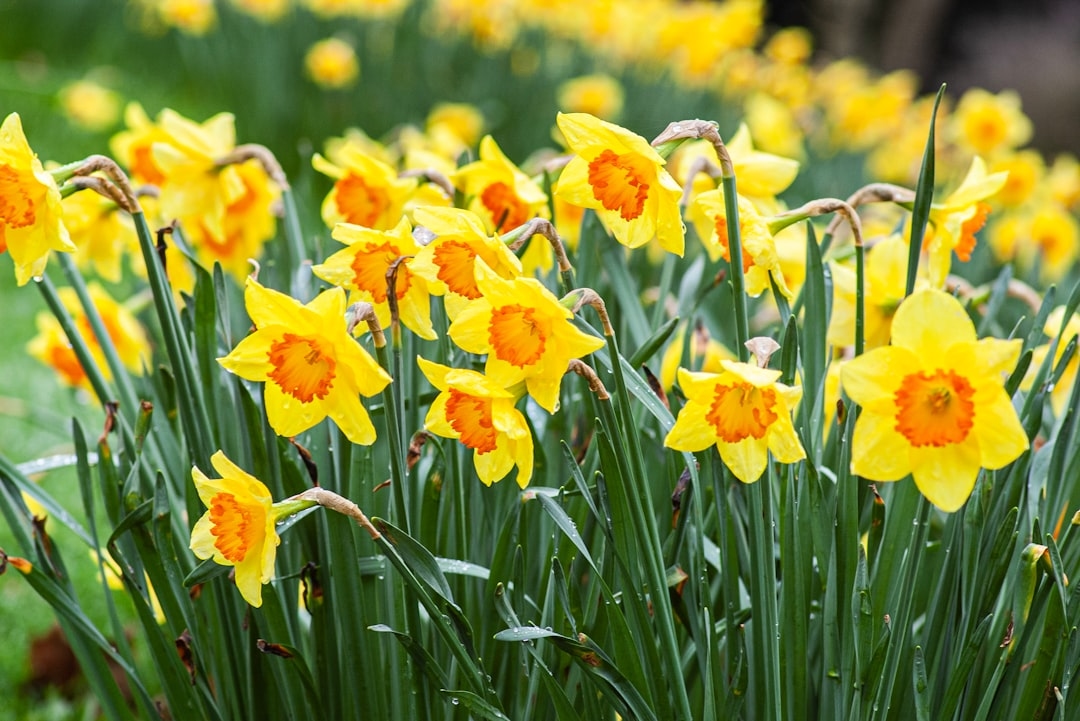
Daffodils are one of spring’s most rewarding flowers. They’re deer-resistant, they naturalize beautifully, and a single well-placed planting can return reliably for 20 years or more. But “easy” doesn’t mean “foolproof.” Depth, drainage, timing, and variety selection all matter — and getting even one of those wrong can cost you a season.
This guide walks you through every stage: choosing the right bulbs, prepping your soil, planting with precision, caring through the growing season, and troubleshooting the most common problems. Whether you’re planting five bulbs in a container or five hundred across a hillside, the same core principles apply.
What Makes Daffodils So Special?
Daffodils belong to the genus Narcissus, which contains over 50 wild species and more than 25,000 registered cultivars. They’re native to meadows and rocky hillsides in southwestern Europe and North Africa — environments that shaped their preference for well-drained soil and a cold dormancy period. That natural history explains a lot about how to grow them well.
The American Daffodil Society (ADS) divides daffodils into 13 official divisions, based on flower form. The most familiar is Division 1 (Trumpet daffodils), where the central cup — the corona — is as long or longer than the petals. Division 2 (Large-Cupped) features a corona between one-third and the full length of the petals. Then there are doubles, split-coronas, jonquils, tazettas, and miniatures. Each division has distinct bloom times, fragrance levels, and climate preferences.
Why does that matter practically? Because mixing divisions is how you extend your daffodil season from 6 weeks to nearly 3 months. Early-season varieties like ‘February Gold’ can open in late February in USDA Zone 7. Late-season varieties like ‘Thalia’ or ‘Actaea’ bloom in April or even early May in cooler zones. Plant strategically across divisions and you get waves of color rather than one brief burst.
Choosing the Right Daffodil Bulbs
Size and Grade Matter More Than You Think
Daffodil bulbs are sold by size grade, typically measured in centimeters of circumference. A “DN I” or “landscape grade” bulb measures 14 cm or larger — these are the ones that produce the most vigorous blooms in the first year. Smaller “DN II” bulbs (12–14 cm) are cheaper but often take an extra season to reach full performance. For container planting or gifts, always go DN I.
Hold the bulb in your hand before buying. It should feel heavy and firm, with no soft spots or visible mold. The papery outer skin — the tunic — may be partially missing, and that’s fine. What you’re checking for is density. A light, hollow-feeling bulb is a dead or dying bulb.
Top Varieties by Use Case
For naturalizing in lawns or meadows, ‘Tête-à-Tête’ (a miniature that multiplies prolifically), ‘Ice Follies’ (a large-cupped white that spreads reliably), and ‘Carlton’ (a classic yellow that’s been naturalizing American gardens since the 1920s) are all excellent choices.
For cut flowers and arrangements, look at ‘Jetfire’ (an early reflexed yellow with a long vase life), ‘Thalia’ (an elegant white with two blooms per stem), and ‘Salome’ (a large-cupped variety with a soft pink corona that deepens as it ages). For fragrance, the jonquil hybrids — ‘Quail’, ‘Pipit’, ‘Baby Moon’ — are in a class of their own. One stem can scent an entire room.
For containers and pots, stick with miniatures and early-season varieties: ‘Tête-à-Tête’, ‘Jetfire’, ‘February Gold’, and ‘Jack Snipe’ all perform beautifully in 10–12 inch pots with 6 or more bulbs packed close together.
Budget Breakdown: What to Expect to Spend
Bulb pricing varies by variety and source, but here’s a realistic cost breakdown for a first-time planting:
- Basic mixed daffodil bulbs (landscape grade): $8–$15 per bag of 25 bulbs at big-box stores like Home Depot or Costco
- Named varieties from specialty bulb suppliers (like Colorblends, Brent and Becky’s, or John Scheepers): $0.50–$2.50 per bulb, with better genetic quality and variety selection
- Rare or exhibition-grade bulbs: $5–$20+ per bulb — reserved for collectors and show growers
- Soil amendments (compost, bone meal, bulb fertilizer): $15–$30 for a typical first-time planting of 50–100 bulbs
- Total for a solid beginner planting of 50 bulbs: roughly $40–$80 depending on source and variety
Specialty suppliers cost more upfront, but the variety selection and bulb quality are meaningfully better. If you’re planting for naturalizing — where you want bulbs to spread and multiply over years — spending a little more per bulb pays dividends for decades.
The Complete Daffodil Planting Guide: Timing and Soil Prep
When to Plant Daffodil Bulbs
Timing is non-negotiable. Daffodil bulbs need a cold period — called vernalization — to trigger their spring bloom. This means planting in fall, before the ground freezes, so roots can establish while temperatures are still workable. The target window is when soil temperature at 6 inches deep drops to between 40°F and 50°F.
In USDA Zones 3–5 (Minnesota, Wisconsin, upstate New York), that means planting in September or early October. In Zones 6–7 (mid-Atlantic, the Pacific Northwest, much of the Midwest), mid-October through early November is ideal. In Zones 8–9 (coastal California, the Gulf Coast, the Pacific Northwest lowlands), plant in November or even December — and in Zone 9 you may need to pre-chill bulbs in the refrigerator for 12–16 weeks before planting to simulate the cold period they’d naturally receive.
Don’t plant too early. Warm soil encourages premature top growth that gets killed by frost. Don’t plant too late either — bulbs need at least 4–6 weeks of cool soil to develop a strong root system before hard freezes arrive.
Choosing the Right Location
Daffodils need at least 6 hours of direct sun per day during their growing season. They’re spring bloomers, which means they do most of their photosynthesis before deciduous trees fully leaf out — so spots that are shady in summer but sunny in spring (like under a canopy of oaks or maples) can work surprisingly well.
Drainage is the single most critical soil factor. Daffodil bulbs sitting in wet soil will rot. Period. If your garden has clay-heavy soil or poor drainage, either raise your beds 6–8 inches, amend heavily with coarse sand and organic matter, or choose a naturally sloped site. You’ll know drainage is a problem if water pools on the surface for more than an hour after a heavy rain.
Soil Preparation and Amendments
Before planting, loosen the soil to a depth of at least 12 inches. Daffodil roots go deep, and compacted soil stunts their development. Work in 2–3 inches of compost to improve texture and microbial activity. If your soil pH is below 6.0, add lime to bring it up — daffodils prefer a pH of 6.0–7.0.
Bone meal is the classic daffodil fertilizer, applied at planting time. Use 1 tablespoon per planting hole, or broadcast at a rate of 10 lbs per 100 square feet and work it into the top 6 inches of soil. It’s slow-release and won’t burn roots. Avoid high-nitrogen fertilizers at planting — they push leafy growth at the expense of flower development.
How to Plant Daffodil Bulbs: Step-by-Step
Planting Depth and Spacing
The standard rule is to plant at a depth of 3 times the diameter of the bulb. For a standard large bulb (roughly 2 inches across), that means a 6-inch planting depth — measured from the bottom of the bulb to the soil surface. In very cold climates (Zone 3–4), go a bit deeper, to 7–8 inches, for extra insulation. In warm climates (Zone 8–9), 4–5 inches is acceptable.
Spacing depends on your goal. For naturalistic drifts that will multiply over time, plant 4–6 inches apart. For more formal, impactful first-season displays, 3–4 inches apart creates a denser look. For containers, you can go tighter still — even touching — since you’ll be replacing the bulbs annually anyway.
Always plant with the pointed end up. The flat basal plate at the bottom is where roots emerge; the pointed tip is where shoots grow. If a bulb looks truly round and you can’t tell which end is which (it happens), plant it sideways — the shoot will find its way up.
Planting Methods for Different Scales
For small plantings of 10–25 bulbs, use a bulb auger — a drill attachment that bores perfectly sized holes in seconds. A standard 3-inch bulb auger mounted on a corded drill can dig 50 holes in 15 minutes. For larger areas, dig a wide trench or prepare an entire bed, set bulbs at the correct depth and spacing, then backfill all at once. This is faster and allows you to see the whole layout before you commit.
For naturalized plantings in grass, try the “toss and plant” method: grab a handful of bulbs, toss them gently over the area, and plant them where they land. This creates the organic, random spacing that looks most natural. Use a narrow-bladed bulb planter or cordless drill with an auger to minimize turf disruption.
Watering After Planting
Water thoroughly after planting — this settles the soil around the bulbs and triggers root development. After that initial watering, fall rainfall typically provides enough moisture for most of the US. You don’t need to water again unless you go more than 3 weeks without rain during the fall rooting period.
In climates with very dry falls (parts of California, the Southwest), water every 2–3 weeks until the ground cools to dormant temperatures. Once frozen, the bulbs need no supplemental water until spring.
A Story From the Garden: What One Missed Step Can Cost
A reader named Diane from suburban Columbus, Ohio wrote in with a problem that’s more common than you’d think. She’d planted 75 mixed daffodil bulbs in a gorgeous spot along her fence line — full sun, loamy soil, perfect spacing. But spring came and she got only about 20 blooms, all clustered in one section, with the rest producing nothing but leaves.
The culprit? Drainage. Her fence line looked well-drained, but a concrete footer under the soil — left over from a previous fence installation — was creating a hidden perched water table. The bulbs sitting above it bloomed fine. The ones sitting on it or below it rotted over winter. Once she identified the concrete barrier with a soil probe, she dug out the affected area, removed the concrete, and replanted with 4 inches of coarse gravel at the bottom of each trench. The following spring, every single bulb bloomed.
The lesson: never assume drainage is fine just because the surface looks good. Probe down 10–12 inches before planting, especially in older urban or suburban lots where all kinds of buried debris can interfere with water movement.
Daffodil Care Through the Growing Season
Spring Care: Feeding and Watering
As shoots emerge in early spring, apply a balanced granular fertilizer — something like 10-10-10 — at the rate recommended on the package, typically around 1 lb per 100 square feet. This is the most important feeding of the year. The bulb is drawing on stored energy to produce its flower, and supplemental nutrients help it rebuild those reserves for next year.
A second application of a low-nitrogen fertilizer (like 5-10-10 or 0-10-10) right as flowers begin to fade is optional but beneficial, especially in beds you’re trying to naturalize. Skip any feeding after the foliage turns yellow — the plant is going dormant and can’t use it.
Daffodils in active growth need about 1 inch of water per week. Spring rain usually handles this in most of the US. If April and May are unusually dry, supplemental watering every 7–10 days will noticeably improve bloom quality and bulb recovery.
Deadheading and Foliage Management
Remove spent flower heads promptly after blooming — this prevents the plant from wasting energy on seed production. Snap or cut the stem just below the flower head, leaving the full stem and leaves intact. The stem is still photosynthesizing and feeding the bulb.
The hardest rule for new daffodil growers: do not cut back the foliage until it has yellowed and died down naturally. This typically takes 6–8 weeks after bloom. The leaves are the factory that recharges the bulb for next year. Cut them early and you’ll get a weaker bloom or no bloom at all the following spring. Never tie or braid the leaves — it reduces their photosynthetic surface area and isn’t necessary.
If you find the yellowing foliage aesthetically offensive (it can be), the solution is to plant daffodils among later-emerging perennials — hostas, daylilies, or ornamental grasses — whose expanding foliage masks the daffodil leaves as they fade. This “companion planting” approach solves the visual problem while protecting the bulb’s energy cycle.
Summer Dormancy
Once foliage has fully yellowed and dried — usually by late June in most of the US — daffodils are dormant. Stop watering. They need a dry summer rest period. Overwatering during dormancy is one of the primary causes of fungal rot.
In regions with very wet summers (the Southeast, the Pacific Northwest), consider lifting bulbs after the foliage dies, drying them in a single layer in a warm, ventilated space, and storing them in mesh bags or open boxes until fall planting time. This is extra work, but it extends the life of susceptible varieties dramatically in high-humidity climates.
Naturalizing Daffodils: Long-Term Success
How Daffodils Multiply
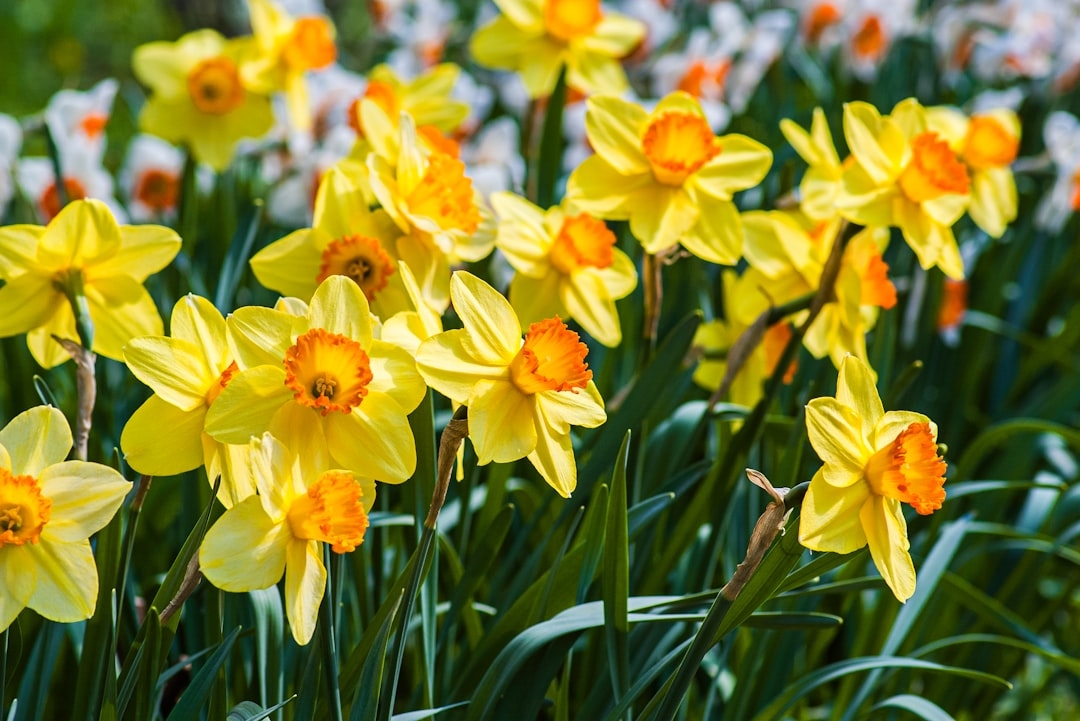
Daffodils naturalize by producing offsets — small daughter bulbs that form around the base of the mother bulb. A single DN I bulb can produce 3–5 offsets over 3–5 years, and each offset eventually matures into a flowering bulb of its own. This is how a planting of 100 bulbs becomes 500 over a decade without any additional purchases.
The catch: overcrowding. When a clump gets too dense — typically after 5–7 years — individual bulbs compete for nutrients and water. Bloom production drops and flowers get smaller. The solution is to dig and divide: lift the entire clump in late summer, separate the bulbs by size, discard any that are soft or diseased, and replant at proper spacing. Dividing every 5–7 years keeps naturalized plantings vigorous and blooming heavily.
Best Naturalizing Varieties
Not all daffodils naturalize with equal vigor. The strongest naturalizers for US conditions include:
- ‘Ice Follies’ — creamy white, large-cupped, exceptionally vigorous in Zones 3–8
- ‘Carlton’ — golden yellow, highly fragrant, one of the most reliably naturalizing varieties ever bred
- ‘Tête-à-Tête’ — miniature, early, produces multiple blooms per stem, spreads prolifically
- ‘Thalia’ — white, multi-stemmed, exceptionally long-lived in naturalized settings
- ‘February Gold’ — early yellow reflexed blooms, naturalizes quickly in Zones 5–9
- ‘Jack Snipe’ — delicate white and yellow, excellent naturalizer in partial shade
Growing Daffodils in Containers
Container Selection and Setup
Daffodils grow beautifully in containers, and pots let you place blooms exactly where you want them — on a front stoop, a patio table, or flanking an entryway. Choose a container at least 10 inches deep and 12 inches across. Drainage holes are mandatory; if your decorative pot doesn’t have them, use it as a cachepot and grow the bulbs in a plain nursery pot inside it.
Use a well-draining potting mix — straight bagged potting soil works, but add 20–25% perlite by volume to improve drainage. Fill the container to within about 6 inches of the rim, set bulbs with pointed ends up (touching is fine), cover with 2 inches of mix, and water thoroughly.
Chilling and Forcing Container Daffodils
Container daffodils in climates with mild winters need cold treatment to bloom. Move pots to an unheated garage, basement, or cold frame where temperatures stay between 35°F and 45°F. Leave them there for 12–16 weeks. Water lightly once a month — just enough to keep the mix from completely desiccating. When green shoots appear and you’re ready for blooms, bring the pot into a cool room (55–65°F) with bright light. Flowers typically appear within 3–4 weeks.
In Zones 5–7, you can simply leave containers outdoors in a sheltered spot and let winter do the chilling work naturally. Just protect the pot from repeated hard freezes by wrapping it in burlap or moving it to an unheated shed when temperatures drop below 20°F — freezing is fine, shattering is not.
Post-Bloom Container Care
After bloom, you have two options. Move the container to a less prominent spot and let the foliage die down naturally — the bulbs can be left in the pot, dried out over summer, and reused for a few more seasons, though performance typically declines after the first year in a container. Alternatively, transplant the bulbs into the garden after foliage dies, where they’ll naturalize and perform better long-term. This is the approach most avid gardeners take.
Troubleshooting Common Daffodil Problems
Daffodils Not Blooming: The Most Common Causes
Blind daffodils — plants with healthy foliage but no flowers — are frustrating. The most common causes are:
- Too little sun: Fewer than 6 hours of sun during the growing season = no bloom. Move or thin the canopy overhead.
- Foliage cut too early in previous years: If you cut the leaves while still green, the bulb doesn’t recharge fully and can’t produce a flower the following year. It may take 2 seasons to recover.
- Overcrowded clumps: Dense, congested clumps need dividing. Dig in late summer, separate, and replant at proper spacing.
- Planted too shallow: Bulbs at 2–3 inches depth may push up offsets too vigorously and fail to bloom. Replant at 6 inches.
- Insufficient cold period: In Zones 8–9, bulbs may not receive enough chill hours naturally. Pre-chilling in the refrigerator for 12–16 weeks before planting solves this.
Pests and Diseases
Daffodils are largely pest-resistant — their bulbs contain lycorine and other alkaloids that make them toxic to most wildlife, including deer, squirrels, and voles. This is a major advantage over tulips, which are aggressively dug up by rodents in many parts of the US.
The main pest to watch for is the narcissus bulb fly (Merodon equestris), a bumblebee mimic whose larvae burrow into bulbs. Infested bulbs feel hollow or soft. At planting time, inspect every bulb carefully. Solarizing soil (covering with clear plastic for 4–6 weeks in summer) in heavily infested areas can reduce larvae populations significantly.
Fungal diseases — basal rot (Fusarium oxysporum) and Botrytis — are both caused or worsened by poor drainage and high humidity. Brown, mushy basal plates indicate basal rot; gray mold on foliage and flowers indicates Botrytis. Both are best prevented by good air circulation, well-drained soil, and avoiding overhead irrigation. Remove and dispose of affected bulbs immediately — do not compost them.
Yellowing or Streaked Foliage
Yellow streaking or mosaic patterns on foliage usually indicate a viral infection, most commonly narcissus yellow stripe virus (NYSV). There’s no cure. Infected plants should be removed and destroyed to prevent spread by aphids. Pale, uniformly yellow leaves in spring, on the other hand, are usually a nitrogen deficiency — apply a balanced fertilizer and the problem typically resolves within 2–3 weeks.
Cutting and Arranging Daffodils
When and How to Cut
For the longest vase life, cut daffodils in the “goose neck” stage — when the bud has bent downward under its weight but hasn’t yet opened. Stems cut at this stage can last 7–10 days in a vase. Cut in the early morning, when stems are fully hydrated from the overnight hours.
Use a sharp, clean blade. Cut at a 45-degree angle, leaving as much stem as possible on the plant (at least 4–5 inches). Strip any leaves that would fall below the water line.
The Crucial Conditioning Step
Fresh-cut daffodil stems ooze a milky sap (narcissus sap) that’s harmless to the daffodil but shortens the vase life of other flowers when mixed together. This sap also clogs the water uptake channels of companion stems. The solution: condition daffodils separately for 12–24 hours in plain water before combining with other flowers. After conditioning, do not recut the stems — it triggers more sap release. Just rinse the ends and add them to your mixed arrangement.
Good companion flowers for daffodils in arrangements include hyacinths (which are similar in conditioning needs), pussy willow branches, muscari, and forced tulips that have also been conditioned separately first.
Daffodils for US Climate Zones: Zone-Specific Advice
Cold Climates (Zones 3–5)
In Minnesota, Wisconsin, Michigan, and the northern Great Plains, daffodils are workhorses. They’re reliably cold-hardy, and most large-cupped varieties will naturalize without issue. Plant at 7–8 inches deep for extra insulation. Mulch with 3–4 inches of straw or shredded leaves after the ground cools — this isn’t always necessary in Zone 5, but it significantly improves performance in Zones 3–4. Remove mulch in early spring before shoots emerge, or pull it aside to let them through.
Transitional Climates (Zones 6–7)
This is the sweet spot for daffodil culture. The mid-Atlantic, Ohio Valley, the Carolinas, the Pacific Northwest lowlands, and much of the central US all fall here. Most varieties perform excellently without special treatment. Focus on maximizing seasonal interest by layering early, mid, and late varieties. Jonquil hybrids — which need a little more warmth than trumpet types — perform especially well in Zone 7.
Warm Climates (Zones 8–9)
Growing daffodils in the Gulf Coast states, central California, or coastal Florida requires extra planning. Without sufficient cold, bulbs won’t vernalize properly and bloom rates drop sharply. The workaround: purchase pre-chilled bulbs from specialty suppliers, or chill your own bulbs in the refrigerator (not the freezer, and away from ripening fruit, which releases ethylene gas that damages bulbs) for 12–16 weeks at 35–45°F before planting.
In warm climates, treat daffodils as annuals — replant fresh bulbs each fall for the best performance, rather than expecting them to naturalize and repeat. Zones 10 and above are generally too warm for daffodils without aggressive pre-chilling protocols.
Practical Tips for Buying Daffodil Bulbs in the US
Big-box stores like Home Depot, Lowe’s, and Walmart carry daffodil bulbs from late August through October, usually in mixed or single-color bags. Quality is adequate for general use, but variety selection is limited to 10–15 common types. For gardeners who want specific named varieties, or rare doubles and fragrant jonquils, specialty mail-order suppliers are the better choice.
Top US bulb suppliers include Colorblends (Connecticut), Brent and Becky’s Bulbs (Virginia), John Scheepers (Connecticut), and Dutch Gardens (Wisconsin). All ship at the correct planting time for your zone and offer far more variety selection than retail stores. Orders placed in July or August often get better availability before popular varieties sell out.
Avoid buying bulbs from grocery stores or discount bin displays — these are typically stored at room temperature, which degrades quality over time. If a bulb feels light or has visible mold, it’s not worth planting regardless of price.
Frequently Asked Questions About Daffodil Planting
How deep should I plant daffodil bulbs?
Plant daffodil bulbs at a depth equal to three times the bulb’s diameter. For a standard large bulb measuring roughly 2 inches across, that means planting 6 inches deep, measured from the bottom of the bulb to the soil surface. In colder climates (Zones 3–4), go slightly deeper at 7–8 inches for added frost protection.
When is the best time to plant daffodil bulbs in the US?
Plant daffodil bulbs in fall, when soil temperatures at 6 inches deep drop to 40–50°F. In Zones 3–5, that means September through early October. In Zones 6–7, mid-October through early November is ideal. In Zones 8–9, November or December works, and bulbs may need pre-chilling in the refrigerator for 12–16 weeks before planting.
Why are my daffodils not blooming?
The most common causes of non-blooming daffodils are insufficient sunlight (less than 6 hours daily), foliage cut back too early in previous seasons, overcrowded clumps that need dividing, bulbs planted too shallow, or insufficient cold exposure in warm climates. Identify which factor applies to your planting and correct it — most non-blooming daffodils recover fully within one to two seasons.
Can I plant daffodils in spring instead of fall?
Daffodil bulbs planted in spring without a prior cold period will not bloom that same season. They may push up foliage, but without vernalization the flower bud won’t form. For spring blooms, you must plant in fall. If you’ve missed fall planting, store bulbs in the refrigerator through winter and plant the following fall, or purchase pre-chilled bulbs for forcing in containers indoors.
Are daffodils toxic to pets?
Yes. All parts of the daffodil plant — particularly the bulbs — contain toxic alkaloids, primarily lycorine. Ingestion can cause vomiting, drooling, diarrhea, and in large amounts, more serious symptoms in dogs, cats, and horses. Keep bulbs stored away from pets during planting season, and contact your veterinarian immediately if ingestion is suspected. Despite this toxicity, daffodils are a safer garden choice than many alternatives because deer, rabbits, and rodents naturally avoid them.
Planning for Next Year, Starting This Season
Every decision you make right now — which bulbs you buy, how deep you plant them, where you place them — is an investment that pays off not just next spring but for the next two decades. Daffodils reward thoughtful planning with compounding returns. A bed that’s spectacular after three years of naturalization requires almost no additional input. It just gets better.
Mark your blooming areas with small stakes or photos while plants are in flower — it’s the best time to identify gaps, adjust color schemes, and decide where to add new varieties next fall. Keep a simple garden journal noting bloom dates, variety performance, and what you’d do differently. Even three seasons of notes transforms you from a guessing gardener into a confident one.
Order specialty bulbs in July or August before the best varieties sell out. Start with 50–100 bulbs across three or four varieties in different bloom times, get a feel for how they perform in your specific conditions, and expand from there. By your third season, you’ll have a planting that stops passersby in their tracks — and the knowledge to keep improving it every year.