Contents:
- Why Spring Bulbs Work Especially Well in Small Spaces
- 25 Spring Blooming Bulbs Types: The Full List
- Tulip (Tulipa spp.)
- Daffodil (Narcissus spp.)
- Crocus (Crocus vernus)
- Grape Hyacinth (Muscari armeniacum)
- Hyacinth (Hyacinthus orientalis)
- Allium (Allium spp.)
- Snowdrop (Galanthus nivalis)
- Siberian Squill (Scilla siberica)
- Spanish Bluebell (Hyacinthoides hispanica)
- Fritillaria (Fritillaria meleagris)
- Pushkinia (Puschkinia scilloides)
- Chionodoxa (Glory-of-the-Snow)
- Ipheion (Spring Starflower)
- Eranthis (Winter Aconite)
- Leucojum (Snowflake)
- Ornithogalum (Star-of-Bethlehem)
- Anemone (Anemone blanda)
- Camassia
- Trillium
- Iris reticulata
- Oxalis (Wood Sorrel)
- Leucocoryne (Glory of the Andes)
- Babiana (Baboon Flower)
- Sparaxis (Harlequin Flower)
- Brodaea / Triteleia
- Spring Bulb Comparison Table
- How to Choose the Right Spring Blooming Bulbs for Your Situation
- Budget First
- Match Bulbs to Your Light Conditions
- Think About Succession Planting
- Consider Deer and Rodent Pressure
- Zone Check Your Exotics
- Budget Breakdown: What to Expect to Spend
- Tulip vs. Ranunculus: Clearing Up the Confusion
- Frequently Asked Questions
- What are the easiest spring blooming bulb types for beginners?
- Can spring-blooming bulbs grow in containers or apartments?
- When should I plant spring blooming bulbs?
- How long do spring bulbs bloom?
- Do spring bulbs come back every year?
- Your Next Step This Fall
Here’s a myth worth busting right away: spring-blooming bulbs are only for people with big backyards and serious gardening experience. Not true. Some of the most stunning spring bulbs thrive in 6-inch pots on a balcony, a sunny windowsill, or a narrow strip of soil along a front stoop. You don’t need acreage — you need the right bulb for your space. This guide covers 25 spring blooming bulbs types in concrete detail, so you can shop smart, plant confidently, and actually enjoy the results come March through May.
The most beginner-friendly spring-blooming bulbs are tulips, daffodils, crocuses, grape hyacinths (Muscari), and alliums. They’re widely available ($0.50–$2.50 per bulb), require minimal care, and perform well in containers as small as 8 inches wide. Plant them in fall (September–November) at 2–3× their own depth for blooms the following spring.
Why Spring Bulbs Work Especially Well in Small Spaces
Most spring bulbs store their entire energy supply underground. That means they do the hard work before you even see them — no daily watering rituals, no fertilizer fuss during growth. A single 10-inch container can hold 6–8 tulip bulbs layered in a “lasagna” style (large bulbs deep, small ones near the surface), giving you a dense, florist-quality display from a tiny footprint. Container planting also lets apartment dwellers move blooms around to follow sunlight or dress up an entryway during peak bloom.
25 Spring Blooming Bulbs Types: The Full List
1. Tulip (Tulipa spp.)
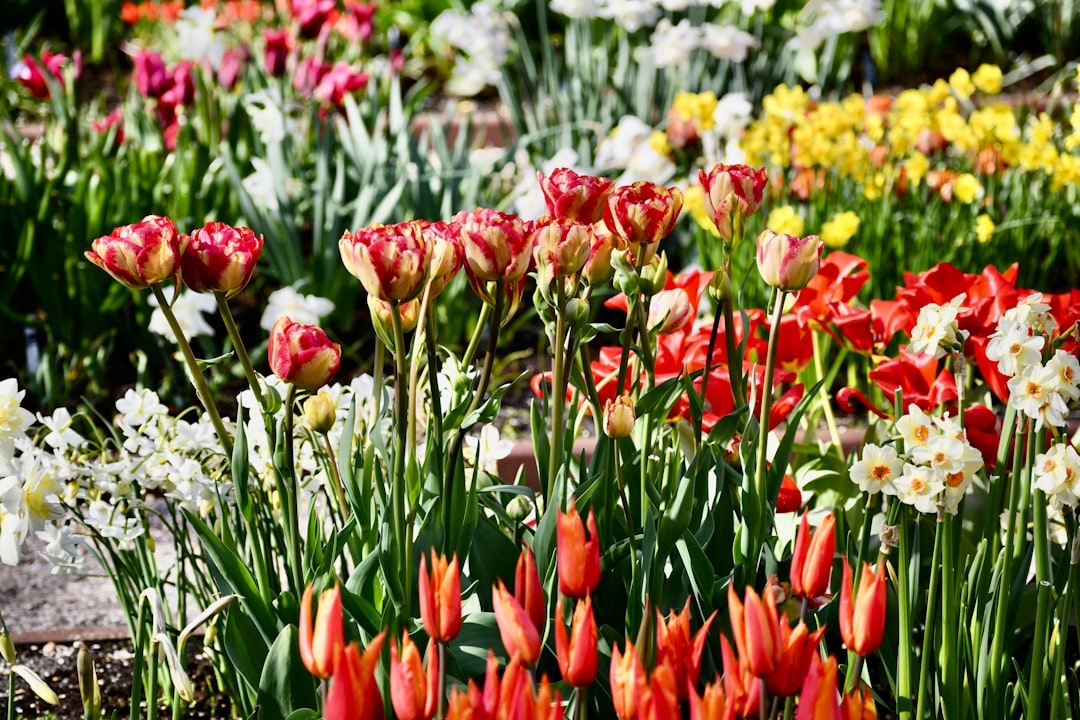
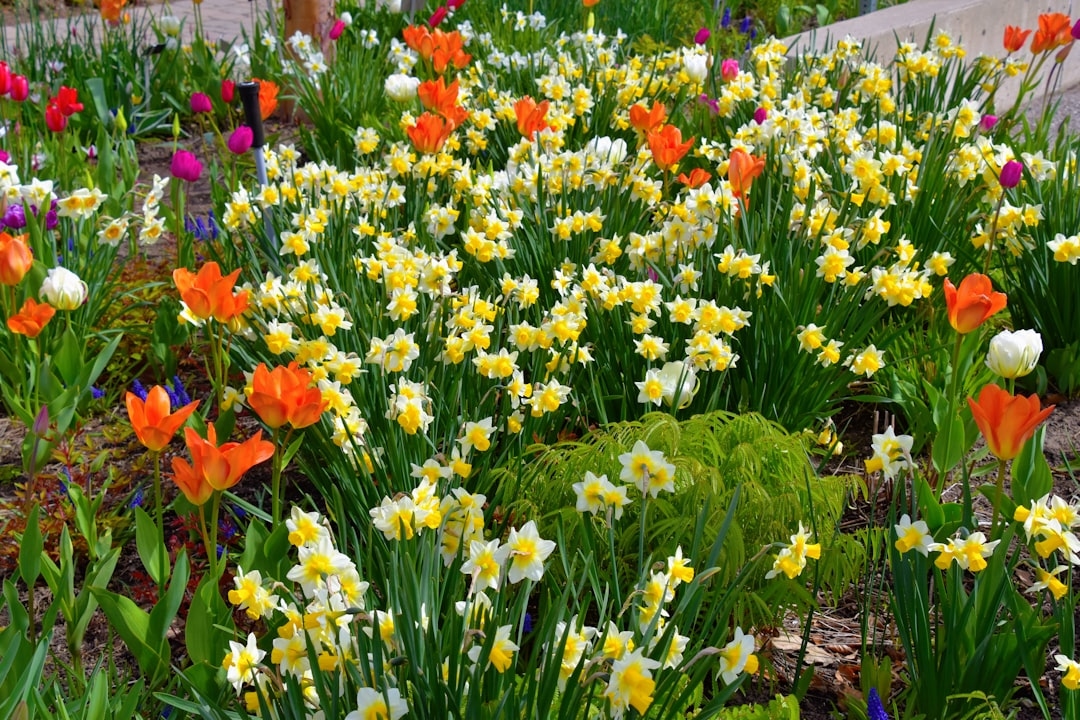
The classic. Tulips come in single, double, fringed, parrot, and lily-flowered forms — over 3,000 registered cultivars. They bloom mid-to-late spring (April–May) and reach 6–28 inches tall depending on variety. Dwarf types like ‘Red Riding Hood’ (10 inches) are perfect for pots. Plant bulbs 6–8 inches deep, 4–6 inches apart. Expect to pay $0.75–$2.00 per bulb at most garden centers. Treat them as annuals in USDA zones 8 and above — the heat prevents reliable reblooming. Commonly confused with: Ranunculus, which has layered papery petals and grows from claw-shaped corms, not the smooth teardrop bulbs of a tulip.
2. Daffodil (Narcissus spp.)
Deer-resistant, long-lived, and forgiving — daffodils are arguably the most low-maintenance spring bulb available. They naturalize readily, meaning they spread and return year after year without replanting. Blooms appear March–April in zones 3–9. Height ranges from 6 inches (miniature ‘Tête-à-Tête’) to 18 inches (standard ‘King Alfred’). Plant 6 inches deep. Cost: $0.50–$1.50 per bulb. A single 12-inch pot holds 5–6 bulbs comfortably and produces a cheerful, fragrant cluster.
3. Crocus (Crocus vernus)
Crocuses are the advance scouts of spring — they push through snow as early as February in zone 6. Cups of purple, white, yellow, and striped blooms sit just 3–4 inches above soil. Plant 3 inches deep, 3 inches apart. A 6-inch pot holds up to 12 corms. Cost: $0.25–$0.75 each, making them among the most affordable spring bloomers. They also force beautifully indoors on a gravel-and-water tray — no soil required.
4. Grape Hyacinth (Muscari armeniacum)
Tiny cobalt-blue spikes packed with tiny bell-shaped florets — Muscari is one of the most reliable repeat bloomers you’ll find. Blooms April in zones 3–9, reaching just 6–8 inches tall. Plant 3 inches deep. A 4-inch pot can hold 5–6 bulbs, making these ideal for windowsill gardens. Cost: $0.30–$0.60 per bulb. They naturalize aggressively, so container growing actually helps you control their spread.
5. Hyacinth (Hyacinthus orientalis)
If you want fragrance, hyacinths deliver it by the truckload. A single stem of densely packed florets can scent an entire room. Bloom time: late March to mid-April. Height: 8–12 inches. Plant 6 inches deep. Cost: $1.00–$3.00 per bulb. Pre-chilled “prepared” hyacinth bulbs are sold specifically for indoor forcing — place them in a hyacinth glass or shallow bowl with water just touching the base, chill for 8–12 weeks, then bring into warmth for blooms in 2–3 weeks.
6. Allium (Allium spp.)
Related to culinary onions, ornamental alliums produce perfect spherical flower heads in purple, white, or pink atop straight stems. ‘Globemaster’ reaches 4 feet and produces 10-inch flower balls. ‘Purple Sensation’ is more apartment-friendly at 24 inches. Blooms May–June. Plant in fall, 3× bulb depth. Cost: $1.50–$4.00 per bulb. Long-lasting as cut flowers — stems hold for 2 weeks in a vase.
7. Snowdrop (Galanthus nivalis)
Snowdrops are among the earliest bloomers, sometimes flowering in January in zone 6–7. Drooping white teardrops with green inner markings hang from 3–6 inch stems. Plant 3 inches deep in groups of 10 or more for visual impact — single bulbs look sparse. Cost: $0.75–$2.00 each. They prefer “in the green” transplanting (while still in leaf) for best establishment. Excellent for shaded spots where other bulbs struggle.
8. Siberian Squill (Scilla siberica)
Intense cobalt-blue nodding bells appear in early spring on 4–6 inch stems. Scilla naturalizes prolifically — plant it once and it fills in gaps reliably over several years. Cost: $0.30–$0.70 per bulb. Plant 3 inches deep in well-draining soil. Zones 2–8. A great choice for the narrow strip of soil between sidewalk and building that’s often too shaded for tulips.
9. Spanish Bluebell (Hyacinthoides hispanica)
Taller and more heat-tolerant than English bluebells, Spanish bluebells produce loose clusters of blue, pink, or white bells on 12–18 inch stems in April–May. Zones 3–8. Plant 3–4 inches deep. Cost: $0.50–$1.00 per bulb. They thrive in partial shade — ideal for balconies with east or west exposure that get only 4 hours of direct sun.
10. Fritillaria (Fritillaria meleagris)
The checkered lily is a conversation starter. Bell-shaped flowers display a distinctive purple-and-white checkerboard pattern on 12-inch nodding stems. Bloom time: April. Zones 3–8. Plant 4 inches deep. Cost: $1.00–$2.50 per bulb. They prefer moist, well-drained soil and naturalize in grass. In containers, use a peat-free mix with extra grit for drainage.
11. Pushkinia (Puschkinia scilloides)
Often overlooked, Pushkinia produces pale blue-white flowers with a darker blue stripe down each petal — similar in look to Scilla but with a softer palette. Bloom time: March–April. Height: 4–6 inches. Zones 3–9. Plant 3 inches deep. Cost: $0.30–$0.60 per bulb. Excellent for rock gardens or the front edge of a container arrangement.
12. Chionodoxa (Glory-of-the-Snow)
Star-shaped blue or pink flowers with white centers emerge as early as February. Stems reach 4–6 inches. Zones 3–9. Plant 3 inches deep, 2–3 inches apart. Cost: $0.40–$0.80 per bulb. These naturalize quickly and pair beautifully with crocuses for a layered early-spring display. Hardy enough to push through light snow cover.
13. Ipheion (Spring Starflower)
Ipheion uniflorum produces pale blue or white star-shaped flowers with a light vanilla-honey fragrance on 6–8 inch stems. Blooms March–May. Zones 6–9. Plant 3 inches deep. Cost: $0.50–$1.00 per bulb. The grassy foliage smells of garlic when bruised — a useful deer deterrent. Performs well in containers and doesn’t mind crowding.
14. Eranthis (Winter Aconite)
Bright yellow buttercup-like flowers surrounded by a green ruff emerge in February, often alongside snowdrops. Height: 2–4 inches. Zones 3–7. These corms need soaking in water overnight before planting to improve germination. Plant 2 inches deep. Cost: $0.50–$1.25 per corm. They dislike being dried out, so buy and plant promptly in early fall.
15. Leucojum (Snowflake)
Often confused with snowdrops, Leucojum produces larger white bells tipped with green dots on 12–18 inch stems — taller and airier than Galanthus. Spring snowflake (L. vernum) blooms February–March; summer snowflake (L. aestivum) blooms April–May. Zones 4–9. Plant 3–4 inches deep. Cost: $1.00–$2.00 per bulb. Naturalizes in moist spots near downspouts or shaded containers.
16. Ornithogalum (Star-of-Bethlehem)
Clusters of white star-shaped flowers with green stripes appear in April–May on 12-inch stems. Zones 4–9 for O. umbellatum. Plant 3 inches deep. Cost: $0.50–$1.25 per bulb. Note: all parts are toxic if ingested, so skip if you have pets with outdoor access. They close at night and on cloudy days — a quirky trait kids find fascinating.
17. Anemone (Anemone blanda)
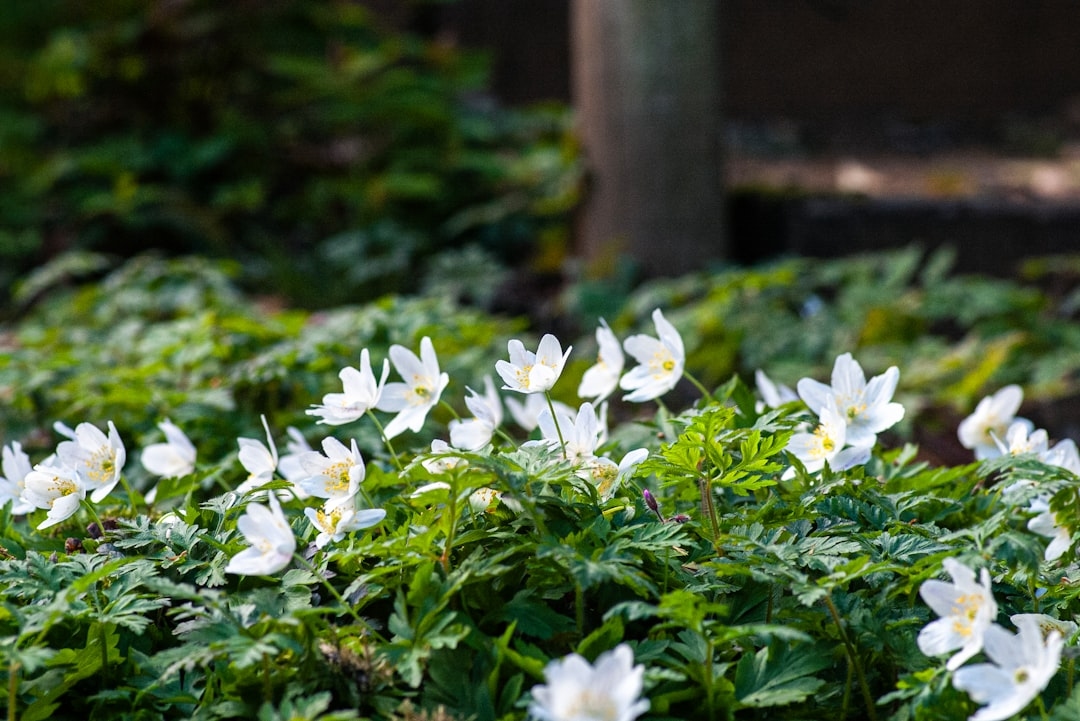
Daisy-like flowers in blue, pink, or white on ferny 4–6 inch foliage. Blooms March–April. Zones 4–8. Soak the knobby corms in water for 24 hours before planting, then set them 2 inches deep. Cost: $0.50–$1.00 per corm. They prefer well-drained, slightly alkaline soil. Great for filling gaps between larger bulbs in a container.
18. Camassia
Native to North American prairies, Camassia produces tall spikes (18–36 inches) of blue-purple or white star-shaped flowers in May–June. Zones 3–8. Plant 4 inches deep. Cost: $1.50–$3.00 per bulb. They prefer moist soil and actually tolerate boggy conditions that would rot most other bulbs — useful for pots that tend to stay wet.
19. Trillium
A woodland native with three-petaled white or red flowers above a whorl of three broad leaves. Height: 8–18 inches. Zones 4–9 depending on species. Plant rhizomes 4 inches deep in humus-rich, well-drained soil. Cost: $3.00–$8.00 per rhizome — pricier, but they’re long-lived perennials. Shade-tolerant, making them ideal for north-facing balconies or deeply shaded spots.
20. Iris reticulata
Miniature iris with rich purple, blue, or yellow flowers bloom February–March on just 4–6 inch stems. Zones 5–9. Plant 4 inches deep. Cost: $0.75–$1.50 per bulb. They require excellent drainage — bulb rot is the main enemy. In containers, add 30% perlite to your potting mix. After bloom, let foliage die back naturally to feed the bulb for next year.
21. Oxalis (Wood Sorrel)
Clover-like foliage in green or deep burgundy pairs with pink, white, or yellow flowers from April onward. Height: 6–10 inches. Zones 6–10 for most species. Plant 2 inches deep. Cost: $0.50–$1.50 per bulb. Some species are invasive in-ground, but container planting eliminates that risk. ‘Iron Cross’ (O. tetraphylla) is especially showy with its purple-banded leaves.
22. Leucocoryne (Glory of the Andes)
A lesser-known gem producing clusters of fragrant blue, white, or lilac funnel-shaped flowers on 12–18 inch stems in April–May. Zones 7–10. Plant 3–4 inches deep. Cost: $1.50–$3.50 per bulb. Excellent for mild-winter regions (California, Pacific Northwest) where many other spring bulbs underperform without chilling. Stunning in cut-flower arrangements.
23. Babiana (Baboon Flower)
South African native with pleated, sword-like leaves and vivid purple, red, or blue funnel flowers. Height: 6–12 inches. Zones 8–10. Plant corms 3–4 inches deep. Cost: $1.00–$2.50 per corm. In colder zones, treat as annuals or dig corms in fall and store at 50°F. The pleated foliage is ornamental on its own even before bloom.
24. Sparaxis (Harlequin Flower)
Brightly colored open-faced flowers in orange, red, yellow, and white — often with contrasting eye zones — appear on 12-inch stems in April–May. Zones 7–10. Plant 3 inches deep. Cost: $0.75–$1.50 per corm. Like Babiana, they need excellent drainage and full sun. A fantastic choice for a sunny south-facing balcony in a mild-winter climate.
25. Brodaea / Triteleia
Often sold as “Brodiaea,” these are usually Triteleia laxa ‘Queen Fabiola’ — loose umbels of violet-blue tubular flowers on 18-inch wiry stems in May–June. Zones 6–10. Plant 3 inches deep. Cost: $1.00–$2.00 per corm. Late-blooming and drought-tolerant once established. Excellent for dry, sunny containers that may go unwatered during vacation weeks.
Spring Bulb Comparison Table
| Bulb | Bloom Time | Height | Min. Container | Cost/Bulb | Zones |
|---|---|---|---|---|---|
| Tulip | Apr–May | 6–28″ | 10″ | $0.75–$2.00 | 3–8 |
| Daffodil | Mar–Apr | 6–18″ | 8″ | $0.50–$1.50 | 3–9 |
| Crocus | Feb–Mar | 3–4″ | 6″ | $0.25–$0.75 | 3–8 |
| Grape Hyacinth | Apr | 6–8″ | 4″ | $0.30–$0.60 | 3–9 |
| Hyacinth | Mar–Apr | 8–12″ | 6″ | $1.00–$3.00 | 4–8 |
| Allium | May–Jun | 12–48″ | 12″ | $1.50–$4.00 | 4–9 |
| Snowdrop | Jan–Mar | 3–6″ | 6″ | $0.75–$2.00 | 3–7 |
| Fritillaria | Apr | 12″ | 8″ | $1.00–$2.50 | 3–8 |
| Iris reticulata | Feb–Mar | 4–6″ | 6″ | $0.75–$1.50 | 5–9 |
| Camassia | May–Jun | 18–36″ | 12″ | $1.50–$3.00 | 3–8 |
How to Choose the Right Spring Blooming Bulbs for Your Situation
Budget First
For under $20, you can fill two 10-inch containers with a layered mix of crocuses ($5 for 20 bulbs), grape hyacinths ($6 for 20 bulbs), and a cluster of miniature daffodils ($8 for 8 bulbs). That’s a succession of blooms from February through late April from a single afternoon of planting. If budget isn’t a constraint, adding a few alliums or trilliums elevates the display considerably — but the cheap bulbs do just as much heavy lifting in small spaces.
Match Bulbs to Your Light Conditions
South or west-facing balconies with 6+ hours of sun: tulips, alliums, Sparaxis, Brodaea. East-facing spots with 4 hours of morning sun: daffodils, hyacinths, grape hyacinths, Anemone blanda. North-facing or deeply shaded areas: snowdrops, trilliums, Spanish bluebells, Scilla. Getting this match right is more important than any other factor — even the most expensive bulb will sulk and fail to rebloom in wrong light.
Think About Succession Planting
Plant a mix of early, mid, and late bloomers to stretch color from February through June. A simple three-layer container can include: Iris reticulata at 4 inches deep (blooms February), tulips at 8 inches deep (blooms April), and Brodiaea corms at 3 inches deep (blooms late May–June). One pot, four months of flowers. Add annual pansies on top to fill the gap while bulbs emerge.
Consider Deer and Rodent Pressure
If you’re planting in a ground-level garden bed, squirrels love tulip and crocus bulbs. Daffodils, alliums, Scilla, and snowdrops are all toxic to rodents and largely ignored. A wire mesh cage placed around in-ground bulbs (a hardware cloth cylinder) reduces losses by 80–90% according to extension service recommendations.
Zone Check Your Exotics
Sparaxis, Babiana, and Leucocoryne are stunning but only reliably hardy in zones 7–10. If you’re in zone 5 or 6, you can still grow them as annuals — plant in spring, enjoy summer–fall blooms, then compost. Alternatively, dig and store corms in a cool, dry location (a paper bag in a 45–55°F garage works well) over winter and replant each year.
Budget Breakdown: What to Expect to Spend
- Starter container garden (2 pots, ~30 bulbs): $15–$30 — crocuses, grape hyacinths, miniature daffodils
- Mid-range display (4 pots, ~60 bulbs, multi-variety): $40–$70 — adds tulips, hyacinths, Iris reticulata
- Full succession garden (6+ pots or ground bed, 100+ bulbs): $80–$150 — includes alliums, Fritillaria, Camassia, plus potting mix and containers
- Specialty/rare bulbs (Trillium, Leucocoryne, Brodaea): $3–$8 per bulb — best purchased from specialty mail-order suppliers like Brent and Becky’s Bulbs or John Scheepers
Tulip vs. Ranunculus: Clearing Up the Confusion
Both produce lush, layered flowers in similar colors and bloom in spring — but they’re planted and grown very differently. Tulips grow from smooth, teardrop-shaped bulbs planted in fall (October–November) at 6–8 inches deep. Ranunculus grow from claw-like dried corms planted in late winter or early spring (January–March in mild climates, after last frost elsewhere) at just 2 inches deep, claws facing down. Tulips tolerate freezing temperatures; Ranunculus prefer cool but frost-free conditions (40–60°F). If you want a classic cupped spring bloom, plant tulips in fall. If you want that multilayered tissue-paper look for spring arrangements, add Ranunculus to your late-winter planting list.
Frequently Asked Questions
What are the easiest spring blooming bulb types for beginners?
Daffodils, grape hyacinths (Muscari), and crocuses are the most beginner-friendly spring bulbs. They’re pest-resistant, require no staking, tolerate a range of soil conditions, and rebloom reliably for years without lifting. Plant them 3–6 inches deep in fall for flowers the following February through April.
Can spring-blooming bulbs grow in containers or apartments?
Yes. Most spring bulbs thrive in containers as small as 6 inches wide. Use a well-draining potting mix, plant at the recommended depth, water once after planting, and store the container in a cold location (32–45°F) for 12–15 weeks to simulate winter chill. A cold garage, unheated porch, or refrigerator crisper drawer all work.
When should I plant spring blooming bulbs?
Plant spring-blooming bulbs in fall — September through November in most of the US. The soil should be below 60°F at planting depth. In USDA zones 8–10, refrigerate bulbs for 6–8 weeks before planting in December or January, since natural winters aren’t cold enough to trigger proper dormancy.
How long do spring bulbs bloom?
Individual blooms last 1–3 weeks depending on species and temperature. Cooler springs extend bloom time significantly — a 50°F week can stretch tulip blooms from 10 days to 3 weeks. By planting early, mid, and late-season varieties together, you can achieve 3–4 months of continuous color from the same bed or container.
Do spring bulbs come back every year?
Many do, but not all. Reliable perennial returners include daffodils, Muscari, Scilla, Allium, Camassia, and Chionodoxa. Tulips in zones 8+ often behave as annuals due to insufficient winter chill. Hyacinths return for 3–4 years but produce progressively smaller flower spikes. Replacing tulips every 1–2 years and treating hyacinths as short-lived perennials gives you the best display.
Your Next Step This Fall
The best time to order bulbs is August through September, before popular varieties sell out. Retailers like Colorblends, Brent and Becky’s Bulbs, and Dutch Gardens ship at the right planting time for your zip code — you don’t have to guess. Start with one container of five different spring blooming bulbs types in a 12-inch pot using the lasagna method: deep tulips at the bottom, mid-level hyacinths, and crocus corms near the top. By March, that single pot will show you exactly what your space can do — and you’ll be planning your second pot before the first one is finished blooming.