Contents:
- What Petunias Actually Are: A Brief Botanical Background
- Petunia vs. Calibrachoa: Clearing Up the Confusion
- Petunia Varieties: Choosing the Right Type for Your Space
- Grandiflora Petunias
- Multiflora Petunias
- Spreading / Wave Petunias
- Trailing / Mounding Series (Supertunia, Surfinia, Blanket)
- The Seasonal Planting Timeline for Petunias
- Starting Petunias from Seed Indoors
- Buying and Transplanting Nursery Starts
- Month-by-Month Care Calendar (Zones 5–7 as Baseline)
- Soil, Sun, and Site Selection
- Sunlight Requirements
- Soil Composition and pH
- Container Size Guidelines
- A Complete Petunia Growing Guide: Watering and Fertilizing
- Watering Frequency and Technique
- Fertilization: The Most Important Variable in Container Performance
- Deadheading and Pruning: Keeping Petunias Blooming All Season
- Deadheading Grandiflora and Multiflora Types
- Mid-Season Hard Pruning
- Self-Cleaning Varieties
- Growing Petunias in Hanging Baskets: Specific Considerations
- Pest and Disease Management
- Common Pests
- Common Diseases
- Budget Breakdown: What Petunias Actually Cost
- Starting from Seed
- Buying Transplants
- Ongoing Supplies
- Overwintering Petunias: Is It Worth It?
- Frequently Asked Questions
- Why are my petunias not blooming?
- How often should I water petunias in containers?
- When should I cut back leggy petunias?
- Can petunias grow in shade?
- What is the difference between Wave petunias and regular petunias?
- Taking Your Petunias Further
You planted them in May, full of hope. By July, you had a leggy, half-dead tangle of stems with a few sad blooms clinging on for dear life. Sound familiar? Petunias are one of the most popular annual flowers in the United States — over 500 million plants are sold each year — yet they are also one of the most commonly mismanaged. The gap between a spectacular, season-long display and a disappointing one almost always comes down to a handful of specific, correctable mistakes.
This petunia growing guide covers everything: choosing the right variety for your conditions, planting timing by USDA hardiness zone, fertilizer schedules, pruning technique, and troubleshooting the problems that kill plants mid-season. Whether you are filling a 12-inch container on an apartment balcony or planting a 40-foot border bed, the underlying biology is the same — and once you understand it, growing petunias becomes genuinely straightforward.
What Petunias Actually Are: A Brief Botanical Background
Petunias belong to the family Solanaceae — the same family as tomatoes, peppers, and eggplants. The genus Petunia contains roughly 20 species native to South America, primarily Argentina, Uruguay, and southern Brazil. The ornamental petunias sold in garden centers today are almost exclusively complex hybrids derived from crosses between Petunia axillaris (white-flowered, night-fragrant) and Petunia integrifolia (small, violet-purple blooms).
Modern breeding began in earnest in the 1950s and accelerated dramatically with the introduction of F1 hybrid seed technology. Today’s cultivars are engineered for specific traits: weather tolerance, flower size, trailing habit, or continuous bloom without deadheading. Understanding this hybrid background matters practically — it explains why saving seed from your petunias produces inferior offspring, and why named varieties from reputable breeders consistently outperform cheap generic transplants.
Petunias are treated as tender annuals in most of the US, completing their life cycle in a single growing season. In USDA Zones 10–11 (parts of southern Florida, coastal California, and Hawaii), they can overwinter as short-lived perennials.
Petunia vs. Calibrachoa: Clearing Up the Confusion
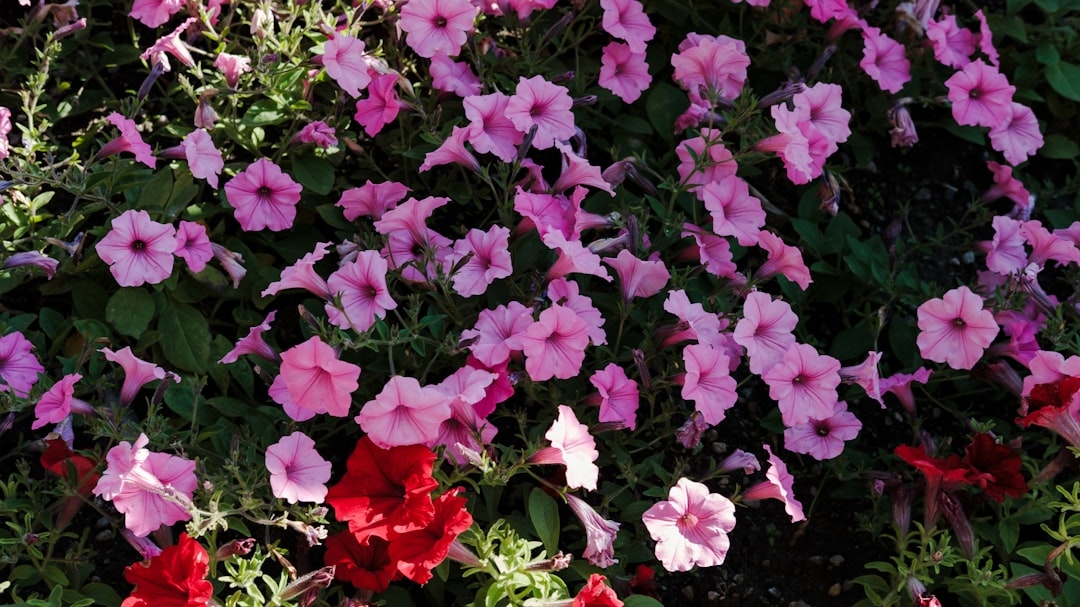
Walk into any garden center and you will find petunias displayed alongside Calibrachoa — also called Million Bells or mini-petunias. They look almost identical at a glance: both produce trumpet-shaped flowers in a nearly identical color range, both trail attractively from containers, and both bloom prolifically all season. The confusion is understandable.
The differences, however, are significant enough to affect your care routine:
- Flower size: Petunia flowers range from 1.5 inches (multiflora types) to 5 inches (grandiflora types) in diameter. Calibrachoa flowers top out at about 1 inch.
- Soil pH sensitivity: Calibrachoa is highly sensitive to iron deficiency at soil pH above 6.0 and requires fertilizers with chelated iron. Standard petunia fertilizers used on calibrachoa often produce yellow, chlorotic foliage.
- Self-cleaning vs. deadheading: Most calibrachoa varieties are fully self-cleaning — spent blooms drop on their own. Many petunias, especially grandifloras, require manual deadheading or periodic hard pruning to maintain bloom production.
- Trailing habit: Calibrachoa trails more uniformly and compactly. Wave and Supertunia petunia series can trail 3–4 feet, making them better suited to large hanging baskets and window boxes where dramatic cascading is desired.
If your “petunias” have tiny flowers and never seem to need deadheading, you are likely growing calibrachoa. Both are excellent plants — but they respond differently to care, so correct identification matters.
Petunia Varieties: Choosing the Right Type for Your Space
The commercial petunia market is divided into four primary classes, each with different growth habits, flower sizes, and maintenance requirements.
Grandiflora Petunias
Grandifloras produce the largest blooms — typically 3 to 5 inches across — and include the classic ruffled, double-flowered types that photograph so dramatically. The tradeoff is fragility: large flowers are easily damaged by heavy rain and perform poorly in high heat and humidity. In the Southeast US, grandifloras often struggle from July onward. They are best suited to the Pacific Northwest, Upper Midwest, and Northeast, where summers are milder. The ‘Ultra’ and ‘Supercascade’ series are reliable grandiflora performers. Expect to deadhead every 3–5 days during peak bloom.
Multiflora Petunias
Multifloras produce flowers in the 1.5–2.5 inch range but generate them in far greater quantity than grandifloras. More importantly, they are significantly more weather-tolerant — better in rain, heat, and humidity. The ‘Primetime’ and ‘Celebrity’ series are classic multifloras that have remained in commercial production for decades, which says something about their reliability. For mixed beds and borders, multifloras deliver more consistent color across a long season.
Spreading / Wave Petunias
Introduced by Ball Horticultural in 1995, the Wave series fundamentally changed how gardeners use petunias. Wave petunias spread horizontally 3–4 feet while remaining only 6 inches tall, making them highly effective as ground covers, in raised beds, and in large containers. They are self-cleaning on most varieties, require heavy fertilization (more on this below), and are exceptionally heat-tolerant. The original ‘Purple Wave’ won an All-America Selections award and remains one of the best-performing annuals ever introduced. The Easy Wave and Tidal Wave sub-series offer additional size and habit variations.
Trailing / Mounding Series (Supertunia, Surfinia, Blanket)
These vegetatively propagated (cutting-grown) varieties — sold under brand names like Supertunia (Proven Winners), Surfinia (Suntory), and Blanket (Ball) — are propagated from cuttings rather than seed. This allows breeders to maintain extremely consistent performance across millions of plants. They trail 18–36 inches, are largely self-cleaning, and bloom continuously from planting to frost with minimal intervention beyond regular fertilizing. They are typically 20–30% more expensive than seed-grown types at retail, but the reduced maintenance often justifies the premium for container gardeners.
The Seasonal Planting Timeline for Petunias
Timing your petunias correctly is the single most impactful decision you will make. Plant too early and a frost kills your investment. Plant too late and you miss weeks of prime blooming weather.
Starting Petunias from Seed Indoors
Petunia seed is tiny — roughly 250,000 seeds per ounce — and requires light to germinate. Sow seeds on the surface of a moistened, fine-textured seed-starting mix; do not cover them. Maintain surface temperature at 70–75°F (21–24°C). Germination occurs in 7–10 days under good conditions. Provide supplemental lighting immediately upon germination — seedlings that stretch for inadequate light become permanently leggy.
Start seeds indoors 10–12 weeks before your last expected frost date:
- Zones 3–4 (Minnesota, northern Montana): Start mid-January to early February; transplant late May to early June.
- Zones 5–6 (Ohio, Missouri, Virginia): Start late January to mid-February; transplant late April to mid-May.
- Zones 7–8 (Georgia, Texas, Pacific Northwest): Start early to mid-February; transplant mid-April to early May.
- Zones 9–10 (Southern California, southern Florida): Start October–November for winter/spring bloom; transplant December–January.
Buying and Transplanting Nursery Starts
Most gardeners purchase transplants, which is entirely sensible. Garden centers in the US typically stock petunias from late March (south) through late May (north). The best transplants are compact, dark green, and have no more than 1–2 open flowers — heavily blooming transplants have often been stressed by root restriction in small cells. Transplant after your last frost date when nighttime temperatures stay reliably above 40°F.
Month-by-Month Care Calendar (Zones 5–7 as Baseline)
- February–March: Start seeds indoors; order online transplants if desired.
- April: Harden off seedlings; prep beds with compost; purchase transplants once available.
- May: Transplant after last frost; begin fertilizing 2 weeks after transplanting.
- June: Peak growth phase; begin weekly liquid feeding; deadhead grandifloras every few days.
- July: Mid-season shearing if plants become leggy (cut back by one-third); maintain feeding schedule.
- August: Second flush of bloom after July shearing; continue feeding through August.
- September: Reduce feeding frequency; enjoy late-season color; consider saving cuttings for overwintering.
- October–November: First frost ends the season in most zones; compost spent plants.
Soil, Sun, and Site Selection
Sunlight Requirements
Petunias need a minimum of 6 hours of direct sun per day. 8 hours produces significantly more flowers. Below 5 hours, plants grow vigorously but bloom sparsely — a frustrating outcome. In the South (Zones 8–10), afternoon shade can actually improve performance during July and August by reducing heat stress, but morning sun remains essential.
Soil Composition and pH
In the ground, petunias perform best in well-drained, loamy soil with a pH between 5.5 and 6.5. Amend heavy clay soils with 3–4 inches of compost worked 8–10 inches deep before planting. In sandy soils, compost improves moisture retention. Avoid wet, poorly drained sites — petunias are exceptionally prone to root rot in waterlogged conditions.
For containers, use a high-quality, peat- or coir-based potting mix with added perlite (a 3:1 mix of potting soil to perlite works well). Never use garden soil in containers — it compacts, restricts drainage, and can introduce soilborne pathogens.
Container Size Guidelines
Container size directly affects how often you need to water and how large the plant grows. As a practical rule:
- One trailing petunia per 10–12-inch pot
- Three plants in a 14–16-inch container
- Five to seven plants in a 24-inch window box
- Three to five plants in a 12-inch hanging basket (use a liner with good drainage)
Overcrowding is one of the most common mistakes in container planting. Plants need adequate root volume to support their above-ground biomass, especially during hot weather when water demand is highest.
A Complete Petunia Growing Guide: Watering and Fertilizing
Watering Frequency and Technique
Petunias are moderately drought-tolerant once established in the ground. In containers, they are not — they can go from adequately moist to wilting in under 12 hours during a hot summer afternoon. Check containers daily during summer. The standard test: insert your finger 1 inch into the soil; if it feels dry at that depth, water thoroughly until water drains freely from the bottom.
Ground-planted petunias generally need about 1 inch of water per week from rain or irrigation. During extended dry periods, deep watering twice a week is more effective than shallow daily watering — it encourages deeper root development and greater drought resilience.
Avoid overhead watering in the evening. Wet foliage overnight encourages botrytis (gray mold), which is particularly damaging to grandiflora petunias with their dense, ruffled blooms. Drip irrigation or morning watering eliminates this risk almost entirely.
Fertilization: The Most Important Variable in Container Performance
Petunias are heavy feeders. In containers especially, nutrients leach out with every watering — a well-watered container in summer can lose most of its soluble nutrients within 3–4 weeks. Under-fertilized petunias produce pale foliage, reduced bloom, and weakened stems susceptible to disease.
The most effective approach for containers combines a slow-release granular fertilizer incorporated at planting with a weekly liquid feed during the growing season:
- At planting: Mix a 3–4 month slow-release fertilizer (such as Osmocote 14-14-14) into the top 2–3 inches of potting mix at label rates — typically about 1 tablespoon per gallon of container volume.
- Weekly liquid feed: Apply a water-soluble fertilizer with a balanced NPK ratio (20-20-20 or similar) at half the label rate, OR a bloom-promoting formula (such as 15-30-15) at full label rate. The extra phosphorus in bloom formulas supports flower production specifically.
- Magnesium supplement: If foliage yellows between the veins (interveinal chlorosis) despite adequate fertilizing, apply a dilute Epsom salt solution — 1 tablespoon per gallon of water, once per month. Magnesium deficiency is common in frequently watered containers.
For ground beds, a granular slow-release fertilizer applied at planting, supplemented with a monthly liquid feed, is usually sufficient. Beds benefit from natural soil buffering that containers lack.
Deadheading and Pruning: Keeping Petunias Blooming All Season
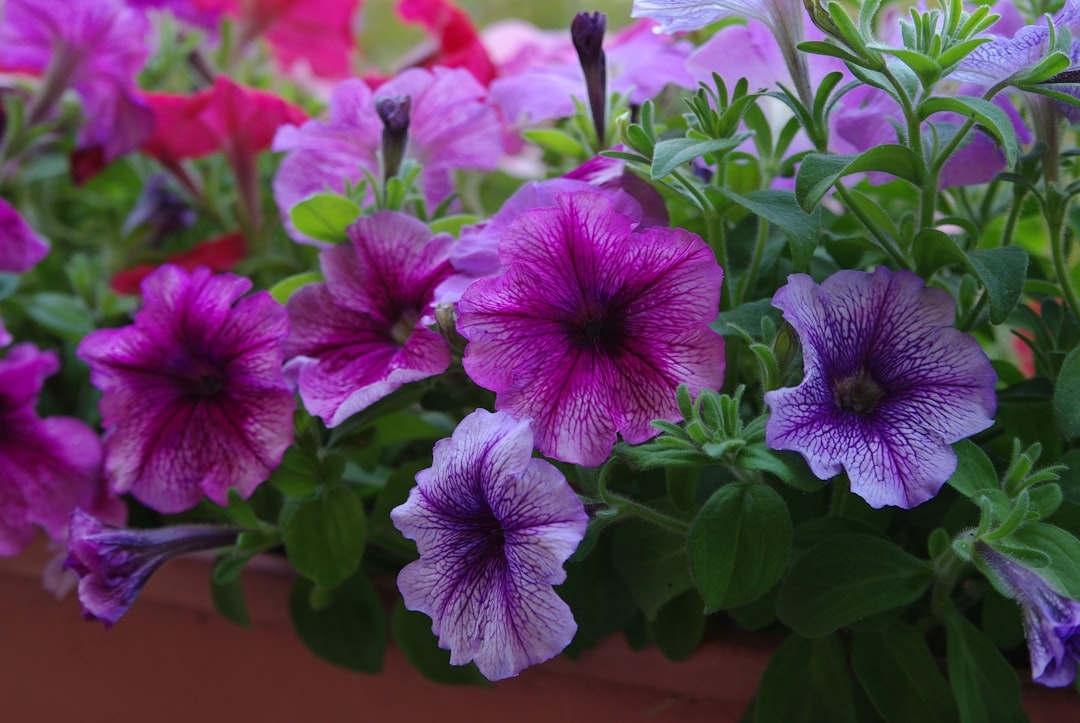
Deadheading Grandiflora and Multiflora Types
Deadheading — removing spent flowers before they set seed — redirects the plant’s energy from seed production back into flower production. For grandifloras, this is not optional if you want continuous bloom. Remove spent flowers by pinching or cutting just below the flower head, including the seed-forming calyx behind the petals. Leaving the calyx in place allows seed development to proceed regardless of whether the petals have dropped.
Mid-Season Hard Pruning
By mid-July in most of the US, petunias commonly become leggy: long, bare stems with flowers only at the tips. This is normal — it is not a sign of disease or failure. The solution is a hard cut-back, trimming plants to 4–6 inches tall. This sounds drastic. It is. And it works reliably.
After cutting back, apply a liquid fertilizer immediately to support the flush of new growth. Plants typically recover with full foliage within 10–14 days and return to peak bloom within 3–4 weeks. In Zones 5–7, a July cut-back produces a spectacular August and September flush that often surpasses the early-season display.
Self-Cleaning Varieties
Wave, Supertunia, and most spreading series are bred to be self-cleaning — the plant naturally abscises spent flowers before they set seed. These varieties do not require routine deadheading. They still benefit from the mid-season hard prune if they become leggy, but the daily or every-other-day deadheading routine required for grandifloras is unnecessary. This is worth knowing before you buy: if you want low maintenance, specify self-cleaning varieties at the garden center.
Growing Petunias in Hanging Baskets: Specific Considerations
Hanging baskets represent the most demanding growing environment for petunias. They are exposed to wind on all sides, dry out faster than ground-level containers, and are often in full sun all day. Success depends on a few specific practices.
Use the largest basket practical for your space — a 14-inch basket holds significantly more soil volume than a 10-inch and requires dramatically less frequent watering. Line wire baskets with coir liners rather than sphagnum moss for better moisture retention. Add a water-retaining polymer gel (such as Soil Moist) to the potting mix at planting — about 1 teaspoon per gallon of mix — which can reduce watering frequency by 30–50% in hot weather.
For basket-specific variety selection, trailing series outperform mounding types dramatically. ‘Wave Purple Classic’, ‘Supertunia Vista Bubblegum’, and ‘Cascadias Bicolor Cabernet’ are three varieties specifically noted for basket performance by commercial growers. Expect to water baskets once daily — sometimes twice — during July and August heat.
Pest and Disease Management
Common Pests
Aphids cluster on new growth and the undersides of leaves, excreting sticky honeydew that promotes sooty mold. A strong jet of water dislodges most infestations. For persistent problems, insecticidal soap at 2–3% concentration applied every 5–7 days is effective and safe for beneficial insects.
Tobacco budworm (Heliothis virescens) is the most damaging petunia pest in the Southeast and Southwest. The caterpillar feeds inside flower buds, destroying them before they open. You see the damage — holes in buds, missing flowers — but rarely see the pest, which feeds at night. Bacillus thuringiensis (Bt) applied at dusk every 7–10 days is the most effective organic control. Synthetic pyrethroid insecticides are also effective but should be applied in the evening to minimize bee exposure.
Spider mites become problematic in hot, dry conditions, causing stippled, bronzed foliage. Increase humidity around plants, ensure consistent watering, and apply miticide or neem oil at first sign of infestation.
Common Diseases
Botrytis blight (gray mold) appears as brown, water-soaked spots on petals and foliage, rapidly progressing to a gray, fuzzy mass of spores. It thrives in cool, humid conditions with poor air circulation. Remove affected plant parts immediately, improve spacing, and switch to morning watering. Fungicides containing iprodione or fludioxonil are effective for severe cases.
Root rot caused by Phytophthora or Pythium species is almost always a consequence of overwatering or poor drainage. Plants wilt despite moist soil, stems collapse at the base, and roots appear brown and mushy rather than white and firm. There is no effective treatment for established root rot — remove affected plants, improve drainage, and start fresh. Prevention through proper soil preparation and watering discipline is the only reliable strategy.
Powdery mildew appears as a white, powdery coating on upper leaf surfaces, typically in late summer. While unsightly, it rarely kills plants outright. Neem oil or potassium bicarbonate fungicides applied at first sign of infection are effective. Some petunia series, including Supertunia, have been bred with improved mildew resistance.
Budget Breakdown: What Petunias Actually Cost
Growing petunias is accessible at nearly any budget, but the cost varies significantly depending on approach and scale.
Starting from Seed
- Seed packet (25–50 seeds of named variety): $3–$6
- Seed-starting mix (small bag): $5–$8
- Cell trays: $2–$4 (reusable for many seasons)
- Supplemental grow light (amortized over years): $20–$60 one-time
- Total per season (seeds + supplies, excluding lighting): approximately $10–$18 for 24–48 plants
Buying Transplants
- Generic 6-pack from a big-box store: $3–$6 per pack (6 plants)
- Individual 4-inch pots of named varieties (multiflora, Wave): $2–$4 per plant
- Premium vegetatively propagated varieties (Supertunia, Surfinia) in 4-inch pots: $4–$7 per plant
- Pre-planted 12-inch hanging basket (retail): $18–$35
Ongoing Supplies
- Premium potting mix (2 cubic feet): $12–$18
- Slow-release fertilizer (Osmocote, 1 lb): $8–$12 (covers multiple containers)
- Water-soluble fertilizer (Miracle-Gro or equivalent, 1.5 lb): $8–$14
- Full container setup (one 14-inch basket, 3 plants, soil, fertilizer): approximately $30–$55 first year; $15–$25 subsequent years if you reuse the container
The economics strongly favor starting from seed if you need more than 20–30 plants. For a single statement container or basket, buying a quality pre-planted basket or three premium transplants is often the better value of your time.
Overwintering Petunias: Is It Worth It?
In Zones 3–9, petunias will not survive outdoors through winter. However, you can take stem cuttings in late summer and overwinter them indoors as rooted cuttings — effectively cloning your favorite plants for the following season.
Take 3–4 inch stem cuttings in August or early September, before night temperatures drop below 50°F. Remove lower leaves, dip in rooting hormone, and insert into moist perlite or a 50:50 perlite/vermiculite mix. Keep at 65–70°F with bright indirect light. Roots typically form in 3–4 weeks. Once rooted, pot into small containers with standard potting mix and maintain in a sunny window (south-facing, minimum 6 hours of direct indoor sun) or under grow lights through winter.
This is genuinely worthwhile for premium vegetatively propagated varieties that cost $5–$7 per plant at retail. Successfully overwintering three Supertunia plants saves $15–$21 and gives you large, well-established plants to put out in spring — typically several weeks ahead of where nursery transplants would start.
Frequently Asked Questions
Why are my petunias not blooming?
The three most common causes are insufficient sunlight (less than 6 hours daily), inadequate fertilization (especially phosphorus), and failure to deadhead spent blooms on non-self-cleaning varieties. If plants are growing vigorously but not blooming, the issue is usually too much nitrogen relative to phosphorus — switch to a high-phosphorus bloom fertilizer (such as 10-30-20) for 2–3 weeks.
How often should I water petunias in containers?
Check containers daily in summer and water when the top inch of soil feels dry. During temperatures above 85°F, this often means daily watering — sometimes twice daily for hanging baskets. In cooler weather or larger containers, every 2–3 days may be sufficient. The goal is consistent moisture, not a fixed schedule.
When should I cut back leggy petunias?
Cut back leggy petunias when stems become bare and flowering is concentrated only at the tips — typically mid-July in Zones 5–7. Trim plants to 4–6 inches tall, fertilize immediately afterward, and expect full regrowth with renewed blooming within 3–4 weeks. Do not hesitate to do this; plants recover reliably.
Can petunias grow in shade?
Petunias require a minimum of 6 hours of direct sun for adequate blooming. In partial shade (3–5 hours), they will survive and produce foliage but bloom sparsely. For shaded locations, Impatiens walleriana, New Guinea impatiens, or begonias are more appropriate choices. No petunia variety performs well in full shade.
What is the difference between Wave petunias and regular petunias?
Wave petunias are a specific series of spreading petunias bred for a prostrate, wide-spreading growth habit (3–4 feet wide, 6 inches tall), self-cleaning blooms, and exceptional heat tolerance. Regular petunias have an upright or mounding habit. Wave petunias also require heavier fertilization than standard types — approximately 1.5 times the label rate of a balanced water-soluble fertilizer — to support their vigorous growth.
Taking Your Petunias Further
Mastering this petunia growing guide means you now have the foundational knowledge to troubleshoot problems before they become disasters, choose varieties matched to your specific conditions, and keep containers performing at their best from May through October. The next logical step is experimentation: try a cutting-propagated series like Supertunia alongside a seed-grown Wave variety in the same season and compare performance, maintenance time, and cost-per-bloom. Grow one basket with a single color and one with a mixed planting and see which stops more foot traffic.
Petunias reward attention. A grower who checks their containers daily, adjusts fertilization when foliage changes color, and cuts plants back without hesitation at mid-season will consistently outperform one following a rigid schedule without observation. The plants are telling you what they need — this guide gives you the vocabulary to understand what they are saying.
If you are ready to go deeper, seek out the All-America Selections database (all-americaselections.org) for rigorously field-tested variety recommendations by region — a far more reliable source than marketing copy on plant tags. Your local cooperative extension service also publishes region-specific annual flower trial results that reflect performance in your actual climate, not a test garden in a different hardiness zone.