Contents:
- What Makes Peonies Different from Other Perennials
- Choosing the Right Peony Variety for Your Garden
- Bloom Forms Explained
- Top Varieties for US Gardeners
- Fragrance vs. No Fragrance
- Where to Plant Peonies: Site Selection and Soil Prep
- Sunlight Requirements
- Soil Requirements
- Spacing and Air Circulation
- Growing Peonies Guide: Step-by-Step Planting Instructions
- Planting Bare-Root Peonies
- Planting Potted Peonies
- Watering Peonies: What They Actually Need
- Fertilizing Peonies Without Overdoing It
- Staking, Deadheading, and Post-Bloom Care
- Staking
- Deadheading
- Fall Cutback
- Common Peony Problems and How to Fix Them
- Botrytis Blight (Gray Mold)
- Failure to Bloom
- Ants on Buds
- Powdery Mildew
- Dividing and Transplanting Established Peonies
- Growing Peonies as Cut Flowers
- When to Cut
- How to Cut
- Cold Storage
- Peonies in Different US Climate Zones
- Zones 3–4 (Northern Minnesota, Upper Midwest, Northern New England)
- Zones 5–6 (Much of the Midwest, Mid-Atlantic, Pacific Northwest)
- Zones 7–8 (Southeast, Southern California, Pacific Coast)
- Zones 9+ (Deep South, Hawaii, South Texas)
- Buying Peonies: What to Look For and Where to Shop
- Frequently Asked Questions About Growing Peonies
- How long does it take for peonies to bloom after planting?
- Why aren’t my peonies blooming?
- Do peonies need to be divided?
- Are peonies deer-resistant?
- Can peonies grow in containers?
- Building a Peony Garden: Season Extension and Companion Planting
- Extending Bloom Season
- Companion Plants That Work
- A Forward-Looking Note for First-Year Peony Growers
This growing peonies guide starts where peonies themselves do — with a long history. In ancient China, peonies were so prized that imperial gardens reserved entire courtyards for them, and the penalty for stealing a cutting could be severe. By the Tang Dynasty (618–907 AD), the peony had been crowned China’s “king of flowers.” It crossed into Japan by the 8th century, became a symbol of prosperity in Victorian England, and eventually landed in American backyards — where it has thrived, largely unbothered, for over a hundred years. Some plants in US gardens have been blooming in the same spot since the 1920s. No replanting, no replacement. Just peonies doing what peonies do.
That’s the first thing you need to understand about this plant: it rewards patience and punishes neglect with indifference. Plant it wrong and you’ll wait years for nothing. Plant it right and it will outlive you.
This guide covers everything — soil, planting depth, watering, fertilizing, pest management, and which varieties to choose based on your climate and goals. Whether you’re starting from bare-root tubers in fall or potted plants in spring, you’ll find specific, actionable steps here. No guesswork. No filler.
What Makes Peonies Different from Other Perennials
Most perennials are forgiving and fast. Peonies are neither, and that’s not a flaw — it’s a trade-off. They take 2 to 3 years to reach full flowering potential after planting. But once established, they require almost no intervention and produce blooms that retail florists sell for $4–$12 per stem. A mature plant can put out 30 to 50 blooms in a single season.
Peonies are classified into three main categories:
- Herbaceous peonies — The most common type in US gardens. They die back to the ground each winter and re-emerge in spring. Hardiness zones 3–8.
- Tree peonies — Woody shrubs that retain their structure year-round. They bloom earlier than herbaceous types and grow 3–7 feet tall. Zones 4–9.
- Itoh (intersectional) peonies — A hybrid of tree and herbaceous types, developed in the 1940s by Japanese breeder Toichi Itoh. They offer the large blooms of tree peonies with the cold hardiness of herbaceous types. Zones 4–9.
For beginners, herbaceous peonies are the best starting point. They’re the most affordable ($5–$25 for a bare-root division at most garden centers), the easiest to plant, and the most widely adapted to American climates.
Choosing the Right Peony Variety for Your Garden
There are over 6,000 named peony cultivars registered worldwide. You do not need to know all of them. You need to know the bloom form categories and a handful of proven performers for your region.
Bloom Forms Explained
Peony flowers fall into six recognized forms:
- Single — One or two rows of petals surrounding a visible center of golden stamens. Clean, open, and excellent for pollinators. Example: ‘Krinkled White’.
- Japanese — Similar to singles but with modified stamens (called staminodes) that form a fluffy center cluster. Example: ‘Nippon Beauty’.
- Anemone — Guard petals surround a dense, raised center mound of petaloids. Example: ‘Gay Paree’.
- Semi-double — Multiple rows of petals with visible stamens. A good middle ground between airy and full. Example: ‘Coral Charm’.
- Bomb — A globe-shaped flower where the center stamens have converted entirely into petals, forming a rounded “bomb” shape. Example: ‘Kansas’.
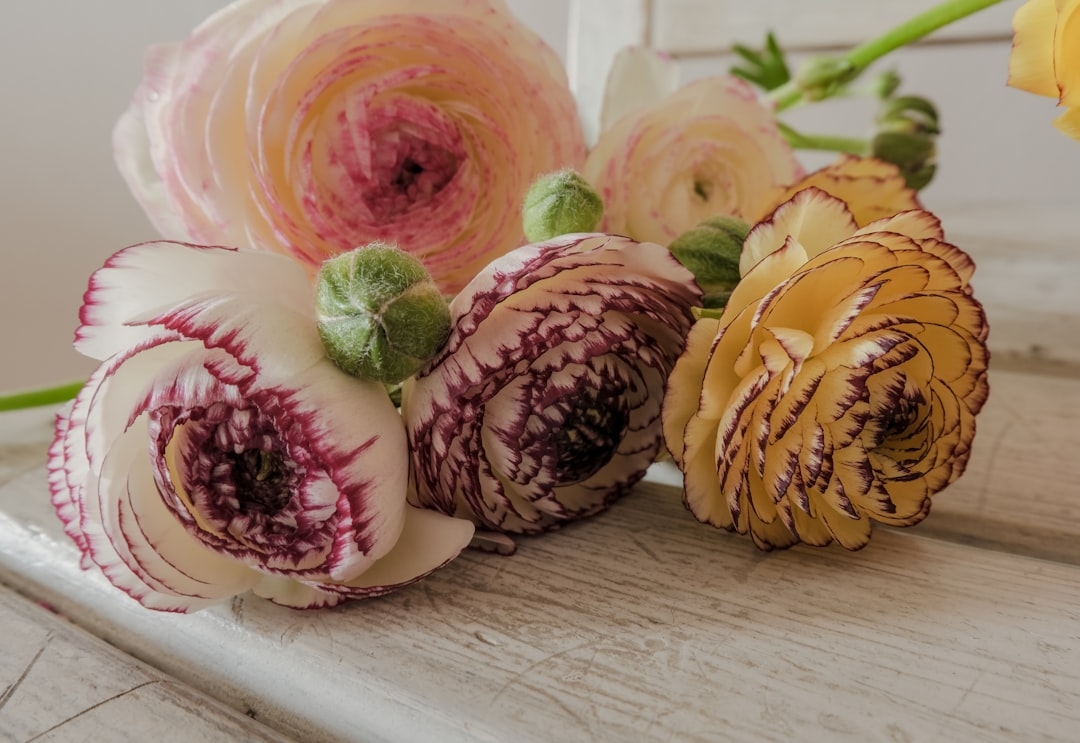
- Double — Fully packed petals with no visible stamens. The classic florist look. Example: ‘Sarah Bernhardt’, ‘Duchess de Nemours’.
Top Varieties for US Gardeners
These cultivars are reliable, widely available, and well-suited to American growing conditions:
- ‘Sarah Bernhardt’ — Double pink, intensely fragrant, late-season bloomer. One of the best-selling cut flower peonies in the US. Zones 3–8.
- ‘Karl Rosenfield’ — Deep red double, strong stems, mid-season. Holds up well in heat. Zones 3–8.
- ‘Festiva Maxima’ — White double with red flecks at the center. An heirloom variety dating to 1851 that remains a benchmark for fragrance. Zones 3–8.
- ‘Coral Charm’ — Semi-double, peach-coral fading to cream. Won the American Peony Society’s Gold Medal in 1986. Zones 3–8.
- ‘Buckeye Belle’ — Dark maroon semi-double, early bloomer, very cold-hardy. Performs well in Zones 3–4 where other varieties struggle.
- ‘Bartzella’ (Itoh) — Yellow double blooms on a compact plant, 4–6 weeks of flowering. Retail price often $30–$60 per plant, but worth it for the extended bloom window.
Fragrance vs. No Fragrance
Not all peonies are fragrant. Single and Japanese forms often have little to no scent. If fragrance is your priority, choose double or bomb forms — particularly white and pink varieties. Red peonies are frequently scentless. ‘Festiva Maxima,’ ‘Sarah Bernhardt,’ and ‘Duchesse de Nemours’ are among the most fragrant cultivars available to US gardeners.
Where to Plant Peonies: Site Selection and Soil Prep
Peonies are not complicated, but they are opinionated about their conditions. Get these basics right and the plant will take care of itself for decades.
Sunlight Requirements
Peonies need a minimum of 6 hours of direct sunlight per day. Eight hours is better. In the South (Zones 7–8), afternoon shade helps protect blooms from heat fade and can extend the flowering period by 3–5 days. In northern zones, full sun is essential for strong stem growth and adequate chill accumulation.
Avoid planting under or near large trees. The combination of shade and root competition will prevent blooming. A peony planted in too much shade may produce lush green foliage but never a single flower — a frustrating outcome that can persist for years before a gardener identifies the cause.
Soil Requirements
The target soil profile for peonies:
- pH: 6.5 to 7.0. Test your soil before planting — inexpensive pH kits are available at any garden center for under $15. Amend with garden lime to raise pH or elemental sulfur to lower it.
- Drainage: Well-draining is non-negotiable. Peonies sitting in waterlogged soil will develop crown rot within one to two seasons. Raised beds or slopes are ideal for heavy clay soils.
- Organic matter: Work 2–3 inches of compost into the top 12–18 inches of soil at planting time. This improves both drainage in clay and moisture retention in sandy soils.
If your garden has heavy clay, plant in raised beds elevated at least 12 inches. This single step has saved more peony plantings than any other intervention.
Spacing and Air Circulation
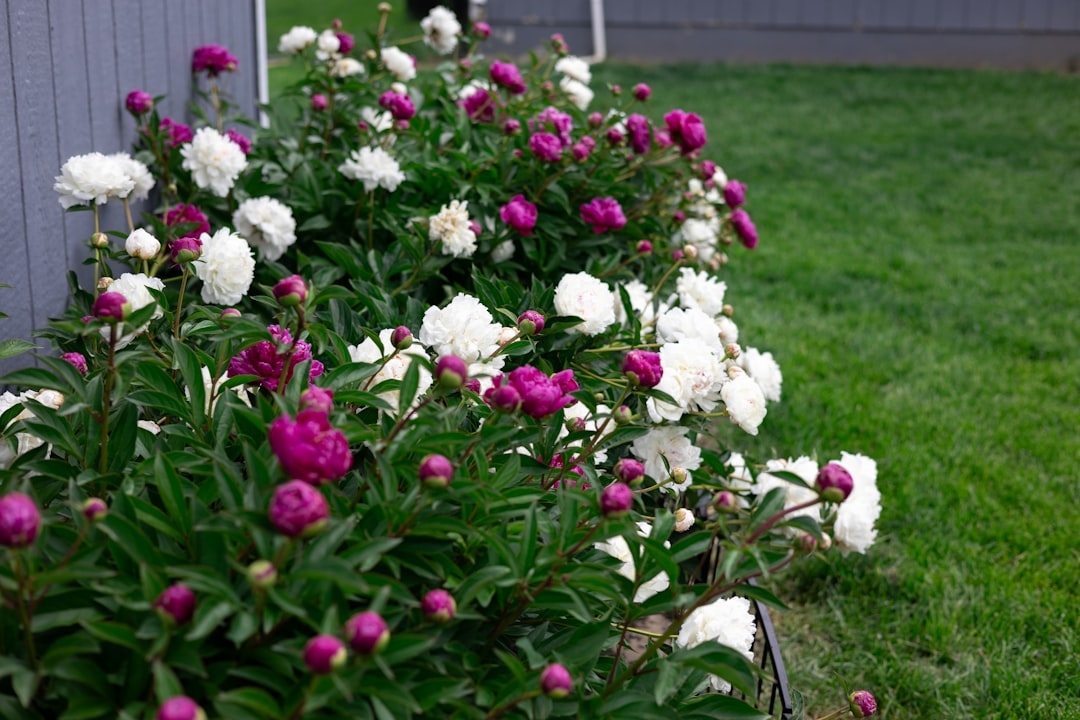
Space herbaceous peonies 3–4 feet apart. This spacing allows adequate air circulation, which reduces the risk of botrytis blight — the fungal disease most likely to affect peonies in humid conditions. Don’t cram them in. A mature herbaceous peony clump can reach 3 feet wide.
Growing Peonies Guide: Step-by-Step Planting Instructions
Peonies are planted from bare-root divisions in fall (September through November in most US regions) or from potted plants in spring. Fall planting gives roots time to establish before winter and almost always results in stronger first-year growth.
Planting Bare-Root Peonies
- Inspect the roots. A healthy bare-root division should have 3–5 firm, fleshy roots (not shriveled) and at least 3–5 visible “eyes” — the small, reddish-pink growth buds on the crown. More eyes mean more stems in year one, but even a 2-eye division will perform well by year three.
- Dig the hole. Make it 12–18 inches deep and 18 inches wide. Loosen the soil at the bottom to encourage root penetration.
- Set the correct depth. This is the most critical step. In Zones 3–5, plant the eyes 1.5 to 2 inches below the soil surface. In Zones 6–8, plant with the eyes no more than 1 inch below the surface. In warm climates (Zone 8+), some gardeners plant eyes at soil level or even slightly above. Planting too deep is the #1 reason peonies fail to bloom.
- Backfill and firm. Fill the hole with amended soil, firming gently to eliminate air pockets. Do not pack hard — roots need loose soil to spread.
- Water in. Soak the planting area thoroughly after planting. Water settles the soil and initiates root-to-soil contact.
- Mulch lightly. Apply 2 inches of mulch around (not over) the crown to insulate roots through winter. Remove the mulch in early spring before growth begins.
Planting Potted Peonies
Potted peonies purchased in spring are slightly more forgiving of timing errors. Plant them at the same depth as they sit in the container — do not bury the crown deeper than it already is. Water thoroughly and stake loosely if stems are already tall. Expect reduced first-year blooming; the plant is recovering from container life and getting established.
🌿 What the Pros Know
Commercial peony growers routinely plant bare-root divisions in September even in Zone 6, where the ground can freeze by December. The 6–8 weeks of root growth between planting and hard freeze is enough to establish the crown and produce a stronger flush in year two than spring-planted stock. If you order bare-root peonies online, choose a vendor that ships in September or October — not one that sends them in late November when root development time is minimal.
Watering Peonies: What They Actually Need
New plantings need consistent moisture for the first growing season — approximately 1 inch of water per week, either from rainfall or supplemental irrigation. After that, established peonies are surprisingly drought-tolerant. A mature clump with a deep root system can go 2–3 weeks without rain in summer without significant stress.
The critical watering window is spring, when stems are pushing up and buds are forming. Drought stress during this period reduces bloom size and stem strength. Use a soaker hose at the base rather than overhead sprinklers — wet foliage accelerates botrytis blight, especially in humid climates.
Reduce watering in late summer and fall as the plant prepares for dormancy. Overly wet soil going into winter is a setup for crown rot.
Fertilizing Peonies Without Overdoing It
Peonies are not heavy feeders. Over-fertilizing — especially with high-nitrogen fertilizers — produces lush, dark-green leaves and few or no flowers. Nitrogen pushes vegetative growth at the expense of blooms.
A simple, effective fertilization schedule:
- Early spring (when shoots are 2–4 inches tall): Apply a balanced, slow-release fertilizer such as 10-10-10 at the rate specified on the package, keeping granules 6 inches away from the crown. Alternatively, topdress with 1–2 inches of compost.
- After blooming: A light application of low-nitrogen fertilizer (5-10-10 or bone meal) supports root development and energy storage for next year’s bloom.
- What to skip: Do not fertilize in late summer or fall. Late feeding stimulates new growth that cannot harden before frost.
In average garden soil with annual compost additions, many established peonies need no supplemental fertilizer at all. Test your soil every 3–4 years and amend based on what the test shows, not what you assume.
Staking, Deadheading, and Post-Bloom Care
Staking
Double and bomb-form peonies produce flowers so heavy they frequently flop. A fully open ‘Sarah Bernhardt’ bloom can weigh over 3 ounces — multiply that by 30 to 40 blooms on a mature plant and you understand why staking matters. Install grow-through rings or wire hoops in early spring, before growth reaches 6 inches. The stems grow up through the support and are held naturally. Trying to stake after the plant is full-grown is a frustrating, ineffective exercise.
Single, Japanese, and semi-double forms usually have stronger, more upright stems and rarely need staking.
Deadheading
Remove spent blooms promptly to prevent seed formation, which drains energy from the plant. Cut the stem back to the first set of leaves below the flower head — do not cut all the way to the ground. The remaining foliage photosynthesizes through summer and fall, generating the energy reserves that power next year’s bloom.
Fall Cutback
After the first hard frost, when foliage has turned yellow or brown, cut stems to 2–3 inches above the ground. Remove all cut material from the garden and discard it — do not compost peony debris, as it can harbor botrytis spores. Clean cuts with sharp, disinfected pruners (a quick wipe with 70% isopropyl alcohol between plants prevents disease spread).
Common Peony Problems and How to Fix Them
Botrytis Blight (Gray Mold)
The most common peony disease in the US. Caused by the fungus Botrytis paeoniae. Symptoms: stems blacken and collapse at soil level in spring, buds turn brown without opening, gray fuzzy mold appears on affected tissue. Most common in wet, cool springs in humid regions.
Prevention: Good air circulation (proper spacing), avoiding overhead watering, and removing all plant debris in fall. Treatment: Cut affected stems to the ground immediately, remove and discard debris. Apply copper-based or sulfur fungicide at soil level in early spring as a preventive in problem gardens.
Failure to Bloom
The most frustrating peony problem, and almost always caused by one of four correctable mistakes:
- Planted too deep. Even 1 inch too deep can prevent blooming indefinitely. Dig and replant at the correct depth in fall.
- Too much shade. Relocate to a spot with 6+ hours of direct sun.
- Plant too young. First-year divisions rarely bloom. Second-year plants may produce 1–3 flowers. Full production by year 3–4 is normal.
- Insufficient chill hours. Herbaceous peonies need 500–1,000 hours below 40°F during winter. In Zone 9 and south, they often fail to accumulate sufficient chill. Stick to Zone 8 maximum for most herbaceous cultivars.
Ants on Buds
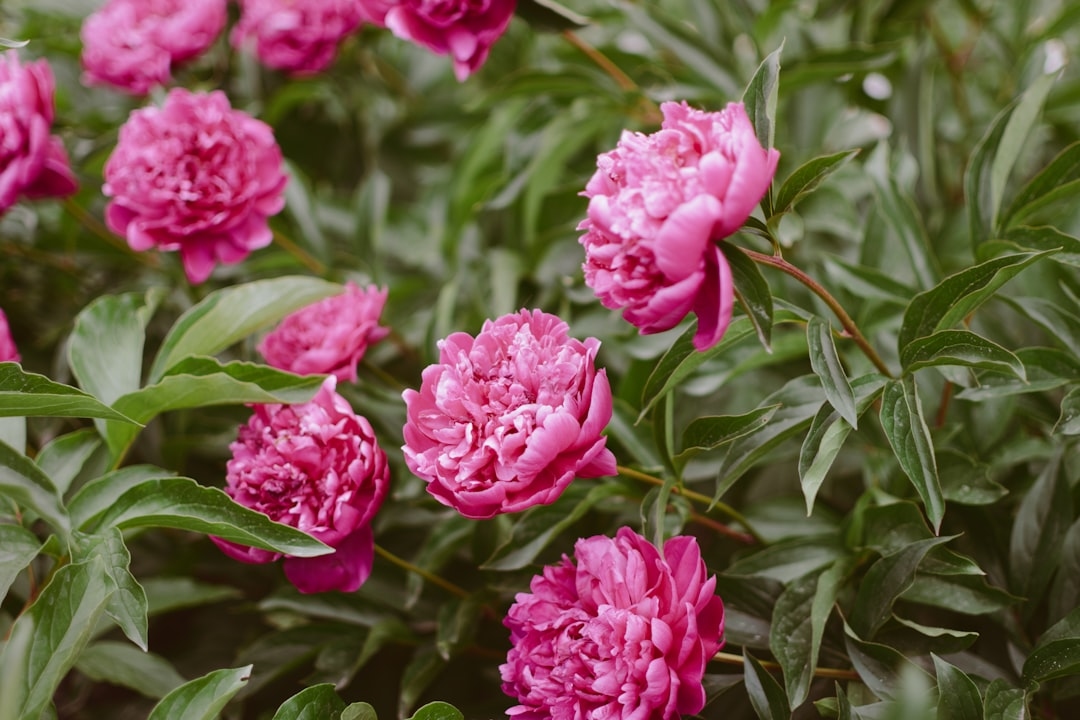
Ants are attracted to the sugary sap secreted by peony buds. They do not cause the buds to open (a persistent myth) and they do not harm the plant. The relationship is purely opportunistic. No intervention is needed. If you’re cutting flowers to bring indoors, give the stems a gentle shake or rinse in cool water to dislodge any hitchhikers.
Powdery Mildew
A white, powdery coating on foliage, usually appearing in late summer. It’s primarily cosmetic at this stage in the season and rarely affects plant health or next year’s bloom. Improve air circulation for long-term prevention. A sulfur spray can control active outbreaks if appearance matters.
Dividing and Transplanting Established Peonies
Peonies rarely need division for plant health — they can grow in the same spot for 50+ years. Divide only if you want to propagate additional plants or if a clump has become unmanageably large. Do not divide before year 5; the disruption sets back flowering by 2–3 years.
The right time to divide is early fall, after the plant has gone dormant but before the ground freezes — typically September in most US regions.
- Dig the entire clump, starting 12 inches from the crown to avoid root damage.
- Rinse the roots with water to see the crown structure clearly.
- Use a sharp, clean knife to cut the crown into divisions, each with 3–5 eyes and several firm roots attached.
- Let divisions air-dry for 1–2 hours before replanting. This helps callous cuts and reduces rot risk.
- Replant at the correct depth (eyes 1–2 inches below surface in Zones 3–5; 1 inch or less in Zones 6–8).
Divisions with fewer than 3 eyes are not worthless — they’ll catch up — but divisions with 5+ eyes bloom faster. Give divided plants the same establishment care as new plantings: consistent watering, light mulch over winter, and patience.
Growing Peonies as Cut Flowers
Peonies are among the most valuable cut flowers in the US market. At retail, a single stem sells for $4–$12 depending on variety and season. A home gardener with 10 established plants can realistically harvest 200–400 stems in May alone.
When to Cut
Cut peonies at the “marshmallow stage” — when the bud is soft enough to gently squeeze and compress slightly, but petals have not yet begun to unfurl. At this stage, stems have 7–14 days of vase life. Fully open blooms, while beautiful, have only 3–5 days of life once cut.
How to Cut
Use sharp, clean pruners or florist shears. Cut stems at a 45-degree angle, leaving at least two sets of leaves on the remaining stem — this protects the plant’s photosynthetic capacity. Cut early in the morning when stems are turgid. Immediately place cut stems in cool water.
Cold Storage
One of peonies’ most useful traits: buds cut at the marshmallow stage can be wrapped in newspaper, placed in plastic bags, and refrigerated (at 32–35°F) for up to 6 weeks. This allows gardeners to stagger blooms for events, or to supply small-scale cut flower operations across an extended season. Remove from refrigeration 24 hours before you want them to open, recut the stems, and place in warm water in a bright room.
A reader’s story worth sharing: Maria, a first-time gardener in suburban Columbus, Ohio, planted five bare-root ‘Sarah Bernhardt’ divisions in October 2020. She followed the planting depth guidelines carefully — eyes exactly 1.5 inches below the surface. Year one: four stems, no blooms. She nearly gave up. Year two: 14 blooms across the five plants. Year three: 78 blooms. She now sells mixed bouquets at her local farmers’ market every May for $18 each, and she’s covered her initial planting investment 40 times over. She credits one thing: not planting too deep.
Peonies in Different US Climate Zones
Zones 3–4 (Northern Minnesota, Upper Midwest, Northern New England)
Peonies are exceptionally cold-hardy. Herbaceous types thrive in these zones — the long, cold winters provide the deep chill hours they need. Best varieties: ‘Buckeye Belle,’ ‘Coral Charm,’ ‘Kansas.’ Apply a 3–4 inch mulch layer after the ground freezes (not before, to avoid encouraging rodent nesting under the mulch). Tree peonies are marginal in Zone 4 and not reliable in Zone 3.
Zones 5–6 (Much of the Midwest, Mid-Atlantic, Pacific Northwest)
The sweet spot for peony growing in the US. Nearly all herbaceous varieties perform excellently. The widest selection of tree and Itoh types is also available and reliable. No special accommodations needed beyond the standard planting guidelines.
Zones 7–8 (Southeast, Southern California, Pacific Coast)
Herbaceous peonies can succeed but need careful variety selection. Look for early-blooming varieties that finish before summer heat sets in. ‘Coral Charm’ and ‘Buckeye Belle’ are early and perform well in these zones. Plant in locations with afternoon shade. Chilling can be a limitation — if your winters routinely stay above 45°F for most of December through February, herbaceous peonies will likely disappoint. Itoh peonies handle Zone 8 better than herbaceous types. Tree peonies can be excellent in Zone 8 in California with some summer irrigation.
Zones 9+ (Deep South, Hawaii, South Texas)
Herbaceous peonies are not viable. Some gardeners experiment with refrigerating bare-root divisions for 6–8 weeks before fall planting to simulate chill — results are inconsistent. Tree peonies in Zone 9 can work in the Western US with afternoon shade and deep irrigation but are difficult to maintain. For reliable flowering plants in these climates, alternative genera (hellebores, gardenias, camellias) offer less frustration.
Buying Peonies: What to Look For and Where to Shop
Bare-root divisions ordered from reputable specialty nurseries almost always outperform budget-bin roots from big-box stores. The size and eye count of mail-order divisions is typically larger, and the cultivar identification is more reliable. Good specialty sources include Calvert’s Peony Nursery (Michigan), Adelman Peony Gardens (Oregon), and the American Peony Society’s member nursery directory.
What to look for when buying bare-root divisions:
- Minimum 3–5 firm, plump roots (not mushy or dry-shriveled)
- 3–5 eyes per division for herbaceous; fewer eyes on tree peony divisions are normal
- No visible mold, soft spots, or foul odor
- Clear cultivar labeling — unnamed “assorted” peonies are fine for casual gardens but frustrating if you’re building a specific color palette or season-extension plan
Expect to pay $8–$20 per herbaceous bare-root division for named cultivars, $25–$60 for tree peonies, and $30–$75 for Itoh hybrids. These are one-time investments for plants that will live 30–50+ years. The per-year cost of a $15 peony planted in 2026 and blooming through 2075 is $0.30 per year.
Frequently Asked Questions About Growing Peonies
How long does it take for peonies to bloom after planting?
Most bare-root peonies produce their first blooms in year 2 or 3. Year 1 is almost always vegetative with no flowers. By year 3–4, a properly planted herbaceous peony should be producing 10–30 blooms per season. If you’re in year 4 with no blooms, check planting depth — eyes planted more than 2 inches deep are the most common cause of non-blooming peonies.
Why aren’t my peonies blooming?
The four most common causes, in order of frequency: (1) planted too deep — eyes more than 2 inches below the soil surface, (2) insufficient sunlight — less than 6 hours per day, (3) plant is too young — years 1–2 rarely produce flowers, (4) insufficient winter chill — problematic in Zone 8+ climates. Check these factors before assuming disease or soil deficiency.
Do peonies need to be divided?
No. Peonies can thrive in the same location for 50+ years without division. Divide only to propagate new plants or to reduce a clump that has grown too large. Division sets back flowering by 2–3 years, so avoid it unless there’s a clear reason. Never divide a plant younger than 5 years old.
Are peonies deer-resistant?
Generally, yes. Deer avoid peonies in most regions — the foliage and flowers are not preferred browse. However, deer behavior varies by region and population pressure. In areas with very high deer density and limited food, no plant is fully deer-proof. Peonies are considered low-risk compared to hostas, daylilies, or tulips.
Can peonies grow in containers?
Technically yes, but with significant limitations. Herbaceous peonies have deep, fleshy root systems that need substantial soil volume — a minimum 15–20 gallon container per plant. They also require winter cold, which container roots don’t experience as reliably as in-ground plants. Containers need to be moved to protected but cold locations (an unheated garage, for example) over winter. Itoh peonies adapt to containers slightly better than herbaceous types due to their more compact root structure. For most gardeners, in-ground planting is far more practical and productive.
Building a Peony Garden: Season Extension and Companion Planting
Extending Bloom Season
A single peony variety blooms for approximately 7–14 days depending on weather. A thoughtful selection of early, mid, and late-season varieties can extend the overall peony display in your garden to 6–8 weeks. A practical sequence for Zone 5–6 gardeners:
- Early (late April/early May): ‘Buckeye Belle,’ ‘Early Scout,’ ‘Coral Charm’
- Mid (mid-May): ‘Karl Rosenfield,’ ‘Festiva Maxima,’ ‘Kansas’
- Late (late May/early June): ‘Sarah Bernhardt,’ ‘Edulis Superba,’ ‘Mother’s Choice’
Planting an Itoh peony like ‘Bartzella’ or ‘Cora Louise’ adds another 2–4 weeks because these hybrids bloom slightly later than herbaceous types and the individual flowers last longer before fading.
Companion Plants That Work
Peonies pair well with plants that either mask their post-bloom foliage or fill timing gaps:
- Catmint (Nepeta) — Blooms heavily in May-June, then again in fall after cutback. The blue-violet flowers contrast beautifully with pink and white peonies.
- Salvia nemorosa ‘Caradonna’ — Upright purple spikes that fill space as peonies fade. Both thrive in full sun with good drainage.
- Alliums — Ornamental alliums bloom at the same time as mid-season peonies. The spherical purple or white globes look striking behind peony clumps.
- Hostas — Placed in front of peonies, hostas’ expanding foliage masks the peony stems as they die back in fall. Best in Zone 5–7 where hostas are vigorous.
Avoid planting aggressive spreaders like mint or creeping Jenny near peonies — they compete for root space and are difficult to remove without disturbing peony crowns.
A Forward-Looking Note for First-Year Peony Growers
Plant your peonies this fall. Mark the spot carefully so you don’t accidentally dig into the crown next spring. When growth emerges in April — just two or three thin, waxy-red shoots pushing through cold soil — resist the urge to do anything other than remove the winter mulch. Year one is about roots, not flowers.
By year three, you’ll understand why gardeners a century ago gave these plants entire courtyards. A mature peony in full bloom is genuinely one of the most spectacular things a temperate garden can produce. The blooms arrive in May, last two weeks, and then the plant spends the rest of the year quietly building energy for the next show. It asks almost nothing in return.
The American Peony Society (americanpeonysociety.org) maintains a searchable database of registered cultivars, a Gold Medal award archive dating to 1923, and a directory of specialty nurseries. Joining their community — even just subscribing to their bulletin — will accelerate your learning curve significantly. Regional peony trial gardens (the Minnesota Landscape Arboretum and Longwood Gardens in Pennsylvania both maintain extensive collections) are worth visiting in May to see named varieties in person before you buy.
Plant one variety this fall. Just one. See what it does in three years. Then you’ll know exactly how many more you’re going to plant.