Contents:
- Why Zinnias Belong in Every Small-Space Garden
- Understanding Zinnia Varieties: Picking the Right Plant for Your Space
- Best Zinnia Varieties for Containers and Small Spaces
- Flower Form: Singles, Semi-Doubles, and Doubles
- The Zinnia Growing Guide: Planting from Seed
- When to Plant Zinnias
- How to Sow Zinnia Seeds in Containers
- A Reader Story: The Balcony That Bloomed
- Sunlight, Watering, and Feeding: Getting the Basics Right
- Sunlight Requirements
- Watering: More Nuance Than You’d Expect
- Fertilizing for Maximum Bloom
- Deadheading and Pruning: How to Keep Zinnias Blooming All Season
- How to Deadhead Zinnias
- Pinching Seedlings for a Bushier Plant
- Dealing with Pests and Diseases
- Powdery Mildew
- Spider Mites
- Other Common Issues
- Growing Zinnias Indoors: Is It Possible?
- Extending the Season: Fall Zinnias and Seed Saving
- Succession Sowing for Continuous Bloom
- Saving Zinnia Seeds
- A Complete Budget Breakdown: Growing Zinnias on Almost Nothing
- Zinnias as Cut Flowers: Making the Most of Your Harvest
- The Right Cutting Technique
- Mixing Zinnias with Other Container Plants
- Frequently Asked Questions About Growing Zinnias
- How long do zinnias take to bloom from seed?
- Can zinnias grow in pots or containers?
- Why are my zinnia leaves turning white?
- Do zinnias come back every year?
- What is the best fertilizer for zinnias in containers?
- Your Next Step: Start Small, Start Now
You bought a packet of zinnia seeds last spring. Maybe two. They sat on the windowsill for weeks while you second-guessed yourself — Do I have enough sun? Enough space? Will I just kill them? Sound familiar? Here’s what nobody tells you upfront: zinnias are arguably the most forgiving flowering plant you can grow, and they reward even the most distracted gardener with an explosion of color that lasts from midsummer straight through the first frost.
This zinnia growing guide exists because zinnias deserve better than a three-sentence blurb on the back of a seed packet. Whether you’re working with a 10-inch balcony planter or a full raised bed, there’s a zinnia variety — and a strategy — that will work for you.
Why Zinnias Belong in Every Small-Space Garden
Zinnias (Zinnia elegans and related species) are native to Mexico and the American Southwest, which tells you everything you need to know about their temperament: they love heat, they shrug off dry spells, and they perform at their best when most other flowers are wilting. They’re annuals, which means they complete their entire life cycle — seed to bloom to seed — in a single growing season. No overwintering fuss. No digging up bulbs in November.
For apartment dwellers and small-space gardeners, this annual habit is a feature, not a limitation. You get a clean slate every year to try new colors, new varieties, new arrangements. And because zinnias grow so fast — most varieties bloom within 60 to 70 days of sowing — the payoff comes quickly.
There’s also a practical economics argument. A single packet of zinnia seeds typically costs between $2 and $5 and contains anywhere from 50 to 200 seeds. Compare that to purchasing six-packs of annual transplants at $8 to $15 each, and you start to see why experienced container gardeners lean heavily on direct-sown zinnias to fill out their seasonal displays.
Understanding Zinnia Varieties: Picking the Right Plant for Your Space
Walk into any garden center in May and you’ll see zinnias everywhere — but not all zinnias are created equal, and the wrong variety in a small container is a setup for disappointment. Tall cutting types like ‘Benary’s Giant’ can reach 4 feet and need deep, substantial planters. Compact bedding types like ‘Thumbelina’ or ‘Zahara’ top out at 8 to 12 inches and thrive beautifully in a 10-inch pot on a sunny windowsill.
Best Zinnia Varieties for Containers and Small Spaces
- Zahara Series — Bred specifically for heat, humidity, and powdery mildew resistance. Stays 12 to 18 inches tall. Excellent for window boxes and balcony railings.
- Profusion Series — An AAS (All-America Selections) winner. Semi-double flowers, highly disease-resistant, grows 12 to 15 inches. Perfect for mixed containers.
- Thumbelina — The classic dwarf zinnia. Reaches just 6 to 8 inches, making it ideal for small pots or as an edging plant in a narrow planter box.
- Benary’s Giant — Best for raised beds or large (5-gallon+) containers where you want long, cuttable stems for vases. Grows 2.5 to 4 feet tall.
- Queeny Lime Orange — A boutique variety beloved by florists for its unusual dusty-coral coloring. Grows 24 to 30 inches. Worth growing in a deep 3-gallon pot for cut flowers.
Flower Form: Singles, Semi-Doubles, and Doubles
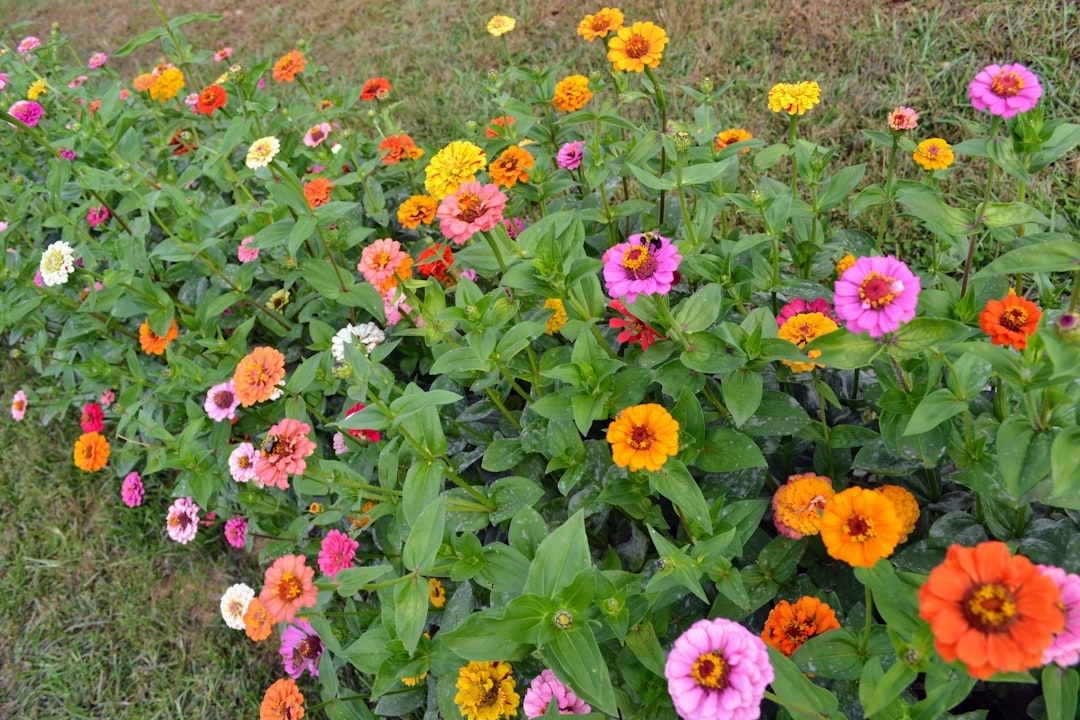
Zinnia flower forms range from single-petaled daisy types (beloved by pollinators because the center is accessible) to densely packed double blooms that look like tiny dahlias. If attracting butterflies and bees to your balcony is a priority, lean toward single or semi-double forms. If you want the showiest display and the most dramatic cut flowers, doubles are your answer. Many series, like Benary’s Giant, offer double forms in 15 or more distinct colors.
The Zinnia Growing Guide: Planting from Seed
Zinnias have one strong preference when it comes to sowing: direct sowing. Unlike many annuals that benefit from indoor starting, zinnias actively dislike having their roots disturbed. Transplant shock is real with these plants — they sulk, stall, and sometimes fail to thrive after being moved. The cleanest approach is to sow seeds directly where they’ll grow.
When to Plant Zinnias
Zinnias are true warm-season plants. Soil temperature needs to reach at least 60°F — ideally 70°F — before germination becomes reliable. In most of the US, that means sowing outdoors no earlier than two weeks after your last frost date. In USDA Hardiness Zones 5 and 6, that’s typically mid-May. In Zones 7 through 9, you may be sowing as early as late March or April. In Zone 10 (South Florida, Southern California), zinnias can be grown almost year-round, though they prefer a break from extreme summer humidity.
For container gardeners without outdoor space until later in spring, a two-week indoor head start is the maximum advisable window. Sow in biodegradable peat or coir pots that can go directly into the container soil without disturbing roots.
How to Sow Zinnia Seeds in Containers
- Choose the right container. Compact varieties need a minimum of 6 to 8 inches of depth and at least 10 inches of diameter per plant. For a fuller display, use a 12- to 16-inch planter and sow 3 to 4 seeds, thinning to the strongest 2 plants.
- Use quality potting mix. Garden soil compacts in containers and suffocates roots. Use a well-draining potting mix, ideally one formulated for containers with perlite already blended in. Avoid mixes with heavy water-retaining gels if your balcony gets intense afternoon sun.
- Sow at the right depth. Press seeds approximately ¼ inch into the soil surface. Deeper than ½ inch and germination rates drop significantly.
- Water gently. Use a watering can with a rose head or a spray bottle to dampen the surface without washing seeds to one side.
- Expect germination in 5 to 10 days at soil temperatures between 70°F and 80°F. Cooler conditions stretch this to 2 weeks.
- Thin ruthlessly. Once seedlings reach 2 inches, thin to one plant per 6 inches of container space. Crowding is the single fastest way to invite powdery mildew and poor airflow.
A Reader Story: The Balcony That Bloomed
Sara K., a reader from a 4th-floor apartment in Chicago, shared her first zinnia experience in a container gardening forum last summer. She had a single west-facing balcony, two 14-inch planters, and serious skepticism. “I’d killed every annual I’d tried before,” she wrote. “Petunias, impatiens — all dead within three weeks.” She sowed Profusion Coral seeds directly into her planters in late May and did almost nothing else except water every other day. By July 4th, both planters were covered in blooms. By August, she was cutting stems to bring indoors. “I didn’t know plants could be this easy,” she wrote. “I felt cheated that nobody told me about zinnias sooner.”
Sara’s experience isn’t unusual. Zinnias consistently out-perform other annuals in heat-stressed, high-sun container situations — exactly the conditions many balconies create.
Sunlight, Watering, and Feeding: Getting the Basics Right
Zinnias are not demanding plants, but they do have a few firm requirements. Get these right and the plants largely take care of themselves.
Sunlight Requirements
Full sun is non-negotiable — a minimum of 6 hours of direct sun per day, though 8 hours produces the best flowering. South- or west-facing balconies and windowsills are ideal. East-facing locations with strong morning sun can work for compact varieties, but you’ll get fewer blooms and leggier plants. North-facing situations? Save your seeds for something else.
Here’s a useful rule of thumb: if a spot gets enough sun to feel warm on your skin at noon in June, it’s probably sufficient for zinnias.
Watering: More Nuance Than You’d Expect
Zinnias are drought-tolerant once established — a trait they inherited from their dry Mexican highland origins — but seedlings and young plants need consistent moisture. The biggest mistake container gardeners make is overhead watering. Getting water on zinnia foliage, especially in humid climates or in the evening, is the primary cause of powdery mildew, the white fungal coating that disfigures leaves and eventually weakens plants.
Always water at the base of the plant. For containers, this means directing the watering can spout toward the soil, not the leaves. Water deeply (until it drains from the container’s bottom holes) but infrequently — roughly every 2 to 3 days in summer heat, adjusting based on rainfall and container size. Smaller containers dry out faster. A 6-inch pot in 90°F weather may need daily watering.
Fertilizing for Maximum Bloom
Container-grown zinnias need more fertilization than those grown in garden beds because nutrients leach out with every watering. Start with a slow-release granular fertilizer blended into the potting mix at planting time — one tablespoon per gallon of soil is a standard rate for most brands. Then supplement every two to three weeks with a liquid balanced fertilizer (10-10-10 or similar) once plants begin setting buds.
Avoid over-fertilizing with high-nitrogen formulas. Too much nitrogen produces lush, dark green foliage and very few flowers. If your zinnias look gorgeous but aren’t blooming, nitrogen excess is the likely culprit.
“The mistake I see most often with container zinnias is either no feeding at all or feeding every week with a high-nitrogen blend,” says Dr. Renata Calloway, Extension Horticulturist at North Carolina State University. “Zinnias want a moderate, balanced diet. Think of it like a steady meal, not a feast.”
Deadheading and Pruning: How to Keep Zinnias Blooming All Season
Left to their own devices, zinnias will bloom, set seed, and then slow their flower production dramatically. Deadheading — removing spent blooms before they fully form seeds — tricks the plant into continuing to produce flowers in an attempt to reproduce. It’s the single most impactful maintenance task for a long zinnia season.
How to Deadhead Zinnias
Find a spent bloom (petals fading, center browning). Trace the stem back to the nearest set of healthy leaves or a lateral branch — typically 3 to 5 inches below the flower head. Cut there with clean scissors or pruning shears. This encourages the plant to branch at that node and produce two new flowering stems where there was one. Deadhead every 5 to 7 days throughout the season.
For cut-flower growers: cutting stems for vases accomplishes the same goal as deadheading. Cut zinnia stems in the early morning when the plant is most hydrated, choose flowers where the petals are just fully open, and place immediately in water. Zinnias last 7 to 12 days as cut flowers — impressive for a plant that cost pennies to grow.
Pinching Seedlings for a Bushier Plant
When seedlings reach 6 inches tall and have developed at least two pairs of true leaves, pinch out the growing tip (the very top of the main stem). This feels counterproductive — you’re removing the part that was about to become your first flower — but it redirects the plant’s energy into developing 4 to 6 lateral branches rather than a single central stem. The result is a fuller, more compact plant that produces dramatically more blooms across the season. It’s worth the 3-week wait for that first flower.
Dealing with Pests and Diseases
Zinnias are relatively tough, but two problems appear with enough regularity to warrant a dedicated section: powdery mildew and spider mites. Both are manageable if caught early.
Powdery Mildew
Powdery mildew presents as a white or gray powdery coating on leaves, usually appearing first on older, lower foliage in late summer. It’s caused by fungal spores that thrive in conditions of high humidity, poor air circulation, and temperature swings between warm days and cool nights. It rarely kills zinnias outright, but it weakens them and shortens the season.
Prevention strategies:
- Choose mildew-resistant varieties (Zahara and Profusion series are specifically bred for resistance).
- Space plants generously — at least 6 inches apart in containers.
- Always water at the base, never overhead.
- Remove and dispose of infected lower leaves immediately; don’t compost them.
Treatment: A spray of 1 tablespoon baking soda plus 1 tablespoon horticultural oil diluted in 1 gallon of water applied weekly can slow the spread. Commercial neem oil-based fungicides are also effective when applied at first sign of infection.
Spider Mites
Spider mites — tiny arachnids barely visible to the naked eye — thrive in hot, dry conditions. The first signs are a speckled, dusty appearance on leaves and fine webbing between stems and leaves. In container gardens on hot balconies, spider mite populations can explode in days during a heat wave.
The fastest intervention is a strong blast of water to the undersides of leaves, which physically knocks mites off the plant. Do this in the morning so foliage dries quickly. For established infestations, insecticidal soap spray applied every 3 to 5 days for two weeks is effective. Avoid applying in direct midday sun, which can cause leaf burn.
Other Common Issues
Alternaria leaf blight (brown spots with yellow halos) occasionally appears in wet summers. Japanese beetles may skeletonize leaves in eastern states. For both, the approach is similar: remove affected foliage promptly, improve air circulation, and consider a copper-based fungicide for blight or hand-picking beetles in the early morning.
Growing Zinnias Indoors: Is It Possible?
This question comes up frequently from apartment dwellers without any outdoor space. The short answer: it’s possible, but challenging. Zinnias need more light than the average interior window provides. A south-facing window in a high-rise apartment that receives 6 or more hours of direct sun can support compact varieties like Thumbelina, but results are rarely as vigorous or floriferous as outdoor growing.
The more practical solution for indoor growing is supplemental lighting. A full-spectrum grow light positioned 4 to 6 inches above compact zinnia seedlings, running 14 to 16 hours per day, can produce decent results. LED grow light panels suitable for this purpose are widely available for $20 to $60, making indoor zinnia growing accessible without a large investment.
Temperature matters too. Zinnias prefer interior temperatures of 65°F to 80°F. Keep them away from air conditioning vents, which dry the air and chill the roots. And be more vigilant about mildew indoors, where air circulation is usually reduced.
Extending the Season: Fall Zinnias and Seed Saving
In most of the US, the zinnia season ends with the first hard frost — typically October in Zones 5 and 6, November through December in Zones 7 through 9. But there are ways to squeeze additional weeks out of your plants and to set yourself up for an even better season next year.
Succession Sowing for Continuous Bloom
Sowing a new set of zinnia seeds every 3 to 4 weeks from late spring through early summer staggers your bloom times and ensures fresh, vigorous plants are coming into flower just as your earliest plants begin to decline. For a balcony gardener with limited containers, this might mean starting a fresh pot of seeds in early July to replace the plants that went in during May. The late-sown plants will bloom in September and October, often producing some of the season’s most vibrant colors as the cooler temperatures intensify pigmentation.
Saving Zinnia Seeds
Zinnias are excellent candidates for seed saving — a practice that turns a $3 seed packet into a multi-year supply at zero additional cost. At the end of the season, allow a selection of your best blooms to fully dry on the plant rather than deadheading them. When the flower head feels papery and dry (usually after the first light frost has killed the plant), cut it off and bring it indoors. Gently pull the dried flower apart over a sheet of paper — the seeds are the small, flat, arrow-shaped structures attached to the base of each petal. Spread them to dry for another week, then store in a paper envelope in a cool, dry location. Viability remains good for 2 to 3 years.
Note that hybrid varieties like the Zahara and Profusion series will not produce offspring identical to the parent. For true-to-type seed saving, stick with open-pollinated or heirloom varieties like ‘Envy’ (chartreuse), ‘Candy Stripe’, or ‘Old Mexico’.
A Complete Budget Breakdown: Growing Zinnias on Almost Nothing
One of zinnias’ most underappreciated qualities is their accessibility. Here’s a realistic cost breakdown for a first-year balcony zinnia setup:
- Seeds (1–2 packets, compact variety): $2–$5
- Potting mix (2 cubic feet bag): $10–$18
- One 14-inch planter (if you don’t already own one): $8–$25 (plastic) or $20–$60 (terra cotta or ceramic)
- Slow-release fertilizer (small container): $8–$12
- Liquid fertilizer for supplemental feeding: $6–$10
Total first-year investment: roughly $34 to $70, depending on container choice. In subsequent years, if you save seeds and reuse containers, your cost drops to essentially the price of fresh potting mix — or less if you amend last year’s mix with compost.
For comparison: a single bouquet of mixed zinnias from a farmers market or florist typically runs $12 to $20. A productive balcony zinnia planter can yield dozens of cut stems throughout the season.
Zinnias as Cut Flowers: Making the Most of Your Harvest
Home-grown zinnias are genuinely excellent as cut flowers, rivaling what you’d find at a florist — and in terms of freshness, surpassing it. Florists and floral designers have embraced specialty zinnia varieties in recent years, particularly the muted, dusty tones of varieties like ‘Queeny Lime’, ‘Salmon Rose’, and ‘Uproar Rose’ that lend themselves to romantic, garden-style arrangements.
The Right Cutting Technique
Cut zinnia stems in early morning, selecting flowers that have just fully opened. Use clean, sharp scissors and make the cut at a 45-degree angle to maximize water uptake. Strip any leaves that will sit below the waterline in your vase — submerged foliage rots and shortens vase life dramatically. Place cut stems in a vase with fresh water and a pinch of cut flower food (or a homemade substitute: one teaspoon of sugar plus one teaspoon of white vinegar per quart of water).
Change the vase water every two days and re-cut the stems slightly each time. Under these conditions, expect a vase life of 7 to 12 days — excellent for an annual flower grown from a $3 packet of seeds.
Mixing Zinnias with Other Container Plants
In mixed containers, zinnias pair exceptionally well with trailing verbena (which spills over the container edge while zinnias stand tall), sweet potato vine (for dramatic foliage contrast), and basil (which benefits from the same heat and sun conditions and keeps some pests at bay). Avoid pairing zinnias with impatiens or fuchsia, which prefer shade and cool, moist conditions — the opposite of what zinnias need.
Frequently Asked Questions About Growing Zinnias
How long do zinnias take to bloom from seed?
Most zinnia varieties bloom 60 to 70 days after sowing from seed. Compact varieties like the Profusion and Zahara series can begin blooming in as few as 55 days under ideal conditions (full sun, warm soil, consistent moisture). Cutting-type varieties like Benary’s Giant typically take 75 to 80 days to their first bloom.
Can zinnias grow in pots or containers?
Yes — zinnias grow very well in containers, provided the pot is large enough (minimum 6 to 8 inches deep), the potting mix drains freely, and the location receives at least 6 hours of direct sun daily. Compact varieties like Thumbelina, Zahara, and Profusion are specifically well-suited to container growing. Tall cutting-type varieties need large (5-gallon or greater) containers to thrive.
Why are my zinnia leaves turning white?
White or gray powdery coating on zinnia leaves is almost always powdery mildew, a common fungal disease. It’s triggered by poor air circulation, overhead watering, and humid conditions. Remove affected leaves, improve spacing between plants, switch to base watering only, and treat with a diluted neem oil or baking soda spray. Replanting with mildew-resistant varieties like Zahara or Profusion in future seasons is the most effective long-term solution.
Do zinnias come back every year?
Zinnias are annuals, meaning they complete their life cycle in one growing season and do not return the following year. However, they self-seed freely — if you allow some flower heads to dry on the plant at the end of the season, seeds may fall into the soil and germinate the following spring. This is less predictable in containers than in garden beds, but it does happen. Alternatively, collect and save seeds deliberately for sowing the next year.
What is the best fertilizer for zinnias in containers?
A balanced fertilizer with equal nitrogen, phosphorus, and potassium (such as a 10-10-10 or 5-5-5 formulation) works well for container zinnias. Start with a slow-release granular fertilizer mixed into the potting soil at planting, then supplement every two to three weeks with a liquid balanced fertilizer once plants begin budding. Avoid high-nitrogen fertilizers, which promote foliage growth at the expense of flowers.
Your Next Step: Start Small, Start Now
If you’ve read this far, you have everything you need to grow zinnias successfully — even in the most constrained space. One 14-inch planter, one packet of Zahara or Profusion seeds, a sunny spot, and a little patience. That’s genuinely all it takes.
The most common regret among first-time zinnia growers isn’t failure. It’s starting too few plants. Zinnias are so easy and so rewarding that most people wish, by August, that they’d filled twice as many containers. Take that as your cue: start with two planters instead of one, or sow a second round of seeds three weeks after your first. Your late-summer self — surrounded by vases of blooms that cost you almost nothing — will thank you for it.
Pick your variety, mark your last frost date, and put that seed packet somewhere you’ll actually find it in May. The blooms are closer than you think.