Contents:
- Understanding the Magnolia Family: Ancient Bloomers with Modern Versatility
- Popular Magnolia Species and Cultivars for US Gardens
- Southern Magnolia (Magnolia grandiflora)
- Saucer Magnolia (Magnolia × soulangeana)
- Star Magnolia (Magnolia stellata)
- Sweetbay Magnolia (Magnolia virginiana)
- Jane and Other ‘Little Girl’ Hybrids
- Magnolia Tree vs. Magnolia Shrub: Key Differences Explained
- Magnolia vs. Tulip Tree: Clearing Up the Confusion
- How to Plant a Magnolia Tree: Step-by-Step
- Site Selection
- Soil Preparation
- Planting Depth and Spacing
- Watering at Establishment
- Magnolia Tree Care: Fertilizing, Pruning, and Pest Management
- Fertilizing Magnolias
- Pruning Magnolias
- Common Pests and Diseases
- Magnolia Planting Cost Breakdown
- Growing Magnolias in Containers
- Maximizing Bloom Performance Year After Year
- Magnolia Trees for Specific US Landscapes
- Best Magnolias for Cold Climates (Zones 4–5)
- Best Magnolias for Hot, Humid Climates (Zones 8–9)
- Best Magnolias for Small Yards and Urban Gardens
- Frequently Asked Questions About Magnolia Trees
- How fast do magnolia trees grow?
- When do magnolia trees bloom?
- Do magnolia trees lose their leaves in fall?
- Why isn’t my magnolia blooming?
- Are magnolia trees deer-resistant?
Most gardeners assume magnolias are fragile, high-maintenance showpieces reserved for sprawling Southern estates — and that assumption stops a lot of people from ever planting one. This magnolia tree guide sets the record straight. Magnolias are among the most adaptable flowering trees in North America, with species suited to everything from USDA Zone 4 winters to Zone 9 heat, and sizes ranging from compact 8-foot shrubs to 80-foot giants. Whether you have a postage-stamp backyard or a half-acre lot, there is almost certainly a magnolia that fits.
Understanding the Magnolia Family: Ancient Bloomers with Modern Versatility
Magnolias are old — evolutionarily ancient, in fact. The genus Magnolia predates bees by millions of years, which is why the flowers evolved to be pollinated by beetles. That history shows up in the blooms: large, waxy tepals (the term used when petals and sepals look identical) designed to withstand insect crawling rather than delicate bee landings. Today, over 200 recognized species exist within the family Magnoliaceae, and thousands of named cultivars have been developed through hybridization.
In the US, magnolias span two broad behavioral categories: deciduous and evergreen. Deciduous magnolias — like the beloved Saucer Magnolia (Magnolia × soulangeana) — drop their leaves in fall and bloom on bare branches in early spring. Evergreen types, most famously the Southern Magnolia (Magnolia grandiflora), hold their glossy leaves year-round and bloom in late spring through summer. Knowing which type you’re planting fundamentally changes how you position it in the landscape and what you expect from it each season.
Popular Magnolia Species and Cultivars for US Gardens
Choosing the right species is the single most consequential decision in your magnolia journey. A tree planted in the wrong climate or the wrong space will underperform indefinitely. Here are the varieties that consistently deliver for American gardeners.
Southern Magnolia (Magnolia grandiflora)
The quintessential magnolia of the American South. Southern Magnolia grows 60–80 feet tall at maturity with a spread of 30–40 feet, though dwarf cultivars like ‘Little Gem’ top out around 20 feet — a game changer for suburban lots. Hardy in Zones 7–9, it produces creamy white flowers 8–12 inches in diameter from May through August. The leathery, dark green leaves with rusty-brown undersides are nearly as ornamental as the blooms. Leaf drop is constant and significant; factor in cleanup time if you plant one near a pool or patio.
Saucer Magnolia (Magnolia × soulangeana)
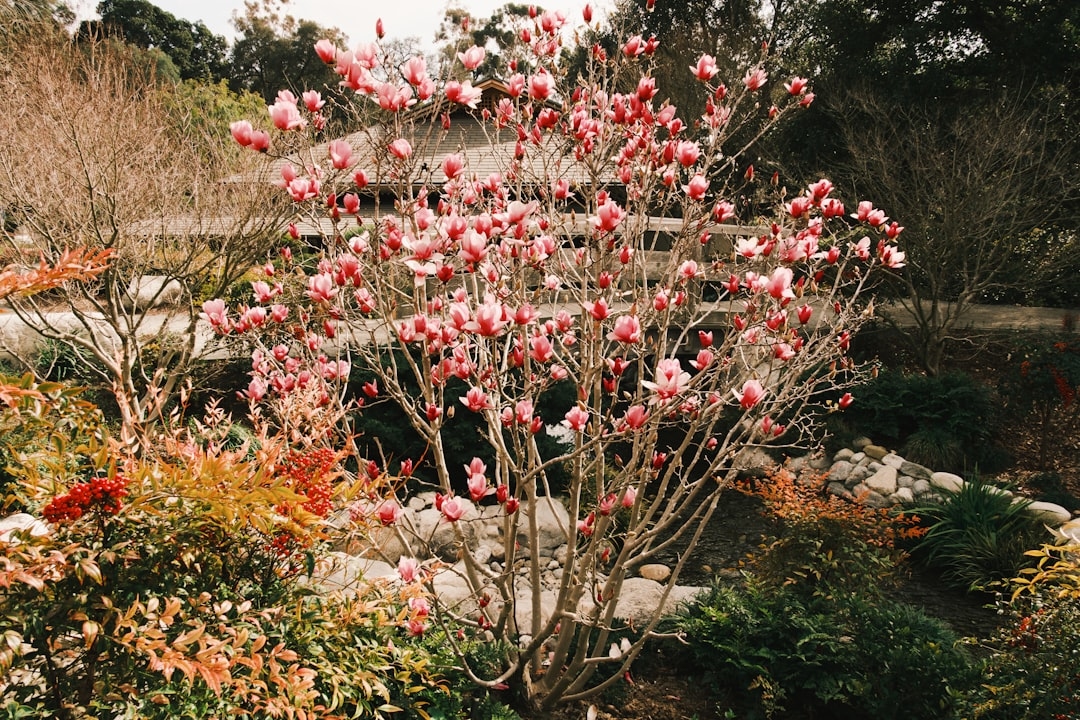
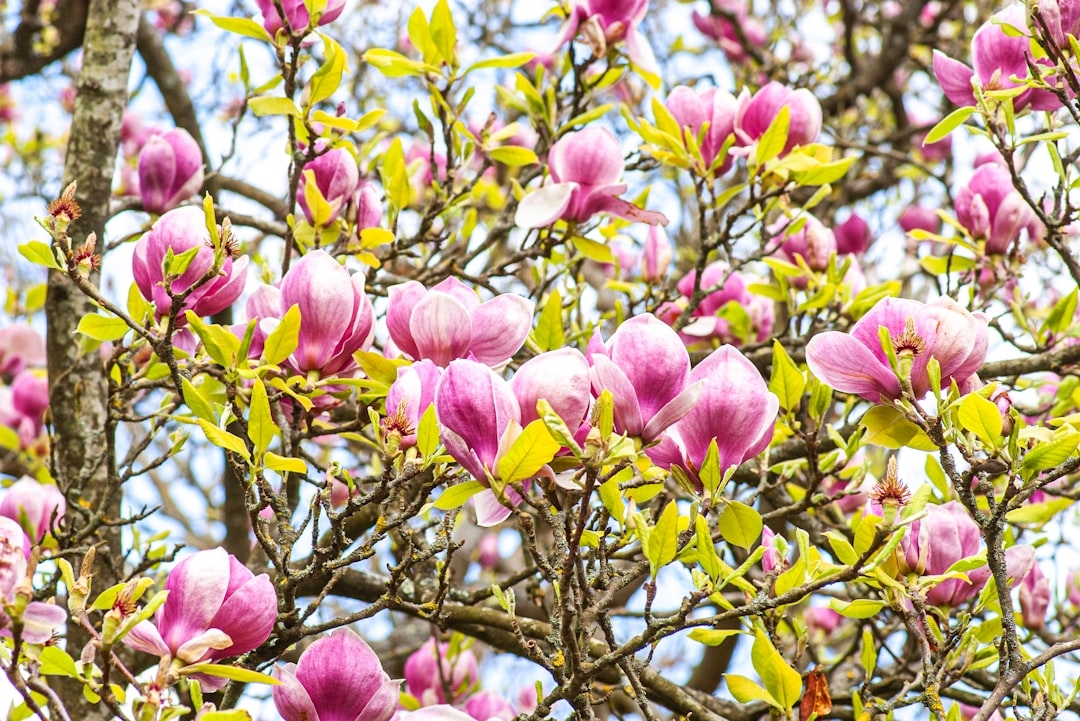
Perhaps the most widely planted magnolia in America. A hybrid of M. denudata and M. liliiflora, Saucer Magnolia grows 20–30 feet tall and wide, with pink-to-purple tulip-shaped blooms appearing before foliage in March and April. Hardy in Zones 4–9, it thrives across most of the continental US. Its main vulnerability: late frost damage. A bloom-obliterating frost event in late March is heartbreaking but not fatal to the tree itself.
Star Magnolia (Magnolia stellata)
The smallest and earliest of the common species. Star Magnolia stays 15–20 feet tall (often smaller in cultivation) and produces a cloud of narrow-petaled white or pale pink flowers in March — sometimes February in warmer zones. It’s one of the most frost-tolerant magnolias available, reliable in Zones 4–8. If you want magnolia impact in a tight space, this is your tree. The cultivar ‘Royal Star’ offers especially clean white blooms with 25–30 petals per flower.
Sweetbay Magnolia (Magnolia virginiana)
An underused native species with real practical advantages. Sweetbay tolerates wet soils — even periodic flooding — making it the go-to choice for rain gardens or low-lying areas where other trees struggle. It grows 10–35 feet depending on climate (semi-evergreen in the South, fully deciduous in the North) and is hardy in Zones 5–10. Its 2–3 inch creamy flowers carry a distinctive lemon-vanilla fragrance that’s subtler and sweeter than grandiflora.
Jane and Other ‘Little Girl’ Hybrids
Developed at the US National Arboretum in the 1950s and 60s, the eight “Little Girl” hybrids — including Jane, Betty, Susan, and Ann — were specifically bred to bloom later than Saucer Magnolia to avoid frost damage. ‘Jane’ is the standout: 10–15 feet tall, wine-red buds opening to deep pink-purple flowers in April, hardy in Zones 4–8. These shrub-form magnolias are ideal for foundation plantings and small residential landscapes.
Magnolia Tree vs. Magnolia Shrub: Key Differences Explained
The line between tree and shrub in the magnolia world is blurry, and it causes real confusion at the nursery. Technically, the distinction comes down to structure: trees have a single dominant trunk; shrubs have multiple stems from the base. But many magnolias — including the Saucer Magnolia — naturally grow as multi-stemmed large shrubs unless trained otherwise. Most nurseries sell them either way.
For practical purposes, size matters more than trunk count. Anything consistently over 20 feet at maturity is effectively a tree in the landscape. Cultivars like ‘Jane’, ‘Ann’, or Magnolia liliiflora ‘Nigra’ stay genuinely shrub-scale and can be incorporated into mixed borders or used as privacy screens. If you’re buying for a specific role — shade tree, specimen plant, foundation shrub — confirm the mature size of the specific cultivar, not just the species.
⚑ What the Pros Know
Experienced landscapers almost never plant magnolias in fall in cold climates. Spring planting — ideally when the soil has warmed above 50°F but before active growth begins — gives roots a full growing season to establish before facing their first winter. In Zones 4–5, fall-planted magnolias have a significantly higher failure rate in the first year than spring-planted ones. If you receive a magnolia as a gift in fall, pot it and overwinter in a protected garage or unheated shed rather than risking ground planting.
Magnolia vs. Tulip Tree: Clearing Up the Confusion
At garden centers and in neighborhood conversations, magnolias and Tulip Trees (Liriodendron tulipifera) get mixed up constantly. Both produce large, showy flowers in spring. Both are native to eastern North America. Both are popular landscape trees. But they are meaningfully different plants.
Tulip Trees are actually in the same family as magnolias (Magnoliaceae), but the flowers tell them apart immediately. Tulip Tree blooms are orange-and-green, tulip-shaped, and appear with the leaves — often hidden high in the canopy. Magnolia blooms are white, pink, or purple, typically much larger, and on deciduous species, appear before leaves emerge. Structurally, Tulip Trees grow much taller — commonly 70–100 feet — and have a single straight trunk with distinctive four-lobed leaves. If someone tells you their “magnolia” is 90 feet tall with greenish-orange flowers, they have a Tulip Tree.
| Feature | Magnolia | Tulip Tree |
|---|---|---|
| Flower color | White, pink, purple | Orange-green |
| Bloom timing | Before or with leaves | With leaves, often hidden |
| Mature height | 8–80 ft (species-dependent) | 70–100 ft |
| Leaf shape | Oval to oblong | Four-lobed, tulip-shaped |
| USDA zones | Varies: 4–9 by species | 4–9 |
How to Plant a Magnolia Tree: Step-by-Step
Magnolias are not difficult to plant, but they do have specific preferences that, ignored, lead to years of mediocre performance. Get the fundamentals right at planting time and you’ll be rewarded with decades of blooms.
Site Selection
Full sun is ideal — at least 6 hours of direct sunlight daily. Most magnolias tolerate partial shade, but flowering diminishes noticeably below 4 hours of sun. Avoid low spots where cold air pools on spring mornings; this microclimate frost vulnerability is the number-one killer of early blooms on deciduous magnolias. North and east-facing exposures are preferable to south and west in Zones 4–6, as the slower morning warm-up reduces premature bud break.
Soil Preparation
Magnolias prefer slightly acidic soil — a pH of 5.5–6.5 is ideal. They perform poorly in compacted clay or alkaline soils above pH 7.0. Before planting, test your soil (county extension services often offer this for $15–$20). If you’re amending clay, work in 3–4 inches of compost across the entire planting area, not just the hole. Adding sulfur to lower pH typically takes 3–6 months to register, so plan ahead.
Planting Depth and Spacing
Dig the hole 2–3 times wider than the root ball but no deeper than its height. Magnolias planted too deep develop oxygen-starved roots and often stagnate for years before declining. The root flare — where the trunk widens at its base — must sit at or slightly above grade. For large species, space trees at least equal to their expected mature spread; crowding triggers fungal problems and reduces flowering.
Watering at Establishment
Newly planted magnolias need consistent moisture for the first two growing seasons. In the absence of rain, plan to water deeply once or twice per week — delivering roughly 1 inch of water per session to the root zone. A 3–4 inch layer of organic mulch (pine bark or shredded hardwood) spread 3 feet out from the trunk, kept away from the bark itself, dramatically reduces moisture loss and moderates soil temperature.
Magnolia Tree Care: Fertilizing, Pruning, and Pest Management
Fertilizing Magnolias
Established magnolias in reasonable soil often need little fertilization. When supplementing, use a slow-release balanced fertilizer with a 10-10-10 or 12-4-8 NPK ratio, applied once in early spring as buds begin to swell. Over-fertilizing — particularly with high-nitrogen products — drives vegetative growth at the expense of flowers. Avoid fertilizing after July in Zones 4–6; late-season nitrogen pushes tender new growth that won’t harden before frost.
For trees showing yellowing leaves (chlorosis) in alkaline soils, chelated iron applied as a soil drench is more effective than granular iron sulfate and typically shows results within 4–6 weeks.
Pruning Magnolias
Magnolias resent heavy pruning. Their wounds seal slowly, and large cuts are entry points for fungal pathogens including Nectria canker. Prune only to remove dead, damaged, or crossing branches, and do it immediately after flowering — never in fall or winter when wounds heal most slowly. Never remove more than 25% of the canopy in a single year. For shaping young trees, light directional pruning in the first three years is far less traumatic than corrective pruning later.
Common Pests and Diseases
Magnolias are relatively pest-resistant, but a few problems appear consistently:
- Scale insects (especially magnolia scale, Neolecanium cornuparvum): The largest scale insect in North America, and the most damaging magnolia pest in the Midwest and Northeast. Look for brown, helmet-shaped bumps on stems. Treat with horticultural oil in late July to early August when crawlers are active.
- Verticillium wilt: A soil-borne fungal disease causing branch dieback. No chemical cure exists; remove affected branches promptly and improve drainage. Avoid planting magnolias where tomatoes, peppers, or other susceptible crops previously grew.
- Leaf spot fungi: Mostly cosmetic on established trees. Rake and dispose of infected leaves in fall; avoid overhead irrigation.
- Phyllosticta leaf blight: Causes tan or gray spots with purple margins on leaves. More prevalent in humid summers. Copper-based fungicide sprays in spring can reduce incidence.
Magnolia Planting Cost Breakdown
Budgeting honestly for a magnolia planting prevents disappointment. Here’s a realistic cost breakdown for a typical residential installation:
- Small shrub-type magnolia (1–2 gallon container, e.g., ‘Jane’ or ‘Ann’): $25–$60 at a garden center.
- Mid-size tree (5–7 gallon container, e.g., Saucer Magnolia): $75–$150 at retail.
- Specimen tree (balled-and-burlapped, 6–8 ft caliper, e.g., Southern Magnolia): $250–$600+ depending on nursery and region.
- Professional installation (labor, B&B tree): Add $150–$400 for planting and staking by a landscape crew.
- Soil amendments (compost, sulfur, mulch): $40–$80 for a typical single-tree planting.
- Soil test: $15–$25 through a county extension service.
Total realistic budget for a DIY planting of a mid-size magnolia: $130–$260. Professional installation of a specimen tree with amendments: $450–$1,100. Mail-order nurseries like Fast Growing Trees or Nature Hills often offer comparable quality at 20–30% less than local garden centers, but shipping costs on large trees can offset savings.
Growing Magnolias in Containers
Container growing is a legitimate strategy for gardeners in Zone 4 or colder who want to push the hardiness envelope, or for those with patio gardens and no in-ground planting space. The keys to success are selecting a genuinely dwarf cultivar and using an oversized container — at minimum a 25-gallon pot for a tree you plan to keep for more than two years.
Compact cultivars that perform well in containers include ‘Jane’, ‘Betty’, Magnolia stellata ‘Centennial’, and ‘Little Gem’ (for Zones 7+). Use a well-draining potting mix blended with 20–25% perlite. Container-grown magnolias dry out faster than in-ground trees; check moisture every 2–3 days during summer and water before the top 2 inches of soil becomes fully dry. In Zone 5 and colder, move containers to an unheated garage or shed when temperatures drop below 20°F to protect the roots — container roots have far less insulation than in-ground roots and can freeze solid in a bad winter.
Maximizing Bloom Performance Year After Year
Magnolias set next year’s flower buds in late summer — typically July through August for most deciduous species. Anything that stresses the tree during this window (drought, pest damage, aggressive pruning) directly reduces the following spring’s flower count. This is the most underappreciated fact in magnolia care.
Three practices consistently improve annual bloom performance:
- Deep watering in late summer: Even established trees benefit from supplemental irrigation during dry spells in July and August when bud set is occurring.
- Phosphorus supplementation in spring: A single application of bone meal or a 0-20-0 phosphorus fertilizer worked into the soil in early spring supports strong flower production without promoting excessive leafy growth.
- Frost protection for early bloomers: For Saucer and Star magnolias in Zones 4–6, keeping frost cloth or burlap on hand for late-March freeze events (below 28°F) can save an entire year’s bloom. Apply in the evening before the event and remove as soon as temperatures climb above freezing the next morning.
Magnolia Trees for Specific US Landscapes
Best Magnolias for Cold Climates (Zones 4–5)
Star Magnolia and the Little Girl hybrids are the most reliable. The cultivar Magnolia ‘Merrill’ (a M. stellata × M. kobus hybrid) is particularly cold-hardy, surviving Zone 4 winters reliably and producing abundant white flowers on a 20–25 foot tree. Magnolia acuminata (Cucumber Magnolia), a native North American species, is fully hardy to Zone 3 and often used as rootstock for cold-climate hybrid breeding.
Best Magnolias for Hot, Humid Climates (Zones 8–9)
Southern Magnolia is the obvious choice but not the only one. Magnolia grandiflora ‘Bracken’s Brown Beauty’ is considered one of the most heat and humidity-tolerant cultivars, growing 30–50 feet with exceptional disease resistance. Sweetbay Magnolia is also outstanding in the South and handles the wet summers of the Gulf Coast and Southeast better than most ornamental trees.
Best Magnolias for Small Yards and Urban Gardens
Scale matters enormously in tight spaces. The top performers under 15 feet: ‘Jane’, ‘Ann’, Magnolia stellata, and the newer Japanese hybrid ‘Fairy Blush’ — a repeat-blooming cultivar that produces pink-flushed white flowers in spring and again sporadically into summer, a significant advantage over single-season bloomers.
Frequently Asked Questions About Magnolia Trees
How fast do magnolia trees grow?
Growth rate varies significantly by species. Southern Magnolia grows 12–24 inches per year under good conditions. Saucer Magnolia grows 10–15 inches per year. Star Magnolia is the slowest of the common species at 4–6 inches per year. Sweetbay Magnolia averages 13–24 inches annually. Slow-growing types tend to develop denser, more floriferous canopies over time.
When do magnolia trees bloom?
Bloom time depends on species and climate zone. Star Magnolia blooms earliest — February to March in Zones 6–8. Saucer Magnolia follows in March to April. Southern Magnolia blooms latest, from May through August. In Zone 4, even early-blooming species may not open until April. Some newer cultivars like ‘Fairy Blush’ and ‘Genie’ rebloom intermittently through summer.
Do magnolia trees lose their leaves in fall?
Deciduous magnolias — including Saucer, Star, and the Little Girl hybrids — drop their leaves in fall like most temperate trees. Evergreen magnolias, particularly Southern Magnolia, keep their leaves year-round. However, “evergreen” doesn’t mean static: Southern Magnolias drop older leaves continuously, especially in spring as new growth emerges, producing significant leaf litter throughout the year.
Why isn’t my magnolia blooming?
The four most common causes are: (1) insufficient sun — less than 4 hours daily dramatically reduces flowering; (2) late frost damage to buds — common with early-blooming species in Zones 4–6; (3) over-fertilization with nitrogen, which pushes foliage over flowers; and (4) the tree is simply young — most magnolias planted from a 1-gallon container take 3–5 years to bloom reliably. Grafted specimens typically bloom sooner than seed-grown trees.
Are magnolia trees deer-resistant?
Magnolias are generally considered moderately deer-resistant. Deer rarely target established trees with mature bark, but young transplants with tender growth are vulnerable, particularly in late winter when other food sources are scarce. Protect new plantings with tree tubes or wire cages for the first two to three years in high-deer-pressure areas. Southern Magnolia’s leathery leaves are less palatable to deer than most ornamentals.
A magnolia planted well today is a multigenerational asset — mature specimens routinely outlive the people who planted them by decades. The key is matching species to site before you dig, getting the planting fundamentals right once, and then largely leaving the tree alone to do what it has been doing far longer than humans have been gardening. Start with a soil test, choose a cultivar rated for your zone, and put that first tree in the ground this spring. The blooms next March will make everything worthwhile.