Contents:
- What Makes a Daisy a Daisy?
- Popular Daisy Varieties and Their Distinct Needs
- Shasta Daisy (Leucanthemum × superbum)
- African Daisy (Osteospermum spp.)
- Oxeye Daisy (Leucanthemum vulgare)
- English Daisy (Bellis perennis)
- Cape Daisy / Swan River Daisy (Brachyscome iberidifolia)
- Growing Daisies Care Guide: Soil, Sun, and Spacing
- Soil Requirements
- Sunlight Needs
- Container and Spacing
- Watering Daisies: Frequency, Method, and Common Mistakes
- Feeding Your Daisies: Fertilizer Schedules That Actually Work
- Pruning and Deadheading: The Most Impactful Habit
- Pest and Disease Management in Small Spaces
- Aphids
- Powdery Mildew
- Earwigs and Thrips
- Overwintering: Keeping Perennial Daisies Through Cold Months
- Growing Daisies From Seed vs. From Transplants
- Practical Tips for Apartment and Small-Space Daisy Growing
- Companion Planting in Containers
- Frequently Asked Questions
- How often should I water daisies in containers?
- Why are my daisy leaves turning yellow?
- Can daisies grow indoors?
- How do I get my daisies to bloom again after the first flush?
- Are daisies toxic to pets?
- Building a Daisy Collection That Lasts
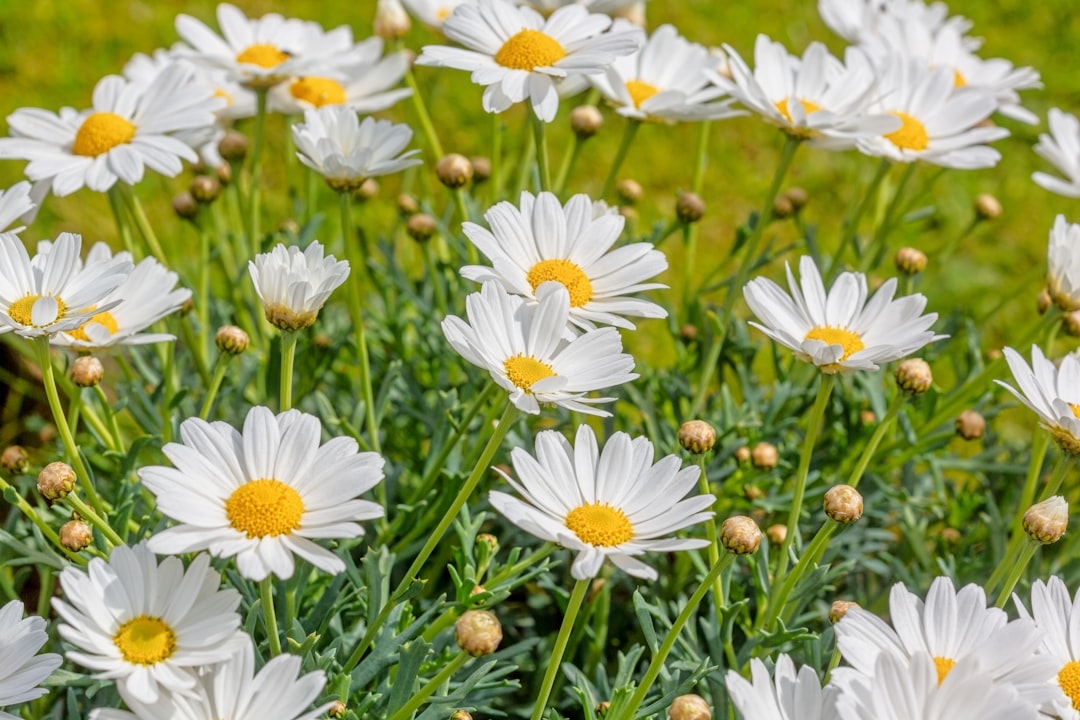
The scent hits first — a faint green, almost herbal note, like crushed stems and warm soil. Then the color: white petals fanned around a yellow center so perfectly round it looks painted. Daisies are one of those flowers that feel inevitable, as if they were always going to grow there, in that exact spot, catching afternoon light. They are cheerful without being loud, and surprisingly resilient. Whether you’re working with a sunny windowsill, a compact balcony planter, or a shared community plot, this growing daisies care guide covers everything you need — from choosing the right variety to keeping them blooming season after season.
Most daisies need 6+ hours of direct sun, well-draining soil with a pH of 6.0–7.0, and watering once or twice per week (more in summer heat). Deadhead spent blooms regularly to extend flowering. In containers, use a pot at least 10–12 inches wide. Hardy varieties like Shasta daisy survive USDA Zones 4–9; tender types like African daisy prefer Zones 9–11 or indoor overwintering.
What Makes a Daisy a Daisy?
The word “daisy” gets applied loosely — and that’s because it describes a form, not a single species. Botanically, true daisies belong to the Asteraceae family, and they share one defining structure: a composite flower head made of two distinct floret types. The outer ring of ray florets looks like individual petals, while the central disc is packed with tiny tubular florets. What appears to be one flower is actually dozens working in concert.
This structure has proven enormously successful. The Asteraceae family is one of the largest flowering plant families on Earth, with over 32,000 species. The flowers most people recognize as “daisies” span several genera: Leucanthemum (Shasta and Oxeye), Osteospermum (African daisy), Echinacea (coneflower, a daisy relative), Gaillardia (blanket flower), and Bellis (English daisy). Each has distinct growing needs, but they share a preference for open sunlight and good drainage.
Understanding which type you’re growing changes your entire approach. A Shasta daisy can survive a hard frost. An African daisy will collapse at the same temperature. Getting this right from the start saves a season of frustration.
Popular Daisy Varieties and Their Distinct Needs
Not all daisies want the same conditions. Here’s a closer look at the most common types and how to match them to your space.
Shasta Daisy (Leucanthemum × superbum)
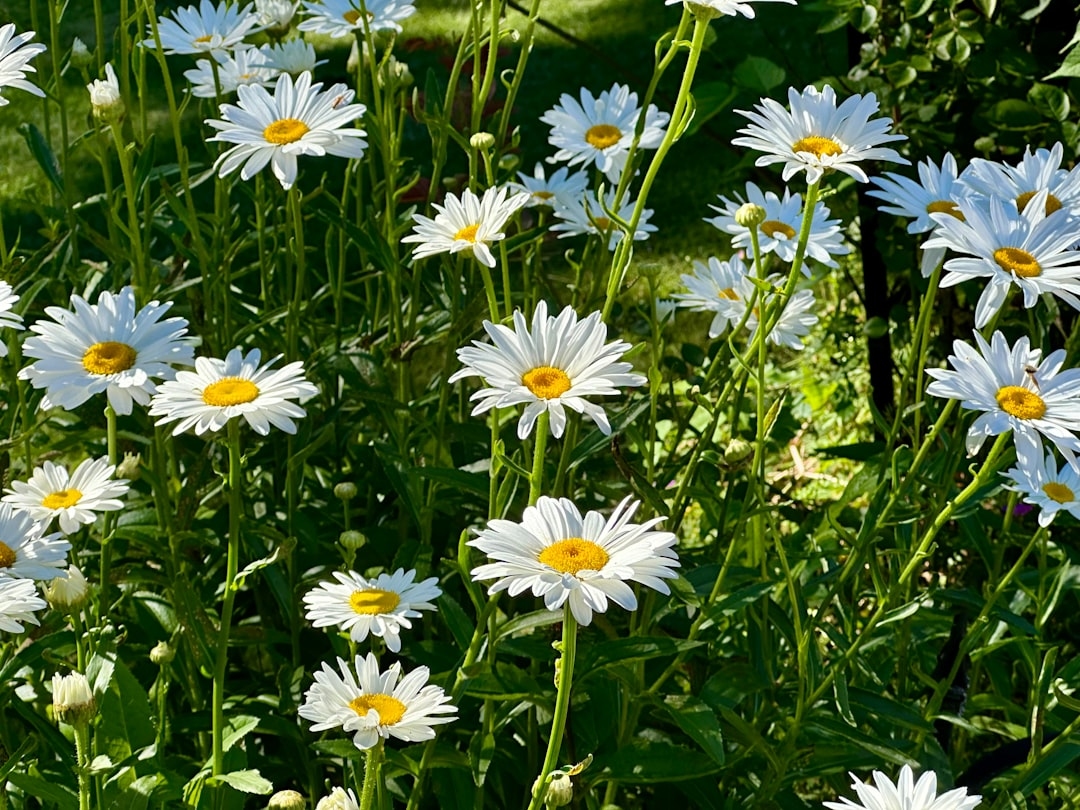
The classic white-and-yellow daisy most people picture. Shasta daisies are perennials in USDA Zones 4–9 and grow 18–36 inches tall, though dwarf cultivars like ‘Snowcap’ top out at 12 inches — ideal for container growing. They bloom primarily in early to midsummer, with a possible repeat flush if deadheaded promptly. Plant in full sun with at least 6 hours of direct light. They tolerate brief drought once established but do best with consistent moisture. Divide clumps every 3–4 years to maintain vigor and prevent the center from dying out.
African Daisy (Osteospermum spp.)
African daisies bring unusual color into the mix — lavender, coral, deep purple, and bicolors with a contrasting disc. They’re perennials in Zones 9–11 but are grown as annuals almost everywhere else in the US. A key quirk: their flowers close at night and on cloudy days. Newer cultivars like ‘4D Berry White’ stay open longer. They prefer cool temperatures and may slow or stop blooming when summer heat exceeds 85°F, then bounce back in fall. In a 10-inch container on a sunny balcony, one plant can produce 30–50 blooms across a season.
Oxeye Daisy (Leucanthemum vulgare)
A European native that has naturalized widely across North America. Oxeye daisies are tougher and more aggressive than Shastas — they’ll self-seed prolifically and can become invasive in some regions (check your state’s noxious weed list before planting in the ground). In containers, however, they’re well-behaved and produce masses of classic 1–2 inch white flowers from late spring through early summer. Hardy in Zones 3–8. They thrive in poor soils where richer plants struggle.
English Daisy (Bellis perennis)
Low, compact, and perfect for small spaces. English daisies grow just 3–8 inches tall and produce pompom-like double or semi-double flowers in white, pink, and red. They’re technically perennials but behave as cool-season biennials or annuals in most US climates, blooming in spring and early summer before going dormant in heat. Grow them in 6-inch pots on a windowsill or as a cheerful border edging. Plant in fall in Zones 6 and warmer; spring in Zones 4–5.
Cape Daisy / Swan River Daisy (Brachyscome iberidifolia)
An Australian native grown as a tender annual across the US. Swan River daisies are fine-textured, with ferny foliage and small 1-inch flowers in blue, violet, pink, and white. They reach 9–18 inches and cascade beautifully over the edge of a hanging basket or window box. They appreciate cooler temperatures and perform best in spring and fall. Space plants 6–9 inches apart in containers for a full, lush look.
Experienced growers select daisy varieties based on their second act — what the plant looks like when it’s not blooming. Shasta daisies have clean, deep green foliage that holds structure in a container all season. African daisies, by contrast, get leggy quickly without regular trimming. Professionals often shear African daisies back by one-third in midsummer to encourage dense, compact regrowth and a strong fall flush. Most home growers skip this step and wonder why their plant looks exhausted by August.
Growing Daisies Care Guide: Soil, Sun, and Spacing
Getting the foundation right matters more than any other factor. Daisies are forgiving once established, but they don’t recover easily from poor starts.
Soil Requirements
All daisies need well-draining soil. Wet feet are their primary enemy — prolonged moisture at the root zone leads to crown rot and fungal disease within days. For container growing, use a standard potting mix amended with 20–25% perlite by volume to improve drainage. Avoid garden soil in pots; it compacts and blocks oxygen flow to roots.
Soil pH should sit between 6.0 and 7.0 for most varieties. At pH levels below 5.5, nutrient uptake becomes impaired even when fertilizer is present. An inexpensive pH test kit ($8–$15 at any hardware store) removes the guesswork. If your mix tests acidic, add a small amount of agricultural lime; if it’s above 7.2, work in granular sulfur.
Shasta and Oxeye daisies actually perform well in moderately lean soil — too much organic matter encourages lush foliage at the expense of flowers. African daisies prefer a slightly richer mix with more moisture retention.
Sunlight Needs
Six hours of direct sun is the baseline. Eight is better. Most daisies will grow in partial shade (4–5 hours of sun), but flowering decreases noticeably — expect 40–60% fewer blooms compared to a fully sunny location. South-facing and west-facing windowsills or balconies typically provide the most light in US homes. East-facing spots work for English daisies and Swan River daisies, which appreciate some afternoon shade in hot climates.
If you’re growing indoors under artificial light, position a full-spectrum grow light 4–6 inches above the foliage and run it for 14–16 hours per day. LED grow lights in the 3000–4000K range work well for flowering plants.
Container and Spacing
Container size directly affects bloom production and plant health. The minimum recommended pot sizes by variety:
- Shasta daisy (dwarf): 10–12 inches diameter, 10 inches deep
- African daisy: 8–10 inches per plant
- English daisy: 6 inches per plant
- Swan River daisy: 8–10 inches, or one 12-inch hanging basket for 3 plants
- Oxeye daisy: 12 inches minimum
Drainage holes are non-negotiable. If a decorative planter lacks holes, use it as a cachepot — place the nursery pot inside and remove the inner pot for watering. Never let daisies sit in a saucer of standing water for more than 30 minutes.
Watering Daisies: Frequency, Method, and Common Mistakes
Daisies occupy a useful middle ground: they’re more drought-tolerant than many flowering perennials, but they bloom best with consistent moisture. The “finger test” is still the most reliable guide — push your finger 2 inches into the soil. If it’s dry at that depth, water thoroughly until it drains from the bottom. If it’s still damp, wait another day.
In most US climates, container-grown daisies need watering every 2–3 days in summer heat (especially when temperatures exceed 85°F) and once per week or less in spring and fall. Terracotta pots dry out faster than plastic or glazed ceramic — factor this into your schedule. A 10-inch terracotta pot may need daily watering in July in zones 7 and above.
Water at the soil level, not over the foliage. Wet leaves combined with poor air circulation invite powdery mildew, a common problem on Shasta daisies in humid climates. Morning watering is preferable to evening — foliage dries before nightfall.
One specific mistake worth calling out: inconsistent watering followed by heavy watering causes bud drop on African daisies and can split stems on Shastas. If you tend to forget, a self-watering planter with a reservoir solves the problem cleanly. Models with wicking systems maintain consistent moisture for 5–7 days between refills.
Feeding Your Daisies: Fertilizer Schedules That Actually Work
Daisies are not heavy feeders, and overfeeding is a real risk. Too much nitrogen produces dark, abundant foliage and sparse flowers — the opposite of what you want.
For container-grown plants, apply a balanced slow-release fertilizer (10-10-10 or 14-14-14) at the start of the growing season — once in spring for perennial types, at planting for annuals. Supplement with a liquid bloom fertilizer (low nitrogen, higher phosphorus and potassium — look for ratios like 5-10-10 or 2-7-7) every 3–4 weeks once flower buds appear.
Perennial daisies like Shasta shouldn’t be fertilized after midsummer in northern zones — late feeding stimulates soft new growth that can be killed by early frosts. In Zones 8–9, a light fall feeding is fine because winters are mild.
English daisies and Swan River daisies are cool-season growers and appreciate a gentle liquid feed every two weeks during their active growing period in spring. Ease off entirely once temperatures climb consistently above 75°F.
Pruning and Deadheading: The Most Impactful Habit
No single practice improves daisy performance more reliably than regular deadheading. Left on the plant, spent flowers signal the plant to shift energy toward seed production. Remove them promptly, and the plant redirects that energy into producing new buds.
Deadhead by cutting the stem back to the nearest lateral bud or leaf node — not just snapping off the flower head. On Shasta daisies, this means cutting stems back 6–8 inches below the spent bloom. On African daisies, trim back to the first set of leaves below the faded flower.
Mid-season shearing works well for African daisies and Swan River daisies when they become rangy. Cut the entire plant back by one-third in July. New growth appears within 10–14 days, and a fresh flush of blooms follows 3–4 weeks later. This technique requires some courage the first time — the plant looks bare for a week — but the results are consistently better than trying to deadhead stem by stem on a plant that’s already overgrown.
For perennial varieties, cut the entire plant back to 3–4 inches above the soil line after the first hard frost. This reduces disease pressure and makes spring cleanup much easier. Do not compost diseased foliage — bag and discard it.
Pest and Disease Management in Small Spaces
Container-grown daisies experience fewer pest problems than their in-ground counterparts, but a few issues appear consistently.
Aphids
Small, soft-bodied insects that cluster on new growth and flower buds. A single aphid colony can number in the hundreds within two weeks. They excrete honeydew, which attracts sooty mold. On balcony containers, a strong stream of water from a spray bottle dislodges most infestations. For persistent cases, insecticidal soap spray (1.5 teaspoons of pure castile soap per quart of water) applied every 5–7 days for 2–3 cycles resolves the problem without harming pollinators.
Powdery Mildew
A fungal disease that leaves a white, dusty coating on leaves and stems. It appears when air circulation is poor and humidity is high. Spacing plants adequately (never crowding them in a container) prevents most outbreaks. Once present, remove affected leaves and treat with a solution of 1 tablespoon baking soda and 1 teaspoon horticultural oil per quart of water, applied weekly. Full sun and good airflow are the best long-term prevention.
Earwigs and Thrips
Earwigs chew irregular holes in petals overnight. Diatomaceous earth sprinkled around the base of containers deters them without chemicals. Thrips are harder to see but cause stippled, silvery discoloration on petals and leaves. Blue sticky traps placed near the plant catch adult thrips effectively. Neem oil spray controls both pests and doubles as a fungal preventative.
Overwintering: Keeping Perennial Daisies Through Cold Months
Perennial daisies grown in containers are more vulnerable to winter kill than those in the ground because their roots aren’t insulated by soil mass. A Shasta daisy rated hardy to Zone 4 can freeze solid in an above-ground container when temperatures drop well below 20°F.
In Zones 4–6, move containers to an unheated but protected space — a garage, basement, or covered porch — before the first hard freeze. Water lightly once a month; the plant is dormant but not completely dry. Resume regular watering in early spring as new growth appears.
In Zones 7–9, containers left outdoors need insulation. Wrap pots with burlap or bubble wrap, and cluster them together against a south-facing wall. The thermal mass of grouped containers retains heat better than individual pots. A 3–4 inch layer of straw mulch over the crown adds extra protection.
Annual varieties — African daisy, Swan River daisy, English daisy grown as an annual — don’t overwinter. Compost the spent plants after frost and start fresh in spring. African daisies can be brought indoors and kept as semi-dormant houseplants in a bright window if you want to preserve a particular cultivar.
Growing Daisies From Seed vs. From Transplants
Starting from seed is economical — a packet of Shasta daisy seeds costs $3–$5 and contains 50–200 seeds. The tradeoff is time: most perennial daisies grown from seed won’t bloom in their first year. Annual types like African daisy and Swan River daisy bloom within 60–75 days from seed, making them viable for a single-season start.
Start seeds indoors 6–8 weeks before the last frost date for your zone. Surface sow on moist seed-starting mix (daisy seeds need light to germinate), cover with a humidity dome, and maintain temperatures between 65–70°F. Germination takes 10–21 days. Thin seedlings to the strongest plant per cell once they develop two sets of true leaves.
Transplants from a nursery cost $4–$9 per plant but bloom the same season and let you see exactly what you’re getting. For small spaces with limited room for trial and error, transplants are usually the smarter choice. Look for compact plants with dark green foliage and no yellowing — avoid anything root-bound or already in full bloom at the nursery, as these transition poorly.
When transplanting, don’t plant deeper than the nursery container. Set the crown at soil level. Water in with a diluted liquid fertilizer to ease transplant stress.
Practical Tips for Apartment and Small-Space Daisy Growing
Small spaces require a different approach than a traditional garden. These specific strategies address the constraints of apartment living directly.
- Go vertical: Wall-mounted planters and tiered plant stands let you grow multiple daisy varieties in a 4-square-foot footprint. A three-tier stand can hold 6–9 pots comfortably.
- Choose dwarf cultivars intentionally: ‘Snowcap’ Shasta (12 inches), ‘Sunny Girl’ African daisy (10–12 inches), and ‘Tasso’ English daisy (4–6 inches) were bred specifically for container performance.
- Use lightweight pots: Plastic and fiberglass containers weigh 60–80% less than ceramic, which matters on a load-bearing balcony. Check your building’s balcony weight limit — most residential buildings allow 40–60 lbs per square foot, but container soil is heavier than it looks. A 14-inch pot with wet soil can weigh 25–35 lbs.
- Create a microclimate: Balcony walls and railings reflect heat and block wind. South and west-facing balconies often run 5–10°F warmer than open ground, extending the growing season at both ends.
- Collect and reuse water: A small basin under your containers catches drainage water. Reuse it the same day on other plants — daisy drainage is clean and carries residual nutrients.
- Label everything: In a small collection of mixed daisies, it’s easy to forget which cultivar is which. Simple popsicle stick labels save confusion when it’s time to repot or reorder.
Companion Planting in Containers
Daisies share containers well with plants that have similar sun and water needs. Some combinations offer practical benefits beyond aesthetics.
Lavender and Shasta daisies make a classic pairing — both prefer lean, well-drained soil and full sun, and lavender’s scent deters aphids. Grow them in a 14-inch or larger container with a central lavender plant flanked by two compact Shastas. The contrasting textures (fine lavender foliage against broad daisy leaves) create visual interest even between bloom periods.
African daisies pair well with calibrachoa (Million Bells) in mixed containers. Both are trailing to mounding in habit, both prefer similar watering, and the calibrachoa’s continuous bloom fills the gap when African daisies slow in high summer heat. Use a 16-inch window box for two African daisies and three calibrachoa plants.
Avoid pairing daisies with plants that need consistently moist soil, like impatiens or ferns. The conflicting water needs make it difficult to satisfy both plants without overwatering the daisy.
Frequently Asked Questions
How often should I water daisies in containers?
Water container daisies when the top 2 inches of soil feel dry to the touch — typically every 2–3 days in summer heat and once per week in cooler months. Always water thoroughly until it drains from the bottom, then empty the saucer after 30 minutes. Overwatering is more damaging than underwatering for most daisy varieties.
Why are my daisy leaves turning yellow?
Yellow leaves on daisies most commonly indicate overwatering or poor drainage, which causes root rot. Check that your container has drainage holes and that the soil isn’t staying wet for more than 2 days. Less common causes include nitrogen deficiency (treat with a balanced fertilizer) or spider mite infestation (look for fine webbing under leaves).
Can daisies grow indoors?
Yes, with limitations. Daisies need bright, direct light — a south-facing window or supplemental grow lighting running 14–16 hours per day. English daisies and African daisies adapt most readily to indoor conditions. Without adequate light, plants produce weak stems and minimal flowers. Indoor daisies also benefit from increased air circulation; a small fan running a few hours daily prevents fungal issues.
How do I get my daisies to bloom again after the first flush?
Deadhead spent flowers immediately by cutting the stem back to the nearest lateral bud or leaf node. For African daisies and Swan River daisies, a mid-season shearing — cutting the plant back by one-third — reliably triggers a second wave of blooms within 3–4 weeks. Consistent feeding with a low-nitrogen, bloom-boosting fertilizer during active growth also extends the flowering period.
Are daisies toxic to pets?
Most daisies — including Shasta daisies, African daisies, and Oxeye daisies — are mildly toxic to cats and dogs if ingested. They contain sesquiterpene lactones and pyrethrins, which can cause vomiting, diarrhea, excessive drooling, and skin irritation. Keep containers out of reach of pets, particularly on low windowsills or floor-level shelves. The ASPCA Animal Poison Control Center (888-426-4435) is the best resource for any suspected ingestion.
Building a Daisy Collection That Lasts
The real reward of this growing daisies care guide isn’t a single season of blooms — it’s the rhythm that develops over several years. A dwarf Shasta daisy in a terracotta pot by the window, divided every third spring and refreshed with new soil. An African daisy on the balcony railing, sheared back in July, brilliant again by September. English daisies seeded in fall, a carpet of pink in April.
Each variety teaches you something specific. The Shasta shows you how a perennial matures and improves. The African daisy teaches responsiveness — how quickly a plant can recover with the right intervention. The English daisy shows the value of timing, of working with seasonal rhythms rather than against them.
Start with one variety this season. Master its needs. Then add another. Within two or three growing seasons, a single apartment balcony or sunny windowsill can hold a genuinely diverse, blooming collection — one that produces fresh flowers for cutting from April through October with only moderate effort. That’s a return worth working toward.