Contents:
- What Are Impatiens? A Quick Background
- Impatiens Varieties: Choosing the Right Plant for Your Space
- Standard Garden Impatiens (Impatiens walleriana)
- New Guinea Impatiens (Impatiens hawkeri)
- Double-Flowered Impatiens
- Downy Mildew-Resistant Varieties
- Sun vs. Shade: Understanding Light Requirements for Impatiens
- How Much Shade Do Impatiens Actually Need?
- Growing Impatiens in Sun: What Really Happens
- Reading Your Garden’s Light
- Soil Preparation and Planting: Getting the Foundation Right
- Ideal Soil Conditions
- Planting Depth and Spacing
- When to Plant Impatiens
- Watering Impatiens: The Rhythm That Keeps Them Blooming
- In-Ground Watering Guidelines
- Container Watering: A Different Formula
- Fertilizing for Maximum Bloom Production
- What Nutrients Impatiens Actually Need
- Signs of Nutrient Deficiency
- Common Impatiens Problems and How to Solve Them
- Downy Mildew: The Biggest Threat to Standard Impatiens
- Root Rot (Pythium and Phytophthora species)
- Impatiens Necrotic Spot Virus (INSV)
- Leggy Plants with Few Flowers
- Growing Impatiens in Containers and Window Boxes
- Container Size and Plant Density
- Overwintering Impatiens in Containers
- Impatiens for Events: Planning a Garden Display
- Timing Your Planting for Peak Bloom
- Color Coordination for Event Gardens
- Estimated Plant Quantities for Event Gardens
- Mulching and Maintenance Through the Season
- Propagating Impatiens: Starting from Cuttings
- Regional Considerations Across the US
- Southeast and Gulf Coast (Zones 8–10)
- Pacific Coast (Zones 8–10)
- Midwest and Great Plains (Zones 5–7)
- Northeast and New England (Zones 4–6)
- Your Complete Impatiens Growing Guide: Pulling It Together
- Frequently Asked Questions About Growing Impatiens
- Can impatiens grow in full sun?
- Why are my impatiens wilting even though the soil is wet?
- How far apart should I plant impatiens?
- Do impatiens come back every year?
- What is the best fertilizer for impatiens?
Impatiens are the best-selling bedding plant in the United States — outselling petunias, marigolds, and geraniums combined in most years. Yet despite their popularity, millions of gardeners accidentally kill them every season by planting them in the wrong light, watering on the wrong schedule, or choosing the wrong variety for their climate. This impatiens growing guide exists to fix that. Whether you’re lining a shaded walkway, filling a wedding garden with lush color, or just trying to keep a container alive through August, the details here will make all the difference.
What Are Impatiens? A Quick Background
Impatiens (Impatiens walleriana and related species) are flowering annuals native to East Africa and the tropical regions of Asia. The name comes from the Latin word for “impatient” — a nod to the way their seed pods burst open at the slightest touch, flinging seeds several feet in all directions. Gardeners have been cultivating them in the US since the late 1800s, but the modern compact, continuously-blooming varieties we know today were largely developed through hybridization programs in the mid-20th century.
They belong to the family Balsaminaceae, and the genus includes over 1,000 species worldwide. The ones you’ll find at most US garden centers fall into a handful of practical categories: standard garden impatiens, New Guinea impatiens, double-flowered impatiens, and the newer downy-mildew-resistant varieties that came to market after 2014.
Their defining characteristic is non-stop bloom. Unlike many flowering annuals that take breaks between flushes, healthy impatiens produce new flowers continuously from late spring until the first frost — typically a 5- to 6-month season in most of the continental US.
Impatiens Varieties: Choosing the Right Plant for Your Space
Variety selection is the single biggest factor in whether your impatiens thrive or struggle. Buying whatever’s on sale at the big-box store is a gamble. Knowing your options means you can match the plant to your specific conditions before you spend a dollar.
Standard Garden Impatiens (Impatiens walleriana)
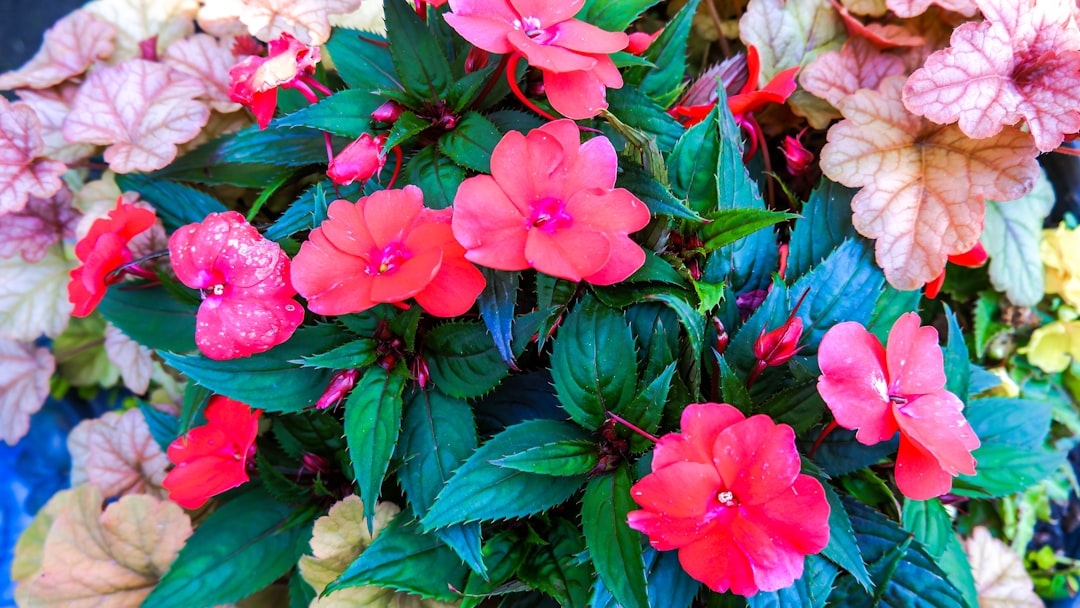
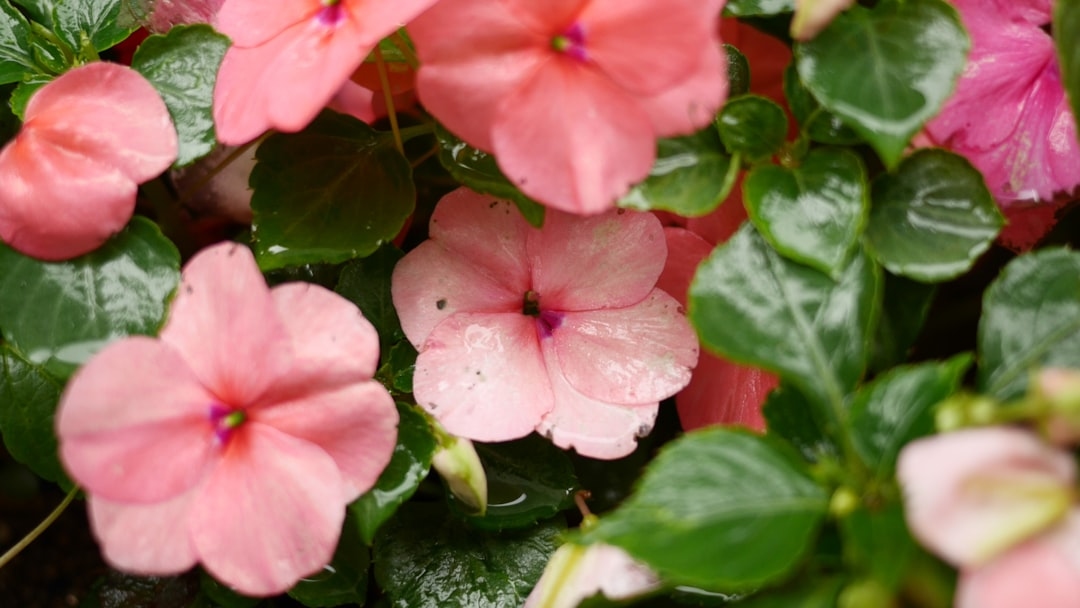
These are the classic shade lovers. They grow 6 to 18 inches tall depending on the cultivar, and they come in just about every color — coral, salmon, red, white, lavender, pink, orange, and bicolors. The ‘Super Elfin’ and ‘Accent’ series are workhorses: compact, freely branching, and heat-tolerant. They perform best in 2 to 4 hours of dappled sunlight and struggle visibly in full afternoon sun.
One critical caveat: standard Impatiens walleriana is highly susceptible to downy mildew (Plasmopara obducens), a devastating fungal-like disease that swept through the eastern US starting around 2011. If you’re in the Mid-Atlantic, New England, or Great Lakes regions, ask your supplier whether their plants come from resistant stock.
New Guinea Impatiens (Impatiens hawkeri)
New Guinea impatiens are the sun-tolerant cousins of standard varieties. They handle 4 to 6 hours of direct sun comfortably and actually perform better with more light than their shade-loving relatives. They grow larger — typically 12 to 24 inches — and their flowers can reach 2 to 3 inches across, nearly twice the size of standard types. Foliage is often variegated or deep bronze-green, making them attractive even when not in bloom.
The ‘Sunpatiens’ line (technically a hybrid between New Guinea and wild species) was specifically bred for heat and sun performance. In USDA hardiness zones 9–11, Sunpatiens can be grown as short-lived perennials. Everywhere else, treat them as annuals.
Double-Flowered Impatiens
These look like miniature roses or camellias, with layers of petals stacked on each other. The ‘Fiesta’ and ‘Rockapulco’ series are the most widely available. They’re showstoppers in containers and window boxes but tend to be more temperamental than single-flowered types — they’re more sensitive to heat stress and require more consistent watering. Expect to pay $1 to $2 more per plant at retail.
Downy Mildew-Resistant Varieties
After the downy mildew crisis devastated impatiens plantings across the country, breeders fast-tracked resistant varieties. The ‘Imara XDR’ series from Syngenta and ‘Beacon’ series from PanAmerican Seed are among the best. Both maintain the look of traditional garden impatiens while offering significantly improved resistance. If you had mildew problems in previous seasons, these are worth the slight premium.
Sun vs. Shade: Understanding Light Requirements for Impatiens
Light is the most misunderstood aspect of growing impatiens. The blanket advice to “plant in shade” oversimplifies a more nuanced reality — and following it blindly leads to leggy, sparse plants with poor bloom production.
How Much Shade Do Impatiens Actually Need?
Standard garden impatiens prefer partial to full shade, defined as 2 to 4 hours of direct sun per day. Morning sun with afternoon shade is ideal — they get the gentle early light and are protected during the hottest part of the day (typically 2 to 5 PM). Under these conditions, expect compact plants, rich foliage color, and continuous flowering.
Full shade — areas that receive less than 1 hour of direct sun — produces plants that survive but don’t thrive. They’ll bloom, but sparsely, and stems will stretch as the plant reaches for more light. If your only available spot is deep shade under a dense canopy, impatiens will still outperform most flowering alternatives, but temper your expectations for bloom density.
Growing Impatiens in Sun: What Really Happens
Standard impatiens placed in 6+ hours of direct sun will wilt dramatically by early afternoon — even when the soil is moist. This isn’t a watering problem; it’s a physiological response to excessive transpiration. The plants recover at night, but this daily stress cycle weakens them over time, reducing bloom production and making them more vulnerable to disease.
For genuinely sunny spots, the answer isn’t to force standard impatiens to adapt — it’s to use New Guinea impatiens or Sunpatiens, which have thicker, waxy leaves that handle solar radiation more efficiently. Placed in a full-sun location, Sunpatiens can produce nearly twice the bloom volume of standard types in the same space.
“A lot of my clients come to me frustrated that their impatiens look terrible by July. Nine times out of ten, they’ve planted standard walleriana in a spot that gets afternoon sun. The fix isn’t more water — it’s matching the variety to the light. New Guineas in a sunny bed, standard types in shade. That one change transforms the whole garden.”
— Dr. Melissa Crane, Certified Professional Horticulturist and garden consultant based in Raleigh, NC
Reading Your Garden’s Light
Don’t guess at your light conditions — observe them. Spend one full day noting how sunlight moves through your planting area, checking at 8 AM, 11 AM, 2 PM, and 5 PM. An area that looks shady at 10 AM might be blasted by direct western sun from 3 to 7 PM, which is brutal for standard impatiens. This one-day observation is worth more than any general advice.
Soil Preparation and Planting: Getting the Foundation Right
Impatiens are not heavy feeders, but they are particular about drainage. Waterlogged roots are their number-one killer — above even downy mildew in most gardens.
Ideal Soil Conditions
The target is a slightly acidic, well-draining soil with good organic content. A pH between 6.0 and 6.5 is optimal. Outside this range, nutrient uptake suffers even when fertilizer is applied correctly. A basic soil test kit from any garden center ($10 to $15) takes the guesswork out of this step.
Work 2 to 3 inches of compost into the planting bed before installing transplants. This improves both drainage in clay soils and moisture retention in sandy ones. For container planting, use a quality potting mix — not garden soil, which compacts in pots and impedes root development. Add perlite at a ratio of about 20% by volume if your mix feels dense.
Planting Depth and Spacing
Set transplants at the same depth they were growing in the nursery cell. Burying the stem encourages rot; planting too shallow leaves roots exposed. Standard varieties should be spaced 8 to 12 inches apart; New Guinea types need 12 to 18 inches. Yes, closer spacing gives you faster fill and more immediate visual impact — but it also reduces air circulation, which increases disease risk. Find the middle ground based on your tolerance for waiting.
For event planning purposes: a 6-foot garden border planted with standard impatiens at 10-inch spacing requires approximately 8 to 9 plants per row for single-file planting. Double that for a fuller, layered look.
When to Plant Impatiens
Impatiens are cold-sensitive. Soil temperature needs to be consistently above 60°F before planting — not air temperature, soil temperature. In most of the US, this means:
- Zones 9–10 (Southern California, Gulf Coast, South Florida): March to April
- Zones 7–8 (Mid-Atlantic, Pacific Northwest, Tennessee): Mid-April to mid-May
- Zones 5–6 (Midwest, New England, Mountain West): Late May to early June
- Zone 4 and colder: June, after last frost is confirmed
A late cold snap after planting won’t necessarily kill established plants, but it will set them back significantly. If frost threatens after you’ve planted, cover with a lightweight row cover overnight.
Watering Impatiens: The Rhythm That Keeps Them Blooming
Impatiens communicate through their foliage. Wilted leaves in the morning mean they’re genuinely thirsty. Wilted leaves only in afternoon heat may just be a temporary stress response — check the soil before reaching for the hose.
In-Ground Watering Guidelines
Established in-ground impatiens in shaded locations typically need 1 inch of water per week, either from rainfall or supplemental irrigation. Sunny-location New Guineas may need 1.5 inches in peak summer heat. The goal is consistent moisture — not dry-wet-dry cycles, which stress the plant and reduce bloom production.
Water at soil level, not overhead. Wet foliage sitting overnight creates ideal conditions for botrytis and downy mildew. A soaker hose or drip system is the gold standard for impatiens beds. If you’re hand-watering, direct the flow to the base of the plant.
Container Watering: A Different Formula
Containers dry out dramatically faster than in-ground beds — sometimes requiring watering twice daily in hot, sunny weather. Check pots by inserting your finger 1 inch into the soil. If it’s dry at that depth, water thoroughly until it drains freely from the bottom. Never let pots sit in standing water; it drowns roots within 24 to 48 hours.
Self-watering containers with a reservoir are genuinely useful for impatiens in hot climates. They maintain more consistent moisture than standard pots and can extend time between waterings to every 2 to 3 days even in summer heat.
🌿 What the Pros Know
Professional landscapers who maintain large impatiens installations often use a dilute liquid fertilizer mixed directly into irrigation water — a practice called fertigation. Rather than granular slow-release fertilizer (which can burn impatiens roots if applied incorrectly), they use a water-soluble balanced fertilizer at half the label-recommended strength, applied every 7 to 10 days. This delivers nutrients gradually and consistently, producing visibly denser foliage and more sustained bloom production than monthly granular feeding. Home gardeners can replicate this easily with a hose-end fertilizer injector, available at most garden centers for $15 to $30.
Fertilizing for Maximum Bloom Production
Impatiens grown in quality amended soil don’t need aggressive fertilization — but they do benefit from consistent, moderate feeding throughout the growing season.
What Nutrients Impatiens Actually Need
The ideal fertilizer for impatiens has a balanced N-P-K ratio, such as 10-10-10 or 12-4-8. Avoid high-nitrogen formulations (like 30-10-10 lawn fertilizers) — they push lush foliage at the expense of flowers. For containers, a slow-release granular fertilizer incorporated at planting (like Osmocote 14-14-14, applied at 1 tablespoon per gallon of pot volume) provides 4 months of baseline nutrition. Supplement with liquid feeding every 2 to 3 weeks for best results.
Signs of Nutrient Deficiency
Yellowing of older lower leaves usually signals nitrogen deficiency. Pale, washed-out foliage across the whole plant often indicates an iron or pH issue — the plant can’t absorb iron when soil pH is above 6.5. Purple-tinged stems and undersides of leaves suggest phosphorus deficiency, most common in cool soils in early spring. Each of these has a specific fix; general-purpose fertilizer won’t solve pH-related uptake problems without first correcting soil chemistry.
Common Impatiens Problems and How to Solve Them
Even experienced gardeners run into trouble. Here’s what to actually do when things go wrong — not just vague advice to “improve drainage.”
Downy Mildew: The Biggest Threat to Standard Impatiens
Downy mildew caused by Plasmopara obducens is the most destructive disease impatiens face. Symptoms include stippled or light-green patches on upper leaf surfaces, white powdery growth on leaf undersides, and — in advanced cases — rapid defoliation that leaves bare green stems. There is no effective cure once a plant is infected. Remove and bag infected plants immediately; do not compost them, as spores survive in compost. The pathogen can persist in soil for years.
Prevention is the only reliable strategy: use resistant varieties, maintain good air circulation, avoid overhead watering, and don’t replant susceptible walleriana varieties in a bed that had mildew the previous season.
Root Rot (Pythium and Phytophthora species)
Root rot is almost always a watering or drainage issue, not a soil-borne inevitability. Affected plants wilt despite moist soil, stems at the soil line turn brown and mushy, and the plant collapses quickly. In containers, this usually means the pot has poor drainage holes or is sitting in a saucer of standing water. In the ground, it means the soil is too compacted or clayey.
Caught early — before the stem is fully compromised — you can sometimes save container plants by removing them from the pot, letting roots air-dry for an hour, trimming off rotted root sections, and replanting in fresh, dry mix. In-ground plants rarely recover and should be removed.
Impatiens Necrotic Spot Virus (INSV)
INSV is spread by western flower thrips and causes irregular brown spots, ring patterns, and streaking on leaves and stems. It’s less common than downy mildew but incurable once present. Control thrips with insecticidal soap or spinosad-based sprays; monitor new plants carefully before introducing them to established beds.
Leggy Plants with Few Flowers
Legginess is almost always a light problem. Plants stretching toward light produce long stems with sparse leaf and flower coverage. The fix is moving plants to a brighter location — or, for impatiens that can’t be moved, pinching stems back by one-third to encourage branching. Most impatiens don’t require deadheading (they shed spent blooms on their own), but pinching does stimulate a fresh flush of growth.
Growing Impatiens in Containers and Window Boxes
Containers are where impatiens shine most dramatically. A well-planted 14-inch pot of mixed impatiens can produce hundreds of blooms simultaneously and maintain that display for 5 to 6 months with proper care.
Container Size and Plant Density
Resist the temptation to cram too many plants into a small container. For a 12-inch pot, 3 standard impatiens or 2 New Guinea impatiens is the right density. Going tighter than this creates competition for water and nutrients, reduces air circulation, and produces a plant mass that looks cluttered rather than lush.
Window boxes look best with impatiens planted at 6 to 8 inches apart (slightly tighter than in-ground spacing), combined with trailing plants like sweet potato vine, bacopa, or calibrachoa at the front edge.
Overwintering Impatiens in Containers
In zones 9 and warmer, container impatiens can sometimes overwinter if brought inside before the first frost. They need a bright indoor location — a south-facing window or supplemental grow light providing at least 12 hours of light daily. Reduce watering significantly and stop fertilizing. They won’t bloom much indoors, but they’ll survive to be returned outside in spring. In colder zones, it’s generally more practical to treat them as annuals and replant each year.
Impatiens for Events: Planning a Garden Display
Impatiens are a top choice for event gardens — weddings, memorial plantings, graduation parties, and outdoor celebrations — because of their reliable, long-lasting color. A few planning considerations make the difference between a display that looks stunning on the event date versus one that peaked two weeks earlier.
Timing Your Planting for Peak Bloom
Impatiens from 4-inch nursery transplants reach full, lush coverage in approximately 4 to 6 weeks after planting under good conditions. For a late-June outdoor wedding, plan to plant in mid-to-late May. For a Labor Day event, plant in late July. Keep in mind that extreme summer heat (sustained temperatures above 90°F) can briefly suppress blooming; plants resume flowering when temperatures moderate.
Color Coordination for Event Gardens
A few color-use principles that professional event designers rely on:
- Monochromatic schemes (all white, all coral, all pink) read most clearly from a distance and photograph exceptionally well.
- Complementary color pairs — such as coral and purple, or red and white — create high visual impact in large beds.
- Avoid mixing more than 3 colors in a single bed; beyond that, the result tends to look chaotic rather than intentional.
- White impatiens are universally flattering and reflect light beautifully in shaded settings, making them ideal for evening events where string lights or candles will be used.
Estimated Plant Quantities for Event Gardens
Use this as a starting point for budgeting:
- 10 sq. ft. bed at 10-inch spacing: approximately 15 to 18 plants
- 25 sq. ft. bed at 10-inch spacing: approximately 36 to 40 plants
- 50 sq. ft. bed at 10-inch spacing: approximately 70 to 75 plants
At typical retail prices of $3 to $5 per 4-inch plant, a 25-square-foot display runs $108 to $200 in plant material alone — budget an equal amount for soil amendment, fertilizer, and mulch for an accurate total.
Mulching and Maintenance Through the Season
A 2-inch layer of shredded bark or wood chip mulch around impatiens plantings does several things simultaneously: it moderates soil temperature (critical in hot climates), retains moisture between waterings, and suppresses the weeds that compete with shallow impatiens roots. Keep mulch from touching plant stems directly — contact creates a moist environment that invites stem rot.
Beyond watering and fertilizing, impatiens are genuinely low-maintenance. They don’t require staking, deadheading, or regular pruning. A mid-season pinch-back (cutting plants back by one-third in late July) can rejuvenate plants that have become leggy and give them a second wind through September and October.
Propagating Impatiens: Starting from Cuttings
Standard impatiens are easy to propagate from stem cuttings — a useful skill if you want to multiply a specific color or variety without buying more plants. Take 3- to 4-inch tip cuttings in midsummer, remove the lower leaves, and place the cut end in moist perlite or a well-draining propagation mix. Roots develop within 2 to 3 weeks in a warm, humid environment. A clear plastic bag loosely placed over the container creates a mini greenhouse effect that speeds rooting.
Note that New Guinea impatiens hybrids and named series like Sunpatiens are often patent-protected. Propagating them for personal garden use is generally tolerated, but selling or distributing rooted cuttings of patented varieties is a legal violation.
Regional Considerations Across the US
Growing conditions vary enormously across the country, and advice calibrated for one region can be counterproductive in another.
Southeast and Gulf Coast (Zones 8–10)
Heat and humidity are the twin challenges. Downy mildew pressure is high, and standard impatiens often struggle through July and August even with good care. In this region, New Guinea impatiens and Sunpatiens outperform standard types significantly. Plant in early March, expect peak bloom in April through June and again in September through November after summer heat breaks.
Pacific Coast (Zones 8–10)
The mild, marine climate of coastal California, Oregon, and Washington is nearly perfect for impatiens. Standard types thrive with afternoon shade; temperatures rarely get hot enough to trigger serious stress. Watch for slug and snail damage, which is a bigger concern here than in drier inland regions. Diatomaceous earth or iron phosphate slug bait applied around plantings is effective and safe for pollinators.
Midwest and Great Plains (Zones 5–7)
The growing window is shorter — typically late May through mid-October — but the moderate summer temperatures produce excellent results. Downy mildew pressure is significant in humid years; choosing resistant varieties is especially important here. In particularly dry years, supplemental watering every 3 to 4 days may be needed during July and August.
Northeast and New England (Zones 4–6)
Downy mildew hit hardest in this region during the 2011–2014 outbreak. Many experienced gardeners here switched entirely to New Guinea impatiens or coleus in shaded spots. The ‘Beacon’ and ‘Imara XDR’ series have performed well in university trials in this region and represent the best option for those wanting to return to standard-type impatiens.
Your Complete Impatiens Growing Guide: Pulling It Together
Growing impatiens successfully comes down to four core decisions made before a single plant goes in the ground: matching variety to light conditions, planting at the right time for your zone, building well-draining soil, and establishing a consistent watering rhythm. Get those four things right, and impatiens are remarkably forgiving and generous performers.
The mistakes that derail most gardeners — wilting plants, sparse flowering, mystery disease — almost always trace back to one of those four factors. This impatiens growing guide has given you the specific numbers and regional context to make each of those decisions with confidence, not guesswork.
Whether you’re planning a single container for a front porch or coordinating a large-scale event garden, your next step is concrete: assess your light, confirm your planting window, and choose your variety accordingly. Everything else is just water and patience.
Frequently Asked Questions About Growing Impatiens
Can impatiens grow in full sun?
Standard Impatiens walleriana cannot tolerate full sun — 6 or more hours of direct sunlight causes chronic wilting and weakens plants significantly. For full-sun locations, use New Guinea impatiens (Impatiens hawkeri) or the Sunpatiens hybrid series, both of which are bred for heat and sun tolerance and thrive in 4 to 6+ hours of direct light.
Why are my impatiens wilting even though the soil is wet?
Wilting in wet soil almost always indicates root rot, caused by overwatering, poor drainage, or a Pythium or Phytophthora infection. Healthy roots cannot function when waterlogged. Check that containers have clear drainage holes and that in-ground beds aren’t sitting in low spots that collect water. Improving drainage is the fix — adding more water makes it worse.
How far apart should I plant impatiens?
Space standard garden impatiens 8 to 12 inches apart and New Guinea types 12 to 18 inches apart. Tighter spacing fills in faster visually but increases disease risk by reducing air circulation. For event gardens where peak appearance by a specific date matters, planting at the closer end of the range (8 inches for standard types) gives you a fuller look 2 to 3 weeks faster.
Do impatiens come back every year?
In USDA hardiness zones 10 and 11 (South Florida, Hawaii, parts of coastal Southern California), impatiens can survive year-round and behave as short-lived perennials. In zones 9 and colder, they are treated as annuals and do not survive frost. New plants must be purchased or propagated from cuttings each season.
What is the best fertilizer for impatiens?
A balanced, water-soluble fertilizer with equal or near-equal N-P-K ratios — such as 10-10-10 or 12-12-12 — applied at half the label-recommended strength every 7 to 14 days produces the best results. Avoid high-nitrogen formulas, which encourage leafy growth at the expense of flowers. For containers, combining a slow-release granular fertilizer at planting with periodic liquid feeding through the season gives consistent, sustained results.