Contents:
- A Brief History: Where Carnations Come From
- Carnation vs. Dianthus: Clearing Up the Confusion
- The Language of Carnation Colors: Symbolism That Still Resonates
- Red Carnations
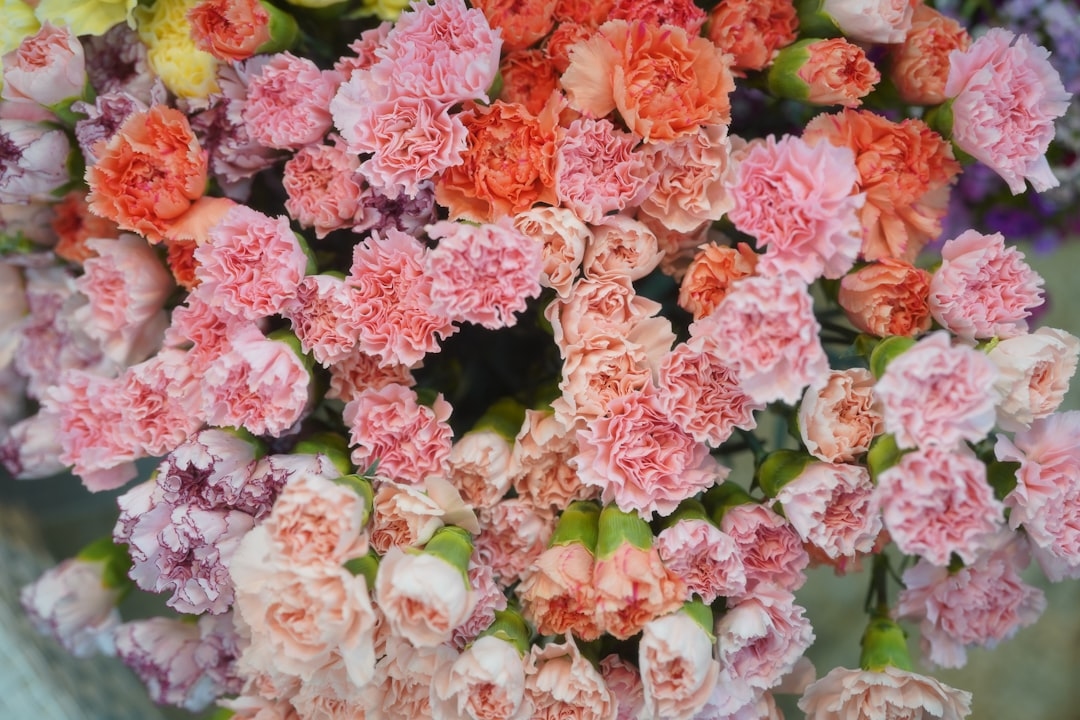
- Pink Carnations
- White Carnations
- Yellow Carnations
- Purple and Striped Carnations
- Types of Carnations: Choosing the Right Variety
- Standard (Large-Flowered) Carnations
- Spray (Mini) Carnations
- Dwarf or Border Carnations
- Perpetual-Flowering Carnations
- Your Complete Carnation Care Guide: Growing Outdoors
- Soil Preparation and Planting
- Sunlight Requirements
- Watering: The Single Most Common Mistake
- Fertilizing for Maximum Bloom Production
- Deadheading and Pinching for More Blooms
- Winter Care by USDA Zone
- Growing Carnations from Seed vs. Cuttings
- Starting from Seed
- Propagating from Cuttings
- Caring for Cut Carnations: Making Them Last
- The Moment They Come Home
- Water Temperature and Flower Food
- Daily Maintenance
- Reviving Wilting Stems
- Carnation Arrangements: Design Principles and Ideas
- Monochromatic Carnation Arrangements
- Mixed Bouquets: Where Carnations Excel as Filler
- Carnation Pomander Balls
- Wedding Carnations: A Cost-Effective Luxury
- Common Carnation Problems and How to Fix Them
- Yellow Leaves
- Stunted Growth and Failure to Bloom
- Fusarium Wilt
- Aphids and Spider Mites
- Where to Buy Carnations in the US
- Frequently Asked Questions About Carnation Care
- How long do cut carnations last in a vase?
- Do carnations need full sun or shade?
- How often should I water carnations?
- Are carnations perennials or annuals?
- What is the meaning of a red carnation?
- Why are my carnation buds not opening?
- Build Your Carnation Garden This Season
- Water: Every 2–3 days; keep soil moist but never waterlogged
- Light: Full sun, 4–6 hours daily
- Temperature: Thrives between 50–65°F (cool-season plant)
- Cut flower life: 2–3 weeks with proper care
- USDA Zones: Hardy perennials in Zones 6–9; grown as annuals elsewhere
- Bloom season: Late spring through early fall outdoors; year-round from florists
Carnations have been cultivated for over 2,000 years — making them one of the oldest domesticated flowers in human history. Yet most people still think of them as filler flowers, the afterthought tucked between roses and lilies. That reputation couldn’t be more wrong. This carnation care guide will change how you see these remarkable blooms entirely.
From ancient Greek temples to modern-day supermarket bouquets, Dianthus caryophyllus has outlasted empires, inspired poets, and earned a permanent place in floral design across every culture. They’re tough, fragrant, long-lasting, and available in an almost impossible range of colors. And once you know how to grow and care for them properly, they become one of the most rewarding flowers you can cultivate.
A Brief History: Where Carnations Come From
The carnation’s scientific name, Dianthus caryophyllus, translates roughly from Greek as “flower of the gods” — dios (divine) and anthos (flower). That name alone tells you how highly the ancient world regarded them. The Romans used carnations extensively in garlands and ceremonial crowns. Medieval Christian iconography depicted them as symbols of pure love, often painted into portraits of the Virgin Mary.
By the 17th century, carnation cultivation had become a serious horticultural pursuit in Europe. Dutch and French breeders developed hundreds of named varieties, competing fiercely at flower shows. When cultivation spread to the Americas, carnations adapted well to the cooler climates of the Northeast and Pacific Coast.
Today, Colombia and Ecuador supply the majority of carnations sold in the United States — roughly 60–70% of all cut carnations arrive from South America, where high-altitude growing conditions (5,000–9,000 feet above sea level) produce especially firm, long-lasting blooms. The rest come from domestic growers concentrated in California and Florida, as well as imports from the Netherlands.
Carnation vs. Dianthus: Clearing Up the Confusion
Here’s where many gardeners get tripped up. All carnations are dianthus, but not all dianthus are carnations. The genus Dianthus contains over 300 species, including sweet william (D. barbatus), pinks (D. plumarius), and the China pink (D. chinensis). True carnations refer specifically to Dianthus caryophyllus and its hybrids.
The practical difference matters when you’re shopping at a garden center. Dianthus plants labeled simply as “pinks” are typically smaller, lower-growing, and more cold-hardy — suitable as ground covers or border edging. True carnations grow taller (12–24 inches), produce larger blooms (up to 3 inches across), and have the distinctive clove-like fragrance that makes them so recognizable. If you see compact mounding plants with half-inch flowers, that’s likely a garden dianthus. The full-size, frilly, spice-scented blooms you find in florist coolers? Those are genuine carnations.
When buying cut flowers, this distinction matters for vase life too. True florist carnations last 2–3 weeks; smaller dianthus varieties typically fade within 7–10 days.
The Language of Carnation Colors: Symbolism That Still Resonates
Carnation color symbolism is more precise — and more historically grounded — than most people realize. The Victorians codified a floral language called floriography, and carnations played a starring role. Knowing what each color means can make your bouquets far more intentional.
Red Carnations
Deep red carnations represent profound love and admiration — not the passionate urgency of red roses, but something steadier and more enduring. They’re also a symbol of the labor movement; red carnations are traditionally worn on May Day in many countries. In the United States, red carnations are the official state flower of Ohio, adopted in 1904 to honor President William McKinley, who famously wore one in his lapel.
Pink Carnations
Pink carnations carry the richest legend. According to Christian tradition, they first appeared where the Virgin Mary’s tears fell as she wept at the cross — hence their association with a mother’s undying love. This story directly inspired the tradition of wearing pink carnations on Mother’s Day, a custom popularized by Anna Jarvis in the early 1900s. Light pink represents gratitude; deep pink signals affection and appreciation.
White Carnations
White carnations signify pure love, luck, and fidelity. They’re common in wedding arrangements and sympathy bouquets alike — a flexibility that speaks to their neutral emotional register. In South Korea, white and pink carnations together are the traditional gift on Parents’ Day, celebrated every May 8th.
Yellow Carnations
Yellow is the outlier in carnation symbolism. Historically, yellow carnations have been associated with disappointment or rejection — sending a yellow carnation was once considered a gentle way to decline a suitor. In modern floral design, though, yellow carnations are valued purely for their cheerful visual impact, and most recipients are blissfully unaware of the old meaning.
Purple and Striped Carnations
Purple carnations traditionally symbolize unpredictability and whimsy — a fitting message for someone who defies easy categorization. Striped or bicolor carnations, meanwhile, have historically carried a note of regret: “I wish I could be with you.” Today they’re simply striking design elements, especially in contemporary arrangements that play with contrast.
Types of Carnations: Choosing the Right Variety
Not all carnations are created equal, and understanding the main types helps you make better decisions — whether you’re buying stems at a grocery store, ordering from a florist, or planning what to plant in your garden this spring.
Standard (Large-Flowered) Carnations
These are the classic florist carnations: one large bloom per long stem, typically 16–24 inches tall. A single stem can cost $1.50–$3.00 at wholesale and $3–$6 at retail florists. Standard carnations are workhorses in arrangements — they hold their shape for weeks and come in virtually every color imaginable. Popular varieties include ‘Salamanca’ (deep red), ‘White Candy’ (pure white), and the bi-color ‘Baltico.’
Spray (Mini) Carnations
Spray carnations produce multiple smaller blooms (1–1.5 inches across) on branching stems. They’re fuller and more casual-looking than standards, making them popular for garden-style arrangements and as filler in mixed bouquets. A single spray stem replaces 3–5 stems visually. Retail price runs $2–$4 per stem. Look for varieties like ‘Pallas’ (lavender-pink), ‘Kaly’ (hot pink), and ‘Novia’ (white).
Dwarf or Border Carnations
These are primarily garden plants, reaching 10–14 inches tall with double blooms. They’re bred for outdoor performance rather than vase life. ‘Chabaud’ series and ‘Giant Chabaud’ are heirloom varieties that perform reliably in home gardens across USDA Zones 5–9, producing fragrant, fully double flowers from June through September.
Perpetual-Flowering Carnations
Developed primarily for commercial greenhouse production, perpetual-flowering carnations bloom nearly year-round under controlled conditions. They’re what you see in florist coolers in January. Home growers rarely cultivate these, as they require precise temperature management (day temperatures of 60–65°F, night temperatures of 50–55°F) that’s difficult to maintain without a dedicated greenhouse.
Your Complete Carnation Care Guide: Growing Outdoors
Carnations are more forgiving than their refined appearance suggests, but they do have firm preferences. Get these fundamentals right and you’ll be rewarded with blooms from June straight through to October in most parts of the country.
Soil Preparation and Planting
Carnations demand excellent drainage above almost everything else. They rot easily in waterlogged soil. Aim for a loamy, well-draining mix with a pH between 6.0 and 6.8. If your native soil is heavy clay, amend it with coarse sand and compost at a ratio of roughly 1:1:1 (native soil : sand : compost) before planting. Raised beds work exceptionally well — even a 6-inch elevation makes a significant drainage difference.
Space standard carnations 12–18 inches apart to ensure adequate air circulation, which reduces the risk of fungal disease. For spray types, 10–12 inches is sufficient. Plant depth should be just at the soil surface — burying the crown invites rot.
Sunlight Requirements
Carnations are sun-lovers. Give them a minimum of 4–6 hours of direct sunlight daily; 6–8 hours produces the fullest, most floriferous plants. In USDA Zones 8–9, afternoon shade during the hottest months (July–August) can actually improve performance — temperatures above 85°F stress the plants and shorten bloom cycles.
Watering: The Single Most Common Mistake
Overwatering kills more carnations than any other cause. Water deeply but infrequently — allowing the top inch of soil to dry out between waterings. In most climates during the growing season, this means watering every 3–5 days. During active heat or drought, every 2–3 days may be necessary. During cool, cloudy spells, you might go a full week.
Always water at the base of the plant rather than overhead. Wet foliage is an open invitation to botrytis blight, a fungal disease that causes gray mold on leaves and petals. Drip irrigation is ideal for carnation beds.
Fertilizing for Maximum Bloom Production
Feed established carnations every 4–6 weeks during the growing season with a balanced, slow-release fertilizer — a 10-10-10 NPK formula works well. Avoid high-nitrogen fertilizers; they push lush green growth at the expense of flowers. Once buds begin forming, switch to a low-nitrogen, high-phosphorus formula (something like 5-10-5) to support bloom development. Stop fertilizing 6–8 weeks before your first expected frost date.
Deadheading and Pinching for More Blooms
Deadhead spent flowers regularly — at least twice per week during peak bloom season. Removing faded flowers before they set seed redirects the plant’s energy into producing new buds rather than seeds. Each deadheaded stem can trigger 2–3 new branching shoots on spray types.
Pinching — removing the growing tip of young plants when they reach 6 inches tall — encourages branching from the start. Pinch once more when side shoots reach 6 inches. This simple step can double the number of blooms on a single plant by the time summer arrives.
Winter Care by USDA Zone
In Zones 6–9, carnations are reliably perennial with minimal protection. After the first frost blackens the foliage, cut plants back to 4–6 inches and mulch with 2–3 inches of straw or shredded leaves. In Zone 5, heavy mulching (4–6 inches) plus a layer of evergreen boughs gives plants a fighting chance, though success isn’t guaranteed. In Zones 3–4, treat carnations as annuals or overwinter rooted cuttings indoors.
Growing Carnations from Seed vs. Cuttings
Both methods work, but they suit different goals and timelines.
Starting from Seed
Carnation seeds germinate in 10–14 days at soil temperatures of 65–70°F. Start seeds indoors 8–10 weeks before your last frost date. Sow seeds 1/8 inch deep in a sterile seed-starting mix. Germination rates for fresh, quality seed typically run 70–85%. One important note: most modern hybrid carnations don’t come true from seed — meaning the offspring may differ significantly from the parent plant in color and form. If you want predictable results, use vegetative propagation.
Propagating from Cuttings
Stem cuttings are the preferred method for preserving specific varieties. Take 4–6 inch cuttings from non-flowering side shoots in late spring or early summer. Remove the lower leaves, dip the cut end in rooting hormone powder (0.1–0.3% IBA concentration), and insert into a moist, well-draining rooting medium. Cover with a humidity dome and place in bright, indirect light at 65–70°F. Roots typically form within 3–4 weeks. Rooting success rates exceed 90% when conditions are right — far more reliable than seed starting for maintaining a specific cultivar.
Caring for Cut Carnations: Making Them Last
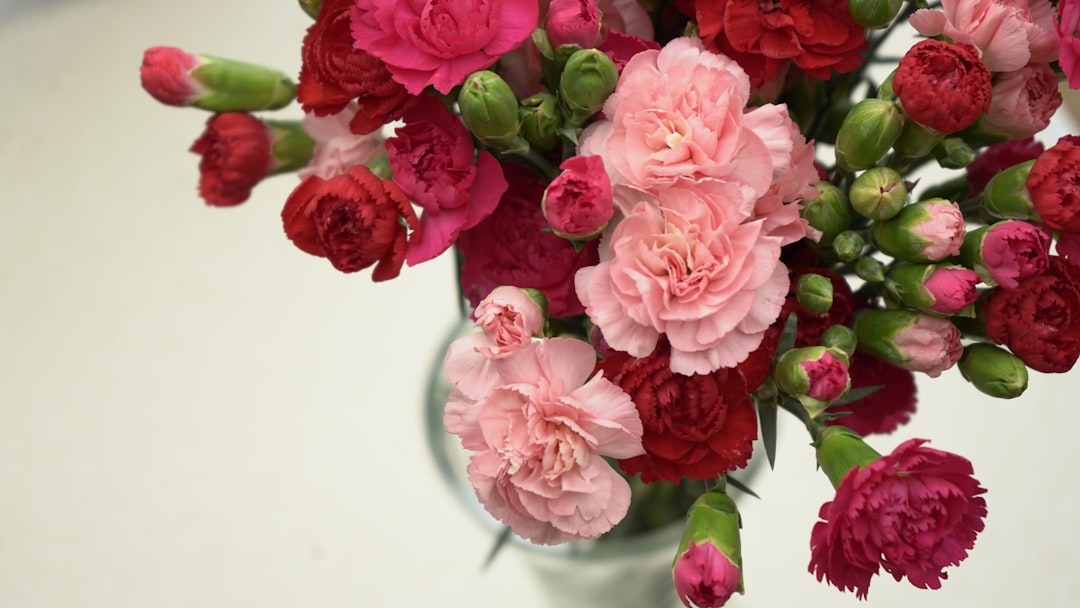
A properly cared-for carnation stem can stay fresh for 14–21 days — longer than almost any other common cut flower. Here’s how to reach that maximum vase life every time.
The Moment They Come Home
The first 30 minutes matter enormously. Cut at least half an inch off the bottom of each stem with a sharp, clean knife — not scissors, which crush the vascular tissue. Cut on a 45-degree angle to maximize water uptake surface area. Remove any leaves that will fall below the waterline in your vase; decomposing foliage introduces bacteria that shorten vase life dramatically.
Water Temperature and Flower Food
Place cut carnations immediately into cool (not cold) water — around 38–45°F if possible. Florist coolers maintain exactly this range. At home, adding ice cubes to your vase water and placing it in a cool room achieves a similar effect. Use the packet of floral preservative that comes with grocery store and florist bouquets; it contains a biocide, sugar (for energy), and an acidifier that together extend vase life by an average of 3–5 days compared to plain water.
If you don’t have flower food packets, a homemade solution works: 1 tablespoon of white sugar, 1 tablespoon of white vinegar or lemon juice, and 1/4 teaspoon of bleach per quart of water. It’s not quite as effective as commercial preparations, but measurably better than plain water.
Daily Maintenance
Change the vase water every 2 days and recut the stems by 1/4 inch each time. Keep carnations away from fruit bowls — ripening fruit emits ethylene gas, which dramatically accelerates petal drop. A bowl of bananas sitting two feet from your vase can cut carnation vase life by 30–40%. Similarly, keep arrangements away from heating vents, direct sunlight, and drafts.
Reviving Wilting Stems
If carnation stems start drooping before the flowers have opened, try a hot-water treatment: cut 1–2 inches off the stems and place them immediately in water heated to 100–110°F for 30–60 seconds, then transfer to cool water. This method rehydrates stems that have developed air locks in their vascular tissue. Success rate is high — about 80% of early-stage wilting carnations recover fully within 2–4 hours.
Carnation Arrangements: Design Principles and Ideas
Carnations are deeply versatile. They work as focal flowers, filler flowers, or textural elements depending on how you use them. Here are practical approaches that produce consistently beautiful results.
Monochromatic Carnation Arrangements
A mass arrangement using a single color of standard carnations — say, 15–20 stems of deep burgundy — creates striking visual impact through repetition. Vary the stem heights by 2–3 inches between adjacent flowers to avoid a flat, grid-like look. Add 5–7 stems of eucalyptus or Italian ruscus at the perimeter for contrast without competing colors.
Mixed Bouquets: Where Carnations Excel as Filler
Spray carnations are among the most effective filler flowers in any bouquet — their branching structure fills gaps naturally, their texture contrasts beautifully with smooth-petaled flowers like tulips or ranunculus, and their longevity means they’ll still look fresh long after companion flowers have faded. Use a ratio of roughly 1 spray carnation stem per 2–3 focal flowers for balanced fullness.
Carnation Pomander Balls
One of the most popular DIY carnation projects is the pomander — a sphere of tightly packed blooms used in weddings, table centerpieces, or as hanging decorations. To make one: soak a 4-inch floral foam sphere in water for 20–30 minutes until saturated. Cut carnation stems to 1.5–2 inches and insert them tightly, covering the entire surface. A 4-inch pomander requires approximately 60–80 standard carnation heads or 100–120 mini carnation heads. Pomanders last 3–5 days at room temperature; refrigerate overnight to extend life.
Wedding Carnations: A Cost-Effective Luxury
Carnations are having a genuine moment in wedding floristry. A wedding bouquet made primarily of white or blush carnations costs $40–$75 in materials, compared to $150–$300 for a comparable rose or peony bouquet. Many couples use them strategically — carnation-heavy centerpieces with rose focal flowers, or all-carnation ceremony arch installations that would be prohibitively expensive using any other bloom. At wholesale pricing ($0.50–$1.50 per stem in bulk), a 200-stem carnation wedding order can cost under $200.
Common Carnation Problems and How to Fix Them
Even experienced growers run into trouble. Here are the most common carnation problems, identified by symptom.
Yellow Leaves
Yellowing lower leaves on actively growing plants usually indicate overwatering or poor drainage. Let the soil dry further between waterings and check that drainage holes aren’t blocked. If yellowing affects upper leaves too, check soil pH — carnations in soil above 7.0 struggle to absorb iron and manganese, causing interveinal chlorosis. Amend with sulfur or apply chelated iron as a foliar spray.
Stunted Growth and Failure to Bloom
If carnations are growing slowly with few or no buds, insufficient sunlight is the most likely culprit. Test with a light meter app — anything below 2,000 foot-candles during the day is too dim for reliable flowering. Nitrogen deficiency is the second most common cause; apply a balanced fertilizer and monitor for improvement over 2–3 weeks.
Fusarium Wilt
Fusarium wilt is the most serious disease carnations face. Caused by the soil-borne fungus Fusarium oxysporum f. sp. dianthi, it causes sudden wilting, yellowing, and brown discoloration inside the stem. There’s no cure once a plant is infected — remove and destroy affected plants immediately (do not compost). Prevent it by using sterilized growing media, practicing a 3-year rotation (don’t plant carnations or other dianthus in the same bed within 3 years), and choosing resistant varieties like ‘Scania’ and ‘William Sim.’
Aphids and Spider Mites
Both pests love carnations, particularly in hot, dry conditions. Aphids cluster on new growth and can be dislodged with a strong stream of water or treated with insecticidal soap (1–2% concentration). Spider mites leave a fine webbing on the undersides of leaves; increase humidity around plants and apply neem oil at dusk. Treat at the first sign of infestation — both pests reproduce rapidly and a light infestation becomes severe within 7–10 days without intervention.
Where to Buy Carnations in the US
Your buying options range from impulse grocery store purchases to direct wholesale sourcing, and the quality difference is substantial.
Grocery stores and big-box retailers (Trader Joe’s, Whole Foods, Costco): Convenient and affordable — $5–$12 per bunch of 10–15 stems. Quality is inconsistent; Costco and Trader Joe’s generally offer better flower quality than standard supermarkets due to higher turnover. Check that buds are firm and petals are tightly closed — this indicates the flowers were recently cut and have maximum vase life ahead of them.
Local florists: More expensive ($3–$6 per stem individually or $25–$50 for arranged bouquets), but florists receive regular fresh deliveries and can source specific colors and varieties on request. Building a relationship with a local florist pays dividends — you’ll get first access to seasonal and unusual varieties.
Online wholesale platforms (FiftyFlowers, The Bouqs Farm Direct, Mayesh Wholesale): For events or larger purchases, buying wholesale online can cut costs by 50–70% compared to retail. Minimum orders typically start at 100–200 stems. Flowers arrive 1–2 days before your event date in bud form and need 24–48 hours to fully open.
Garden centers for plants: In spring, most garden centers carry Dianthus caryophyllus starts alongside their annual flower selection. Expect to pay $3–$6 for a 4-inch pot. Mail-order specialty nurseries like Burpee and Park Seed carry a wider range of cultivars, including heirlooms, that you won’t find locally.
Frequently Asked Questions About Carnation Care
How long do cut carnations last in a vase?
Cut carnations typically last 14–21 days in a vase when properly cared for. To maximize vase life: recut stems at a 45-degree angle, change water every 2 days, use floral preservative, and keep them away from fruit, direct sunlight, and heat vents. Carnations are among the longest-lasting of all cut flowers.
Do carnations need full sun or shade?
Carnations need full sun — a minimum of 4–6 hours of direct sunlight daily. In hotter climates (USDA Zones 8–9), afternoon shade during peak summer heat (temperatures above 85°F) helps prevent stress and extends the blooming season. Too little sunlight results in leggy growth, weak stems, and significantly fewer flowers.
How often should I water carnations?
Water carnations every 3–5 days during the growing season, allowing the top inch of soil to dry out between waterings. In hot or dry conditions, water every 2–3 days. Always water at the base of the plant to prevent fungal disease. Overwatering is the most common cause of carnation failure — when in doubt, wait an extra day.
Are carnations perennials or annuals?
Carnations are perennial in USDA Hardiness Zones 6–9. In colder zones (3–5), they’re typically grown as annuals unless overwintered indoors as rooted cuttings. In Zones 10–11, heat stress limits their performance, and they’re best grown as cool-season annuals in fall and spring. The plants live longest (3–5 years) in the cool, temperate conditions of Zones 6–7.
What is the meaning of a red carnation?
Red carnations symbolize deep love, admiration, and respect — a more enduring, steadfast form of affection than the passionate urgency associated with red roses. They also have strong labor movement symbolism internationally, worn on May Day as a symbol of solidarity. In the United States, the red carnation is the official state flower of Ohio.
Why are my carnation buds not opening?
Carnation buds that won’t open are usually experiencing one of three problems: cold temperatures (below 40°F slows or halts opening), ethylene gas exposure (from nearby ripening fruit or a gas leak), or dehydration from a blocked stem. Recut the stems by 1 inch, place in fresh warm water (65–70°F) with flower food in a room-temperature environment, and buds should begin opening within 12–24 hours.
Build Your Carnation Garden This Season
After 2,000 years, carnations haven’t just survived — they’ve flourished because they genuinely deliver. Long vase life, extraordinary color range, deep cultural resonance, and real garden staying power. No other flower at their price point comes close on all four counts.
Start small if you’re new to them: buy a $5 bunch next time you pass a grocery store, and practice the proper stem-cutting and water-changing routine. Then, come spring, order a few ‘Chabaud’ or ‘Giant Chabaud’ starts from a seed catalog and carve out a sunny, well-drained spot in your garden. By mid-summer, you’ll be cutting your own stems. By fall, you’ll be planning next year’s color combinations.
That’s the thing about carnations. They don’t ask for much — just good drainage, honest sunlight, and a little attention. And they pay you back in blooms for months. Once you stop treating them as the filler flower and start treating them as the featured one, your arrangements will never look the same.