Contents:
- What Makes Begonias So Botanically Unique
- Tuberous Begonias: The Showstoppers of the Begonia World
- Understanding Tuberous Begonia Growth Cycles
- Soil, Light, and Water Requirements
- Popular Tuberous Begonia Cultivars
- Rex Begonias: Growing Living Art Indoors
- Indoor Conditions Rex Begonias Demand
- Potting Mix and Fertilization
- Standout Rex Begonia Varieties
- Begonia Varieties Guide: Wax Begonias for Easy, Reliable Color
- Sun Tolerance and Planting Zones
- Spacing, Sizing, and Mass Planting
- Top Wax Begonia Series for American Gardens
- How to Propagate All Three Begonia Types
- Tuberous Begonia Propagation
- Rex Begonia Propagation via Leaf Cuttings
- Wax Begonia Propagation from Stem Cuttings
- Common Mistakes to Avoid
- Pests, Diseases, and Organic Management
- Common Pests
- Disease Prevention
- Expert Insight: Matching Begonia Type to Growing Conditions
- Seasonal Care Calendar for Begonia Growers
- Spring (March–May)
- Summer (June–August)
- Fall (September–November)
- Winter (December–February)
- Buying Begonias: What to Look For and What to Avoid
- Frequently Asked Questions About Begonia Varieties
- What is the easiest begonia variety to grow for beginners?
- Can tuberous begonias survive winter outdoors in the US?
- Why are my rex begonia leaves losing their color and pattern?
- How often should I fertilize begonias?
- Do begonias attract pollinators?
- Building Your Begonia Collection: A Practical Starting Point
Many gardeners believe begonias are delicate, fussy plants best left to professionals—a myth that has kept countless DIY enthusiasts from growing one of the most rewarding flowering genera on the planet. This begonia varieties guide sets the record straight, breaking down the science and hands-on care behind three of the most popular groups: tuberous, rex, and wax begonias. By the end, you’ll know exactly which type belongs in your garden, your windowsill, or your summer container display—and how to keep it thriving.
What Makes Begonias So Botanically Unique
Begonias belong to the family Begoniaceae, and the genus Begonia alone contains over 2,000 recognized species—making it one of the largest flowering plant genera in existence. They originated primarily in tropical and subtropical regions of South America, Africa, and Southeast Asia, which explains their preference for humidity and indirect light.
What truly sets begonias apart is their asymmetrical leaf shape. Nearly every begonia species produces leaves where one side is noticeably larger than the other—a botanical quirk caused by differential cell growth. This characteristic is so consistent it serves as a quick field identification marker. Their flowers are also unusual: begonias are monoecious, meaning each plant produces both male and female flowers separately on the same stem. The showier blooms with prominent petals are typically male; the smaller, winged versions are female.
Begonias were first formally classified by Charles Plumier in 1690, named after Michel Bégon, a French colonial administrator and plant enthusiast. Since then, hybridizers have produced thousands of cultivars, dramatically expanding the color palette, leaf texture, and growth habit available to home gardeners.
Tuberous Begonias: The Showstoppers of the Begonia World
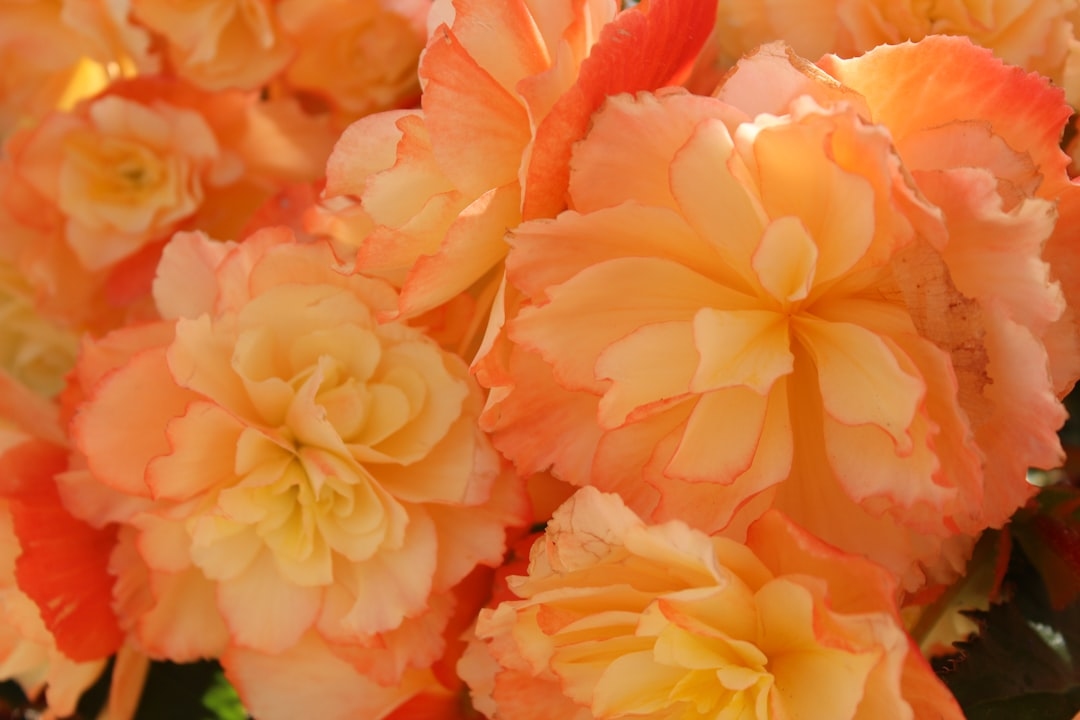
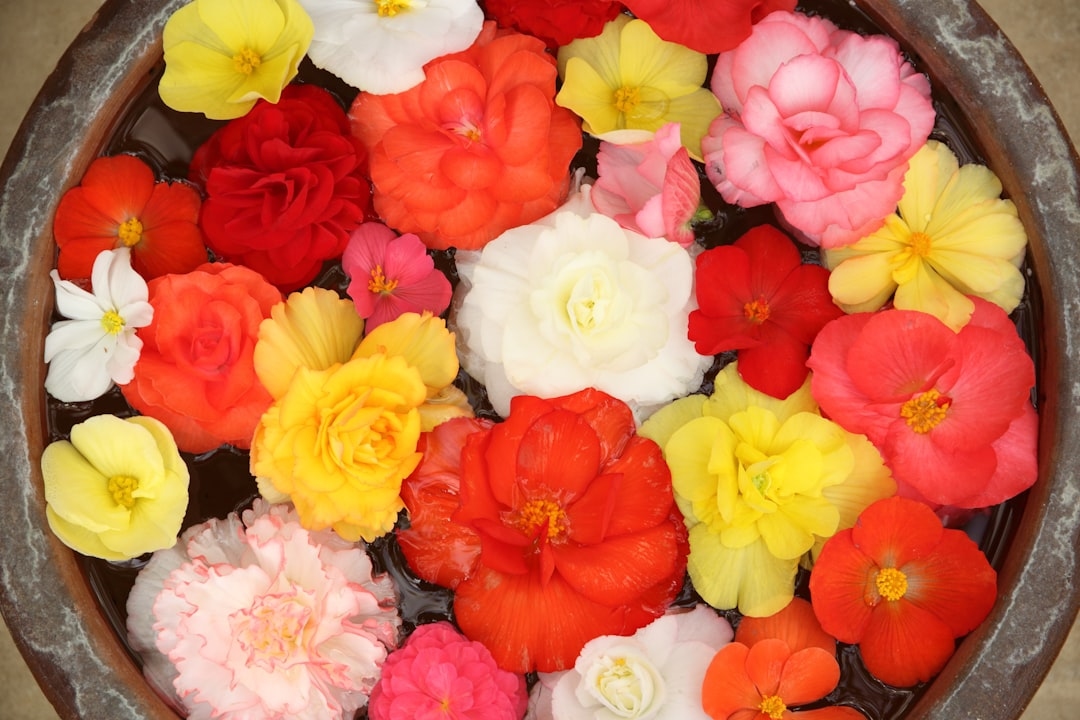
Tuberous begonias (Begonia × tuberhybrida) are the drama queens of the genus—and that’s meant as a compliment. Their flowers can reach 4 to 8 inches in diameter, rivaling roses and peonies in ornamental impact. They’re the variety most commonly found in hanging baskets, window boxes, and summer border displays across USDA Hardiness Zones 9–11, though gardeners in colder zones (3–8) grow them as annuals or lift the tubers each fall.
Understanding Tuberous Begonia Growth Cycles
Tuberous begonias grow from flattened, disc-shaped tubers that go dormant in winter. This dormancy period is not a sign of failure—it’s a biological necessity. The tubers require 3 to 4 months of cool, dry rest (ideally between 45°F and 55°F) before they’ll produce vigorous new growth the following season.
Start tubers indoors 6 to 8 weeks before your last frost date. Place them hollow-side up in a shallow tray of barely moist potting mix, at a temperature of 65°F to 70°F. Pink growth buds will emerge from the hollow side within 2 to 4 weeks. Transplant outdoors only after nighttime temperatures consistently stay above 50°F.
Soil, Light, and Water Requirements
Tuberous begonias perform best in well-draining, organically rich soil with a pH between 5.5 and 6.5. They need bright, indirect light—morning sun with afternoon shade is ideal. Direct afternoon sun, especially in Zone 7 and warmer, scorches the petals and causes premature bud drop.
Water consistently but never allow the soil to become waterlogged. A useful rule of thumb: water when the top inch of soil is dry to the touch. Overwatering is the single most common cause of tuber rot. In containers, ensure drainage holes are unobstructed and avoid saucers that collect standing water.
Popular Tuberous Begonia Cultivars
- ‘Nonstop’ series: Compact, 10–12 inches tall, with double flowers in red, yellow, orange, pink, and white. Excellent for containers.
- ‘Illumination’ series: Trailing habit, ideal for hanging baskets; flowers cascade up to 18 inches below the pot rim.
- ‘Go Go’ series: Upright growers reaching 14–16 inches, with particularly large blooms up to 6 inches across.
- ‘Pin-Up’ series: Single-flowered types with a prominent yellow center, resembling a poppy; more heat-tolerant than double-flowered types.
Rex Begonias: Growing Living Art Indoors
Rex begonias (Begonia rex-cultorum) are grown almost entirely for their foliage. Flowers appear occasionally but are minor players—the real spectacle is the leaf surface, which displays metallic sheens, spiraling patterns, and color combinations that include silver, burgundy, chartreuse, purple, and nearly black. They are rhizomatous plants, spreading via thick horizontal stems (rhizomes) that crawl along the soil surface.
Indoor Conditions Rex Begonias Demand
Rex begonias are not outdoor plants in most of the United States. They’re frost-sensitive and struggle in temperatures below 55°F or above 85°F. Indoors, they thrive at 65°F to 75°F with humidity levels between 50% and 60%—higher than most American homes maintain naturally, especially in winter when heating systems dry out the air.
To raise humidity without wetting the leaves (which invites powdery mildew), set pots on a tray filled with pebbles and water, keeping the pot base just above the waterline. Alternatively, a small humidifier placed nearby works well. Grouping rex begonias with other humidity-loving houseplants also helps.
Light requirements are specific: bright, indirect light for 14 to 16 hours per day produces the most vivid leaf coloration. East-facing windows are typically ideal. Under low light, the metallic patterning fades noticeably within 4 to 6 weeks.
Potting Mix and Fertilization
Rex begonias are sensitive to overwatering and root compaction. Use a lightweight, peat-free mix combining 40% coco coir, 30% perlite, and 30% fine bark chips. This blend drains quickly while retaining just enough moisture. Repot every 1 to 2 years into a container only 1 to 2 inches larger than the previous one—these plants actually bloom and display better when slightly root-bound.
Fertilize during the growing season (March through September) with a balanced liquid fertilizer at half-strength, applied every 2 weeks. High-nitrogen formulas promote lush foliage. In fall and winter, reduce feeding to once a month or stop entirely if the plant enters a semi-dormant rest period.
Standout Rex Begonia Varieties
- ‘Escargot’: Named for its spiraling leaf pattern resembling a snail shell; silver and green with burgundy undersides. One of the most recognizable cultivars.
- ‘Fireworks’: Deep purple leaves with silver streaks and pink margins; one of the most visually dramatic cultivars available.
- ‘Red Robin’: Rich crimson and bronze tones, compact grower reaching just 8–10 inches; excellent for windowsills.
- ‘Salsa’: Chocolate-brown and silver with ruffled leaf edges; tolerates slightly lower humidity than most rex types.
Begonia Varieties Guide: Wax Begonias for Easy, Reliable Color
Wax begonias (Begonia × semperflorens-cultorum) are arguably the most planted annual in American landscaping—and for good reason. They bloom continuously from late spring until the first hard frost, require minimal maintenance, and tolerate a broader range of conditions than either tuberous or rex types. The name “wax” refers to the glossy, succulent texture of the leaves rather than any waxy coating.
Sun Tolerance and Planting Zones
Unlike most begonias, wax begonias handle full sun reasonably well, particularly the bronze-leaved varieties, which contain higher levels of anthocyanins—pigments that act as a natural sunscreen. Green-leaved varieties prefer partial shade and may bleach or develop sunscald in afternoon sun exceeding 6 hours per day.
They’re commonly grown as annuals in Zones 3–9 and as tender perennials in Zones 10–11. In frost-free regions, individual plants can persist for 3 to 4 years, developing woody stems at the base. In frost-prone areas, gardeners often dig and pot plants before the first frost, overwintering them on a sunny windowsill and replanting the following spring.
Spacing, Sizing, and Mass Planting
Wax begonias range from compact 6-inch mounds to vigorous 18-inch specimens, depending on the cultivar. For mass planting in beds, space plants 6 to 8 inches apart for a dense, carpet-like effect, or 10 to 12 inches apart if you prefer a slightly airier look. A 100-square-foot bed planted at 8-inch spacing requires approximately 225 plants—worth calculating before your nursery visit, as retail prices typically run $2 to $5 per plant or $15 to $25 for a six-pack.
Top Wax Begonia Series for American Gardens
- ‘Big’ series: Exceptionally large flowers (up to 2.5 inches) on compact, 10–12-inch plants. Heat and humidity tolerant, well-suited to the American South.
- ‘Dragon Wing’: Technically a cane-type hybrid often grouped with wax begonias; large, angel-wing leaves and pendulous red or pink flower clusters. Reaches 15–18 inches and thrives in heat.
- ‘Whopper’ series: Among the largest wax begonias available, reaching 16–18 inches in height with 2-inch flowers. Bronze or green foliage options.
- ‘Cocktail’ series: A classic, time-tested series with bronze foliage and red, pink, or white flowers. Performs reliably in both sun and partial shade.
How to Propagate All Three Begonia Types
One of the most satisfying aspects of growing begonias is how readily they propagate. Each type requires a slightly different approach, but none demands specialist equipment.
Tuberous Begonia Propagation
The most straightforward method is tuber division. In spring, when new growth shoots are 1 to 2 inches long, use a sharp, sterilized knife to cut the tuber into sections, ensuring each section has at least one viable shoot. Dust cut surfaces with powdered sulfur or cinnamon to prevent fungal infection, then allow cut surfaces to air-dry for 24 hours before planting. Each division will develop into a full-sized flowering plant within one season.
Stem cuttings also work well. Take 3- to 4-inch tip cuttings in late spring or early summer, remove the lower leaves, and insert into a moistened mix of perlite and coco coir. Maintain temperatures of 70°F to 75°F and high humidity; roots typically develop within 3 to 4 weeks.
Rex Begonia Propagation via Leaf Cuttings
Rex begonias are famously easy to propagate from leaf cuttings—a technique that produces multiple new plants from a single leaf. Cut a healthy, mature leaf from the parent plant and slice across the main veins at 1-inch intervals. Lay the leaf flat on moist propagation mix, vein-side down, and secure it with small pins or staples so the cut veins make contact with the soil. Within 4 to 8 weeks, tiny plantlets emerge from each vein cut. Once they reach 2 inches tall, separate and pot them individually.
Wax Begonia Propagation from Stem Cuttings
Wax begonias root so readily from stem cuttings that some gardeners propagate them directly in water. Take 3-inch cuttings just below a leaf node, strip the lower leaves, and place in a jar of clean water in bright indirect light. Roots appear within 10 to 14 days. Pot into a well-draining mix once roots reach ½ to 1 inch in length. Delay too long and the water-adapted roots may struggle to transition to soil.
Common Mistakes to Avoid
Even experienced gardeners make preventable errors with begonias. Here are the most frequent pitfalls and how to sidestep them:
- Watering on a schedule rather than by soil condition: Begonias have no fixed watering schedule. Always check soil moisture before watering—finger-test the top inch. In a cool, humid room, a rex begonia may only need water once every 10 days; in a hot, dry summer outdoors, a tuberous begonia in a terracotta pot may need water daily.
- Planting tuberous begonias too deep: The top of the tuber should sit at or just below the soil surface—no more than ½ inch deep. Burying them 2 to 3 inches deep (as you might a bulb) leads to slow emergence, rotting, or total failure.
- Misting rex begonia leaves: Wetting the foliage of rex begonias invites powdery mildew and botrytis. Always increase ambient humidity through other means—pebble trays, grouping plants, or a humidifier.
- Skipping deadheading on wax begonias: While wax begonias are marketed as “self-cleaning,” removing spent flowers in very wet weather prevents botrytis from establishing on decaying petals.
- Using cold tap water: Begonias are sensitive to cold-water shock. Allow tap water to sit at room temperature for 30 minutes before watering, or use collected rainwater, which is also lower in chlorine and fluoride.
Pests, Diseases, and Organic Management
Begonias face a predictable set of threats, and early identification makes management straightforward.
Common Pests
Fungus gnats are the most frequent pest of indoor begonias, particularly rex types grown in moisture-retentive soils. Their larvae feed on fine root hairs, causing wilting that mimics overwatering. Allow the soil to dry thoroughly between waterings—this alone breaks the life cycle. Sticky yellow traps capture adults. For persistent infestations, a top-dressing of coarse horticultural sand discourages egg-laying.
Thrips cause silvery, stippled damage on tuberous and wax begonia petals and leaves. Inspect new growth with a 10x hand lens. Neem oil spray applied at 5-day intervals for 3 consecutive treatments is effective at all life stages. Apply in the evening to avoid phytotoxicity.
Mealybugs cluster in leaf axils of rex begonias, producing cottony white masses. Remove with a cotton swab dipped in 70% isopropyl alcohol, then follow with a neem oil drench.
Disease Prevention
Powdery mildew is the most common fungal disease across all begonia types, particularly in conditions of low air circulation combined with high humidity. Space plants at recommended intervals, avoid overhead watering, and treat early infections with a solution of 1 tablespoon of baking soda and ½ teaspoon of liquid dish soap per gallon of water, applied weekly.
Botrytis (gray mold) thrives in cool, damp conditions and typically enters through damaged or senescing tissue. Remove spent blooms promptly, improve ventilation, and avoid watering late in the day when foliage won’t dry before nightfall.
Expert Insight: Matching Begonia Type to Growing Conditions
“The biggest mistake I see in my consultations is gardeners choosing a begonia based on appearance alone,” says Dr. Margaret Hollis, Ph.D., Certified Professional Horticulturist and extension educator at the University of Georgia Cooperative Extension. “A rex begonia is a stunning plant, but if your home has dry forced-air heating and south-facing windows, you’re setting it up to fail. Match the variety to your actual conditions first, then work on aesthetics. Tuberous types for shady patios, wax for sunny beds, rex for the right indoor environment—that’s the framework every beginner should start with.”
Dr. Hollis also recommends that first-time begonia growers begin with a wax begonia from the ‘Big’ or ‘Whopper’ series: “They’re vigorous, forgiving, and bloom all season with almost no intervention. Success with those builds the confidence to tackle tuberous and rex varieties.”
Seasonal Care Calendar for Begonia Growers
Timing matters significantly with begonias, particularly for tuberous types that require dormancy management.
Spring (March–May)
Start tuberous begonia tubers indoors 6 to 8 weeks before last frost. Repot rex begonias into fresh mix if they’ve been in the same container for more than 18 months. Begin fertilizing wax begonias as temperatures warm above 60°F. Harden off transplants over 7 to 10 days before moving outdoors permanently.
Summer (June–August)
Peak growing and blooming season for all three types. Monitor soil moisture daily for container plants during heat waves. Pinch back wax begonias that become leggy—cut back by up to one-third to encourage bushier, more floriferous growth. Watch tuberous begonias for powdery mildew; increase air circulation if needed.
Fall (September–November)
Dig tuberous begonia tubers after the first light frost blackens the foliage. Cut stems to 2 inches, allow tubers to cure in a dry location at 60°F for 2 weeks, then store in paper bags with dry peat moss at 45°F to 55°F. Begin reducing watering for rex begonias as day length shortens. Pot up wax begonias for overwintering indoors before the first hard frost.
Winter (December–February)
Check stored tuberous tubers monthly for rot or excessive desiccation; lightly mist with water if they appear shriveled. Rex begonias may drop lower leaves during this period—this is normal semi-dormancy behavior. Maintain wax begonias on a south-facing windowsill with supplemental grow lights if natural light is insufficient (aim for 14 hours of light per day).
Buying Begonias: What to Look For and What to Avoid
Quality at purchase significantly affects performance. At a nursery or garden center, select plants with compact, bushy growth and multiple budded or blooming stems. Avoid plants with yellowing lower leaves (often a sign of overwatering or root issues in the growing facility), visible pest damage, or leggy, stretched growth indicating insufficient light during production.
For tuberous begonias purchased as bare tubers (commonly sold in bags at hardware stores and garden centers from January through March), choose firm tubers with no soft spots or visible mold. Size matters: tubers 1½ inches in diameter or larger produce more vigorous plants and larger flowers than smaller ones. Expect to pay $3 to $8 per tuber for standard varieties and $10 to $20 for premium or specialty cultivars.
Online specialty nurseries such as Antonelli Brothers Begonia Gardens (California) and Glasshouse Works offer a far wider selection of rex and tuberous cultivars than most retail garden centers, though shipping live plants adds cost and risk during extreme weather.
Frequently Asked Questions About Begonia Varieties
What is the easiest begonia variety to grow for beginners?
Wax begonias (Begonia × semperflorens) are the most beginner-friendly variety. They tolerate a wide range of light conditions, including full sun and partial shade, bloom continuously without deadheading, and recover quickly from neglect. The ‘Big’ and ‘Whopper’ series are particularly resilient choices for first-time growers.
Can tuberous begonias survive winter outdoors in the US?
Tuberous begonias are winter-hardy outdoors only in USDA Zones 9–11, where ground temperatures don’t drop below 20°F. In Zones 3–8, tubers must be lifted after the first frost, dried, and stored indoors at 45°F to 55°F until spring. Left in frozen ground, they rot and will not survive.
Why are my rex begonia leaves losing their color and pattern?
Fading leaf color in rex begonias is almost always caused by insufficient light. These plants require 14 to 16 hours of bright, indirect light per day to maintain vivid patterns. Move the plant to an east-facing window or supplement with a full-spectrum LED grow light positioned 6 to 12 inches above the foliage for 14 hours daily.
How often should I fertilize begonias?
During the active growing season (spring through early fall), fertilize wax and rex begonias every 2 weeks with a balanced, water-soluble fertilizer diluted to half-strength. Tuberous begonias benefit from a higher-potassium formula (such as 5-10-10) once flower buds appear, applied every 2 weeks. Stop fertilizing all types in late fall and winter.
Do begonias attract pollinators?
Wax and tuberous begonias attract bees and butterflies, particularly to single-flowered cultivars where pollen is accessible. Fully double-flowered tuberous varieties provide minimal pollinator benefit because the reproductive structures are obscured by extra petals. For pollinator gardens, single-flowered types like the ‘Pin-Up’ series are the better choice.
Building Your Begonia Collection: A Practical Starting Point
Start with one plant from each category: a wax begonia for your outdoor beds or containers, a rex begonia for an east-facing windowsill, and a single tuberous begonia tuber to trial in a 12-inch pot on a shaded patio. This gives you hands-on experience with all three growth habits, dormancy cycles, and care profiles within a single growing season—and costs under $30 total at most garden centers.
Keep a simple log of watering frequency, fertilizer dates, and light conditions for each plant. Within one season, you’ll have concrete, personalized data about which variety performs best in your specific microclimate. That knowledge is worth far more than any generalized growing guide—including this one. From there, expand into specialty cultivars, experiment with propagation, and consider joining the American Begonia Society, which maintains a national network of chapters, a seed fund, and annual shows where collectors exhibit rare species and cultivars not available in commercial trade.