Contents:
- What Makes Cosmos Special: A Quick Background
- Cosmos vs. Zinnias: Clearing Up the Confusion
- Choosing the Right Cosmos Variety for Your Garden
- Cosmos bipinnatus: The Classic Choice
- Cosmos sulphureus: Shorter, Bolder, Hotter
- Dwarf Varieties for Small Spaces
- The Complete Cosmos Growing Guide: Soil, Sun, and Site Selection
- Sunlight Requirements
- Soil: The Counterintuitive Rule
- Climate and USDA Zone Suitability
- How to Plant Cosmos: Direct Sow vs. Starting Indoors
- Direct Sowing in the Garden
- Starting Cosmos Indoors
- Thinning Seedlings
- Watering Cosmos: Less Is Almost Always More
- Fertilizing Cosmos: When to Feed and When to Stop
- Deadheading and Pruning for Maximum Blooms
- How to Deadhead Cosmos
- Pinching for Bushy Growth
- Common Cosmos Pests and Problems (and How to Handle Them)
- Aphids
- Powdery Mildew
- Aster Yellows
- Stem Lodging (Flopping)
- Saving Cosmos Seeds: Free Flowers Forever
- Growing Cosmos in Containers
- Cosmos as Cut Flowers: Maximizing Vase Life
- Cosmos and Pollinators: A Garden Ecosystem Win
- Practical Tips for Growing Cosmos on a Budget
- Frequently Asked Questions About Growing Cosmos
- How long does it take for cosmos to bloom from seed?
- Do cosmos come back every year?
- Why are my cosmos not blooming?
- Can I grow cosmos in pots or containers?
- When should I plant cosmos seeds in the US?
- Start Your Cosmos Garden This Season
A single packet of cosmos seeds — often priced under $3 — can produce over 50 flowering plants that bloom continuously from summer straight through the first frost. That’s not a typo. Few annuals deliver that kind of return on investment, which is exactly why cosmos have been a cottage garden staple for over a century and why florists quietly rely on them to fill out bouquets without blowing their flower budgets. This cosmos growing guide covers everything you need to know to grow these feathery-leaved beauties from seed to stunning display, even if you’ve never planted a flower in your life.
What Makes Cosmos Special: A Quick Background
Cosmos (Cosmos bipinnatus and Cosmos sulphureus) are native to Mexico and Central America, which explains their love of heat and their complete indifference to poor soil. Spanish priests growing them in their mission gardens reportedly named them “cosmos” — the Greek word for harmony — because of the evenly arranged petals. That name stuck, and so did the plant.
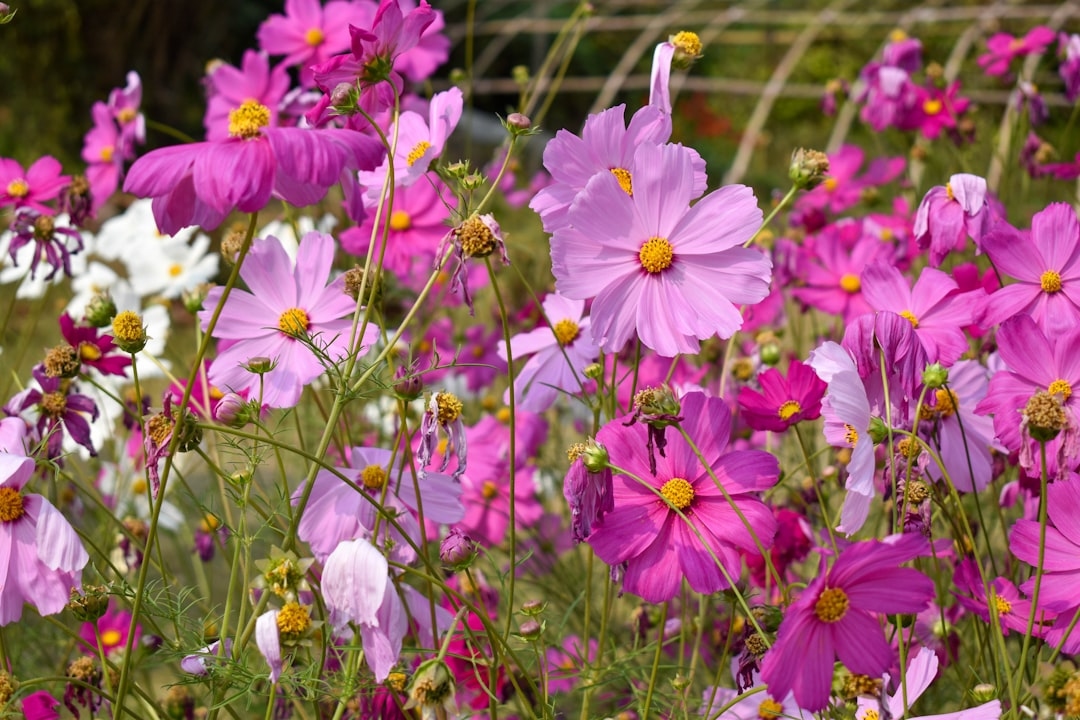
Today, cosmos are grown on every continent where summers get warm. They come in heights ranging from compact 18-inch dwarf varieties to towering 6-foot giants, with blooms in white, pink, magenta, crimson, orange, yellow, and bicolors. The flowers are daisy-like with eight petals surrounding a yellow center disk, and the foliage is so fine and feathery it practically disappears behind the blooms.
What sets cosmos apart from other easy annuals is their self-sufficiency. They evolved in dry, nutrient-poor soils. Feed them too much, water them too often, or baby them with rich amended beds, and they’ll reward you with lush foliage and almost no flowers. Neglect them a little, and they’ll explode into bloom. Understanding this counterintuitive trait is the single biggest key to growing cosmos successfully.
Cosmos vs. Zinnias: Clearing Up the Confusion
At the garden center, cosmos and zinnias are often shelved side by side, and beginner gardeners frequently mix them up or assume they need the same care. They don’t — and the differences matter.
Zinnias (Zinnia elegans) have thick, broad leaves and stocky stems. Their petals are dense and layered, almost like a dahlia. They love heat but also appreciate consistent moisture and do well in amended, fertile soil. Zinnias are slower to establish and more susceptible to powdery mildew in humid conditions.
Cosmos have thread-like, almost fern-like foliage, much taller and airier stems, and single or semi-double flowers with a noticeably delicate look. They thrive on neglect, perform best in lean soil, and are significantly more drought-tolerant once established. Cosmos also tend to start blooming faster — often within 7 weeks of direct sowing — compared to zinnias, which typically need 8 to 10 weeks.
For cut flower arrangements, cosmos bring an airy, wildflower elegance that zinnias can’t replicate. The two plants complement each other beautifully in a mixed border, but they are not interchangeable in the garden bed or the vase.
Choosing the Right Cosmos Variety for Your Garden
The two most commonly grown species are Cosmos bipinnatus (the classic garden cosmos) and Cosmos sulphureus (the sulphur cosmos). Each has its strengths.
Cosmos bipinnatus: The Classic Choice
Cosmos bipinnatus is the tall, airy species most people picture. Varieties worth knowing include:
- Sensation Mix — The most widely available variety. Reaches 4 to 5 feet tall with 3- to 4-inch blooms in pink, white, and crimson. Excellent for cutting.
- Purity — Pure white blooms on 4-foot plants. Stunning in moonlight gardens and highly sought after by florists for bridal work.
- Versailles Series — Bred specifically for cut flower production. Strong, long stems and exceptional vase life of 7 to 10 days.
- Rubenza — A rich ruby-red with a warm, saturated color that holds without fading. Reaches about 30 inches, making it slightly more manageable in windy spots.
- Double Click Series — Semi-double and fully double blooms in a range of pinks and whites. More visually complex than the standard single-petal form.
Cosmos sulphureus: Shorter, Bolder, Hotter
Cosmos sulphureus grows 18 to 36 inches tall and produces smaller, intensely colored blooms in orange, yellow, and red. It handles heat and humidity better than its cousin, making it an excellent choice for gardeners in the Southeast and Gulf Coast states (USDA Hardiness Zones 8–10). The Bright Lights Mix and Klondyke Mix are the most reliably available seed selections.
Dwarf Varieties for Small Spaces
If you’re working with containers, a small patio, or an urban balcony, look for dwarf cultivars like Sonata Mix (24 inches) or Fizzy Pink (18 inches). These compact forms still produce an abundance of flowers but won’t flop over in wind the way the tall varieties can.
The Complete Cosmos Growing Guide: Soil, Sun, and Site Selection
Cosmos are one of the most forgiving flowers you can grow, but they do have non-negotiable requirements. Get these three things right, and the rest largely takes care of itself.
Sunlight Requirements
Cosmos need full sun — a minimum of 6 hours per day, with 8 hours being ideal. In partial shade, plants become leggy and stretched, producing far fewer flowers. In deep shade, they simply won’t bloom. Choose the sunniest spot in your garden without compromise.
Soil: The Counterintuitive Rule
Here’s where most beginners make their first mistake: cosmos actively prefer poor to average soil. Sandy, rocky, or nutrient-lean ground produces the best flowering. Rich, heavily amended garden beds — the kind you’d prepare for vegetables — cause cosmos to put all their energy into leaf and stem production rather than flowers.
If your native soil is clay-heavy, add coarse sand or fine gravel to improve drainage. Waterlogged roots are the one condition cosmos genuinely cannot tolerate. Aim for a soil pH between 6.0 and 8.0 — cosmos are remarkably pH-tolerant within that range.
Do not add fertilizer to the planting bed. If your soil is extremely poor (like pure construction fill), a single application of a low-nitrogen fertilizer (look for an NPK ratio like 5-10-10) at planting time is acceptable. Beyond that, leave it alone.
Climate and USDA Zone Suitability
Cosmos are warm-season annuals that grow well in USDA Zones 2 through 11 as summer bloomers. They cannot survive frost — even a light one at 32°F will kill the plants. In Zone 9 and warmer, you can direct sow as early as February for a spring flush. In Zones 5 through 7, late May is the safe direct-sow window after your last frost date.
💡 What the Pros Know
“Most home gardeners plant cosmos once and wonder why their display fades by August,” says Maria Delgado, Certified Master Gardener and cut flower farmer based in Asheville, NC. “The trick is succession sowing — putting in a new round of seeds every 3 weeks from late spring through early summer. You’ll have fresh, vigorous plants coming into bloom just as your first round starts to wind down. It extends your season by 6 to 8 weeks with zero extra cost.”
How to Plant Cosmos: Direct Sow vs. Starting Indoors
Cosmos are one of the easiest flowers to start from seed. Unlike many annuals that benefit from indoor starting, cosmos actually prefer to be direct sown where they’ll grow. Their taproots don’t love being disturbed, and transplant shock can set them back significantly.
Direct Sowing in the Garden
- Time it right. Sow seeds outdoors after your last frost date when soil temperatures reach at least 60°F. In most of the continental US, this falls between late April (Zones 7–9) and late May (Zones 4–6).
- Prepare the bed minimally. Rake the surface smooth. Do not till deeply or amend with compost. Cosmos germinate better in undisturbed ground.
- Sow shallowly. Press seeds into the soil about ¼ inch deep — no deeper. Cosmos need some light to germinate. Cover lightly and tamp down gently.
- Space properly. For standard tall varieties, aim for 12 to 18 inches between plants. For dwarf types, 9 to 12 inches is sufficient. You can sow more densely and thin after germination.
- Water gently and wait. Keep the soil surface lightly moist until germination, which typically takes 7 to 10 days at 70–75°F.
Starting Cosmos Indoors
If you want a head start — particularly in short-season areas like Zone 4 or Zone 5 — you can start cosmos indoors 4 to 5 weeks before your last frost date. Use individual cell pots or biodegradable peat pots to minimize root disturbance at transplanting. Sow one seed per cell, ¼ inch deep. Keep under grow lights or in a south-facing window at 65–75°F.
Harden off seedlings over 7 to 10 days before transplanting, and handle roots as little as possible. Plant at the same depth they were growing indoors.
Thinning Seedlings
Once seedlings reach 3 inches tall, thin to your target spacing. It feels cruel to pull out healthy seedlings, but overcrowding leads to poor air circulation, increased disease, and weaker stems. Thinned plants will grow significantly larger and more floriferous than crowded ones.
Watering Cosmos: Less Is Almost Always More
Once established — typically 3 to 4 weeks after germination — cosmos are remarkably drought-tolerant. During establishment, water when the top inch of soil dries out. After that, cut back significantly.
Mature cosmos plants in most US regions need supplemental watering only during extended dry spells of 10 days or more without rain. When you do water, water deeply and infrequently rather than giving light daily sprinkles. Deep watering encourages roots to grow down rather than staying at the surface, which increases drought resilience.
Avoid overhead watering on mature plants, as wet foliage promotes fungal issues. Drip irrigation or soaker hoses at the base are ideal. If you’re hand-watering, aim for the soil, not the leaves.
In containers, cosmos need more frequent watering — check daily in hot weather. Even in pots, allow the soil to approach dryness between waterings rather than keeping it consistently moist.
Fertilizing Cosmos: When to Feed and When to Stop
The short answer: fertilize as little as possible. Cosmos evolved in low-nutrient environments. Nitrogen — the first number in any fertilizer’s NPK ratio — promotes leafy green growth. Too much of it, and you’ll have a beautiful bush of feathery foliage with almost no flowers.
If your soil is sandy or extremely lean, a single application of a low-nitrogen, high-phosphorus fertilizer (like 5-10-10 or 0-10-10) at planting encourages root establishment and early bloom. Phosphorus (the middle number) supports flower and root development without stimulating excessive foliage.
Once plants are blooming, stop all fertilization. Mid-season feeding is the most common mistake gardeners make with cosmos, and it reliably results in tall, leafy plants that stop flowering. If neighboring plants in the same bed receive regular feeding, consider whether cosmos is the right choice for that location.
Deadheading and Pruning for Maximum Blooms
Cosmos are prolific self-seeders, and the plant’s natural inclination is to set seed and stop flowering once it has successfully reproduced. Deadheading — removing spent blooms before they form seed — tricks the plant into continuing to produce flowers in an attempt to set seed.
How to Deadhead Cosmos
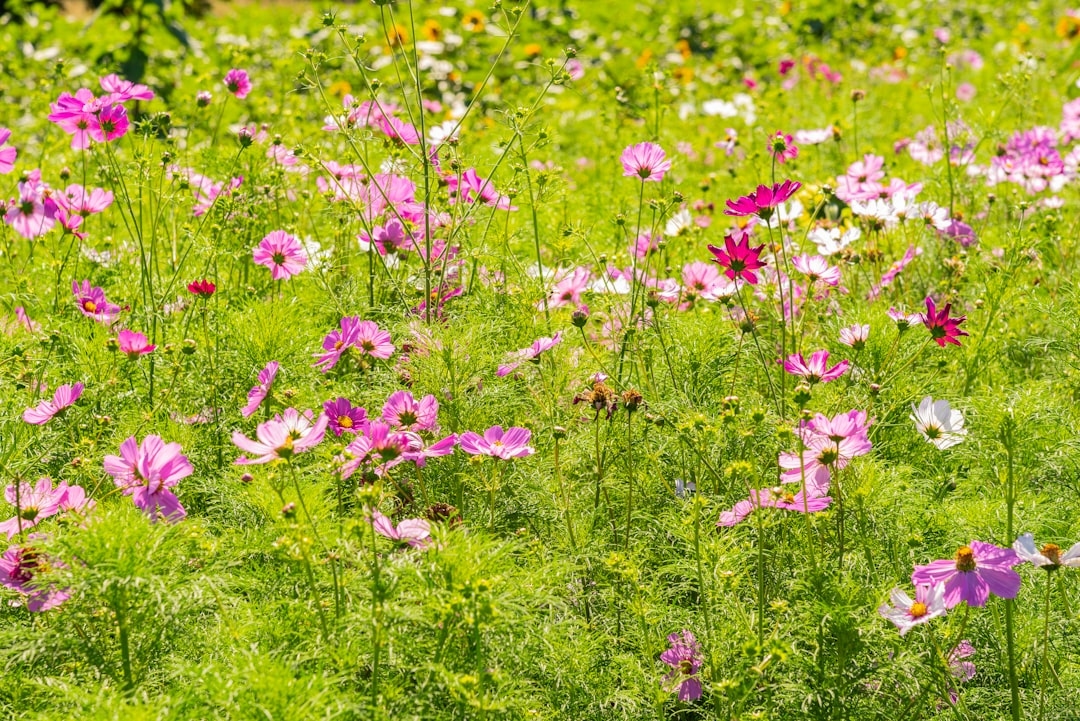
Use clean garden scissors or snips to cut spent blooms back to the nearest set of leaves or a lateral bud. Do this every 3 to 4 days during peak bloom season. It takes about 10 minutes for a moderate-sized planting and makes a dramatic difference in overall bloom count and duration.
For cut flower gardeners: harvesting blooms regularly is deadheading. Cut stems when flowers are in the “marshmallow stage” — fully colored but not yet fully open, with petals still slightly cupped. These will open fully in the vase and last 5 to 7 days in fresh water with a clean cut every other day.
Pinching for Bushy Growth
When seedlings reach 12 inches tall, pinch out the growing tip (the topmost inch of the main stem). This forces the plant to branch, producing 3 to 5 stems instead of one. The result is a shorter, bushier plant with significantly more flowers. It delays first bloom by about 10 days, but total flower production is substantially higher over the season.
Common Cosmos Pests and Problems (and How to Handle Them)
Cosmos are genuinely pest-resistant. Their feathery foliage is unappealing to most chewing insects, and their scent deters many common garden pests. That said, a few issues can arise.
Aphids
Small clusters of soft-bodied green or black insects on new growth or stem tips. A strong blast of water from a hose dislodges most infestations. For persistent problems, insecticidal soap spray (diluted to 2 tablespoons per quart of water) applied in the morning works effectively without harming beneficial insects significantly.
Powdery Mildew
A white, powdery coating on leaves, most common in humid conditions with poor air circulation. The best prevention is proper spacing (at least 12 inches between plants). If mildew appears late in the season, it’s largely cosmetic and won’t affect bloom production significantly. A baking soda spray (1 tablespoon per gallon of water with a few drops of dish soap) can slow its spread.
Aster Yellows
A phytoplasma disease spread by leafhoppers that causes yellowed, distorted growth and misshapen blooms. There is no cure. Remove and destroy infected plants immediately to prevent spread. Do not compost them. Managing leafhopper populations with row covers early in the season reduces infection risk.
Stem Lodging (Flopping)
Tall cosmos varieties can flop in wind or rain, especially in rich soil that promotes lush but weak stem growth. Prevention is the best approach: plant in lean soil, pinch plants at 12 inches, and install stakes or a horizontal plant support net at 18 inches height when plants are young. The net becomes invisible once plants grow through it.
Saving Cosmos Seeds: Free Flowers Forever
One of the great joys of growing cosmos is that they’re extraordinarily easy to save seed from. A single plant can produce hundreds of seeds, and saved seed germinates reliably for 2 to 3 years when stored properly.
Allow some blooms to fully mature and dry on the plant at the end of the season. The seed heads look like a small starburst of thin, dark needles — each needle is one seed. When the heads are brown and dry (typically in September or October, depending on your region), snip them into a paper bag.
Spread seeds on a paper towel for 1 to 2 weeks to ensure they’re fully dry before storage. Store in a labeled paper envelope inside an airtight container in a cool, dark location. A refrigerator drawer works perfectly. Label with the variety name and year.
Note on open-pollinated vs. hybrid varieties: Seeds saved from open-pollinated varieties like Sensation Mix will grow true to type. Hybrid varieties (usually labeled F1 on seed packets) won’t reliably reproduce their parent’s characteristics. The Versailles Series is an F1 hybrid; Sensation and Purity are open-pollinated and excellent for seed saving.
Growing Cosmos in Containers
Container growing is entirely possible for cosmos, though the tall varieties — anything over 3 feet — will require staking and regular watering. For containers, dwarf cultivars like Sonata or Fizzy Pink are dramatically easier to manage.
Use a container at least 12 inches deep and 12 inches wide per plant for dwarf types; standard tall varieties need at least 16 inches of depth. Use a standard potting mix — do not add fertilizer to the mix, as most commercial potting soils already contain starter nutrients that can be excessive for cosmos. Ensure the container has drainage holes. Waterlogging kills container cosmos faster than almost anything else.
In pots, check moisture daily in summer. Water when the top inch feels dry, allow water to drain freely, and empty saucers after watering to prevent roots from sitting in standing water.
Cosmos as Cut Flowers: Maximizing Vase Life
Cosmos are among the best low-cost cut flowers for home arrangers. A mature planting can yield dozens of fresh stems per week throughout summer, which means you can have fresh flowers on your table for months for essentially nothing beyond the cost of a seed packet.
For the longest vase life, follow these practices:
- Cut in the early morning when stems are most hydrated and temperatures are cool.
- Choose the marshmallow stage: Petals fully colored but not yet flat-open.
- Immediately submerge stems in a bucket of cool water. Cosmos are prone to wilting if left out of water even briefly.
- Strip all foliage that would fall below the waterline in your vase — submerged foliage promotes bacterial growth that shortens vase life.
- Change vase water every 2 days and recut stems at a 45-degree angle each time.
- Keep arrangements away from direct sunlight and ripening fruit (which emits ethylene gas that ages flowers prematurely).
With these practices, cosmos stems reliably last 5 to 8 days in the vase — comparable to commercially grown flowers that cost $1 to $3 per stem at the florist.
Cosmos and Pollinators: A Garden Ecosystem Win
Cosmos are among the top-rated flowers for pollinator support. Their open, single-petal form makes nectar and pollen easily accessible to bees, butterflies, and beneficial insects. A University of Sussex study on pollinator-friendly plants found that cosmos ranked in the top tier for bee visitation rates, outperforming many traditional cottage garden flowers.
Monarch butterflies in particular are strongly attracted to cosmos during their fall migration through the US. A planting of pink and white Cosmos bipinnatus in late summer can support migrating monarchs as they move through your area toward their Mexican wintering grounds. If supporting pollinators is a priority, avoid double-flowered varieties like Double Click, whose petals partially obscure the reproductive structures and reduce insect accessibility.
Practical Tips for Growing Cosmos on a Budget
Cosmos are already one of the most economical flowers you can grow, but a few strategies make them even more cost-effective.
- Buy in bulk: A standard retail seed packet contains 50 to 100 seeds for $2 to $4. Bulk seed suppliers like Botanical Interests, Swallowtail Garden Seeds, or Johnny’s Selected Seeds sell larger quantities at significantly lower per-seed costs — sometimes as low as $0.01 per seed for varieties like Sensation Mix.
- Direct sow, don’t buy transplants: Garden center cosmos transplants typically sell for $3 to $5 per small pot. A $3 seed packet sown directly produces 10 times as many plants.
- Save seed every fall: After your first year, your annual seed cost drops to zero.
- Let some self-sow: If you skip deadheading a few plants at the end of the season, cosmos will drop seed and self-sow in subsequent years, essentially becoming a free perennial presence in that bed.
- No special tools required: Unlike some flowers that need heat mats, grow lights, or special soil mixes for starting, cosmos need nothing but soil, sun, and water. Your startup investment is genuinely just the seed packet.
Frequently Asked Questions About Growing Cosmos
How long does it take for cosmos to bloom from seed?
Cosmos typically begin blooming 50 to 60 days after direct sowing, or about 7 to 8 weeks. Varieties bred for cut flower production, like the Versailles Series, may bloom slightly faster. Indoor-started transplants can bloom in 45 to 50 days from germination if they were hardened off properly before transplanting.
Do cosmos come back every year?
Cosmos are tender annuals that complete their life cycle in one growing season and are killed by frost. However, they self-sow prolifically — if you allow some seed heads to mature and drop at season’s end, new seedlings will emerge the following spring in the same area, giving the impression of a perennial. In USDA Zones 9 and warmer, cosmos can sometimes behave as short-lived perennials where frosts are rare.
Why are my cosmos not blooming?
The most common causes are too much nitrogen fertilizer, too much shade, or too much water. Cosmos planted in rich, amended soil or fed with a balanced or high-nitrogen fertilizer will produce lush foliage but few flowers. Check that plants receive at least 6 hours of direct sun daily and that no fertilizer has been applied. If plants are already leafy and vegetative, stop watering and feeding — mild drought stress often triggers bloom production within 2 to 3 weeks.
Can I grow cosmos in pots or containers?
Yes — choose dwarf varieties like Sonata Mix or Fizzy Pink for containers 12 inches or larger. Use standard potting mix without added fertilizer, ensure excellent drainage, and water when the top inch of soil dries out. Tall varieties like Sensation can be grown in large containers (16+ inch depth) but will need staking and more attentive watering.
When should I plant cosmos seeds in the US?
Direct sow cosmos seeds after your last frost date when soil temperatures reach 60°F or above. For most of the mid-Atlantic and Midwest (Zones 5–6), this means late May. In the Southeast and Southwest (Zones 7–9), late March to April is appropriate. For the Gulf Coast and Southern California (Zone 9–10), February sowing is possible. Check your specific last frost date at the USDA Plant Hardiness Zone website or your local cooperative extension office.
Start Your Cosmos Garden This Season
This cosmos growing guide covers everything from variety selection and soil preparation to deadheading, seed saving, and getting the longest possible vase life from your blooms. The real takeaway is simpler than any technique: trust the plant. Cosmos want to grow. They don’t need your help as much as they need you to step back, resist the urge to fertilize, and let them do what they evolved to do.
Pick up a packet of Sensation Mix or Purity this week. Clear a sunny patch of whatever soil you have. Scatter the seeds, cover them with a quarter inch of dirt, water once, and wait 10 days. What comes up after that will bloom for five months, fill your home with flowers, feed your local butterflies, and cost you almost nothing. Then save the seeds in October, and do it all over again next year — for free.
That’s the real magic of cosmos. Not that they’re easy, though they are. It’s that once you start growing them, you never really stop.