Contents:
- What Are Chrysanthemums? Background and Botany
- Types of Chrysanthemums: A Practical Overview
- Garden Mums (Hardy Mums)
- Florist Mums
- Daisy-Type Mums
- Exhibition and Specialty Types
- Bloom Class Reference Table
- Chrysanthemum Hardiness: Zones, Winters, and What Actually Survives
- How to Grow Chrysanthemums: The Full Seasonal Breakdown
- Spring: Planting and Early Growth (March–May)
- Early Summer: Pinching for Shape and Density (June–Early July)
- Midsummer: Watering and Fertilizing (July–August)
- Fall: Bloom Season Maintenance (September–November)
- Seasonal Timeline at a Glance
- Fall Display Tips: Using Chrysanthemums for Maximum Impact
- Color Combinations That Work
- Pairing with Other Fall Plants
- Container Display Strategies
- Extending Display Life
- Common Chrysanthemum Diseases and Pests
- Botrytis Blight (Gray Mold)
- Powdery Mildew
- Chrysanthemum White Rust
- Aphids
- Spider Mites
- Chrysanthemum Leafminer
- Common Mistakes to Avoid
- Growing Chrysanthemums in Containers Year-Round
- Buying Chrysanthemums: What to Look For
- Your Complete Chrysanthemum Guide: FAQ
- When should I plant chrysanthemums for fall blooms?
- How do I keep chrysanthemums blooming longer?
- Are chrysanthemums perennial or annual?
- Why are my chrysanthemums not blooming?
- Can chrysanthemums grow in pots indoors?
- Are chrysanthemums toxic to pets?
- Planning Ahead: Getting More From Your Chrysanthemums Next Season
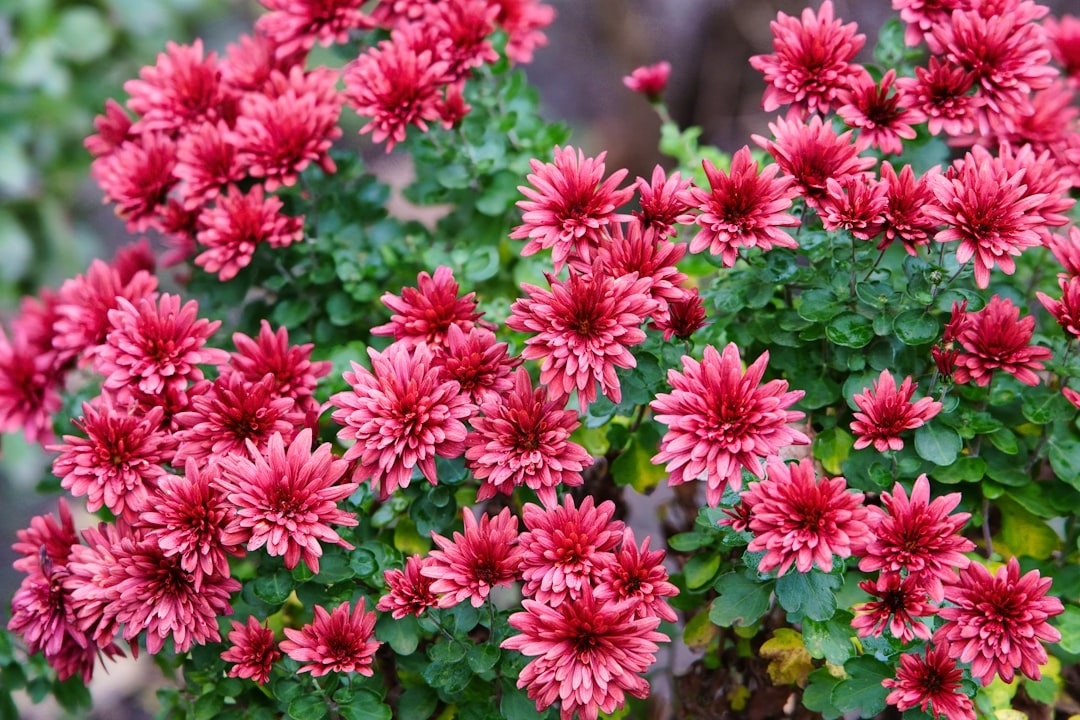
The air turns sharp in late September. Pumpkins line the porch steps. And right on cue, a fat cluster of copper and burgundy chrysanthemums explodes into color beside the front door — the kind of saturated, unapologetic bloom that makes the whole neighborhood slow down. That’s the power of a well-grown mum. They don’t ease into fall. They announce it.
Chrysanthemums are the best-selling potted plant in the United States, moving more than $500 million worth annually. Yet most of them end up dead by Halloween — not because they’re difficult, but because most buyers treat them like seasonal decorations rather than living plants. This chrysanthemum guide fixes that. Whether you’re setting up a front-porch display or building a permanent perennial bed, you’ll find everything you need here to grow mums that actually thrive.
Chrysanthemums need at least 6 hours of full sun, well-drained soil with a pH of 6.0–6.5, consistent moisture (about 1 inch of water per week), and pinching back through early July to produce bushy, heavily blooming plants. Hardy garden mums survive winters in USDA Zones 5–9. Florist mums are generally not frost-hardy and should be treated as annuals unless brought indoors.
What Are Chrysanthemums? Background and Botany
Chrysanthemums belong to the family Asteraceae — the same family as sunflowers and daisies. The genus Chrysanthemum contains roughly 40 wild species, most native to East Asia and northeastern Europe. China holds the longest cultivation history, with records of mums as far back as 1500 BCE. Japan adopted them with near-religious reverence; the chrysanthemum remains the symbol of the Japanese Imperial Family to this day.
Modern garden mums (Chrysanthemum × morifolium) are complex hybrids. They’re technically short-day plants, meaning bloom initiation is triggered when nights grow longer than about 9.5 hours — which is why they naturally peak in September and October in most of the United States. Commercial growers manipulate this cycle with blackout cloth and supplemental lighting to produce blooms year-round, which is how florist mums end up on grocery store shelves in March.
The plant itself grows in a mounding, branching form anywhere from 1 to 4 feet tall depending on the cultivar. Leaves are deeply lobed, dark green, and carry a distinctive sharp scent when bruised. The “flower” most people recognize is actually a composite of two flower types: ray florets (the showy outer petals) and disc florets (the central button). Both types are functional and together form what botanists call a capitulum.
Types of Chrysanthemums: A Practical Overview
The National Chrysanthemum Society recognizes 13 bloom classes, but for the home gardener, it’s more practical to divide mums into a handful of useful categories based on habit, hardiness, and purpose.
Garden Mums (Hardy Mums)
These are the workhorses of fall landscaping. Garden mums are bred specifically for outdoor performance, branching habit, and cold hardiness. They’re reliably perennial in USDA Zones 5 through 9. Expect plants to reach 18–24 inches in both height and spread. Popular series include Mammoth (extremely cold-hardy, reportedly surviving Zone 3 with proper mulching), Belgian Mums (known for tight mounding habit), and the Igloo series (compact, bred for northern climates).
Florist Mums
Florist mums (Chrysanthemum × morifolium in cut-flower or potted form) are bred for large, dramatic single blooms on long stems. Spider mums, cushion mums sold at grocery stores, and the enormous exhibition-type blooms you see at flower shows all fall here. They’re tender — typically hardy only to USDA Zone 7 or above — and rarely come back reliably after winter without significant protection. Buy them for impact, not permanence.
Daisy-Type Mums
These carry single or semi-double flowers with an open center, resembling large Shasta daisies. They tend to be more refined-looking in mixed borders and pair beautifully with ornamental grasses and asters. Leucanthemum and Shasta types are closely related and sometimes sold interchangeably at garden centers, though true Shasta daisies belong to a different species entirely.
Exhibition and Specialty Types
Spider mums have long, tubular petals that curl at the tips. Pompon mums form perfect spherical blooms, typically 1–2 inches across. Quill mums have straight, open-tipped tubular florets. Anemone types have a cushioned center disc surrounded by flat ray petals. These specialty forms are usually grown in pots or cutting gardens where their dramatic blooms can be appreciated up close.
Bloom Class Reference Table
- Single / Semi-Double: Open center, 1–5 rows of petals; best for pollinators
- Anemone: Cushioned disc center with flat ray petals; 12–24 inches tall
- Pompon: Tight, ball-shaped; petals curve inward; 1–4 inches across
- Decorative: Fully double, flat or slightly convex; most common garden form
- Spider: Long, threadlike petals; dramatic; best grown under shelter
- Quill: Straight tubular petals, open at tips; architectural form
- Spoon: Tubular petals with spoon-shaped tip; unusual and striking
Chrysanthemum Hardiness: Zones, Winters, and What Actually Survives
Here’s the honest version of chrysanthemum winter hardiness: it’s complicated, and most garden center labels oversimplify it.
A mum labeled “perennial” is only perennial if certain conditions are met. The plant needs to establish a strong root system before frost hits, which means planting in spring or early summer — not September. A mum dropped into the ground in October has almost no chance of surviving a Zone 5 or 6 winter, because it hasn’t had time to develop the root mass needed to carry it through. That same cultivar planted in May and maintained through the season has a reasonable shot at coming back.
Beyond planting timing, drainage is critical. Mums rot in soggy winter soil far more often than they freeze to death outright. Raise beds by even 3–4 inches if your soil holds water. After the first killing frost, leave the dead stems standing — they trap insulating snow and protect the crown. Apply 3–4 inches of straw or shredded leaves over the crown once the ground hardens. Remove mulch in early spring as temperatures consistently hit 40°F or above.
Realistic zone guidance:
- Zones 7–9: Most garden mums are reliably perennial with minimal intervention
- Zones 5–6: Hardy varieties (Mammoth, Igloo series) overwinter well with proper planting timing and mulching
- Zone 4: Marginal; use only the hardiest cultivars, heavy mulch, and protected planting sites
- Zone 3 and below: Treat as annuals or overwinter plants in an unheated garage in containers
How to Grow Chrysanthemums: The Full Seasonal Breakdown
Growing mums well is about timing as much as technique. Here’s exactly what to do and when to do it across the growing season.
Spring: Planting and Early Growth (March–May)
Start with healthy transplants from a reputable nursery, or divide established plants in your garden. Divisions taken in spring — when new shoots are 3–4 inches tall — establish quickly and bloom reliably in fall. Plant after your last frost date, spacing plants 18–24 inches apart to allow airflow and room for mature spread.
Soil preparation matters more than most gardeners realize. Work in 2–3 inches of compost before planting and aim for a soil pH between 6.0 and 6.5. If you’re unsure of your pH, a basic soil test kit ($10–15 at any hardware store) will tell you where you stand. At pH below 6.0, manganese and aluminum become more soluble and can reach toxic levels; above 7.0, iron and boron become unavailable.
Choose a site with at least 6 hours of direct sun. More is better — 8 hours produces noticeably more compact, floriferous plants than 6. Avoid sites near artificial lights, which can disrupt the night-length signal that triggers bloom formation.
Early Summer: Pinching for Shape and Density (June–Early July)
Pinching is the single most impactful thing you can do for a mum’s fall performance. When new shoots reach 4–6 inches long, pinch out the growing tip just above a leaf node. This forces two to four new shoots to emerge from below the pinch point, dramatically increasing branch number — and therefore bloom count — by fall.
Repeat the process each time new shoots reach 4–6 inches. Most gardeners do 2–3 rounds of pinching between late May and the first week of July. Stop pinching by July 4th in most of the US (or by July 15th in Zone 7 and southward). Pinching too late delays bloom set and risks having plants that haven’t fully opened before hard frost hits.
A plant that was never pinched typically produces 15–30 flowers on a few lanky stems. A plant pinched three times might carry 100 or more blooms on a dense, mounded form. The difference is dramatic and visible from the street.
Midsummer: Watering and Fertilizing (July–August)
Mums are not drought-tolerant once buds begin to form. Consistent moisture — about 1 inch per week from rain or irrigation — keeps foliage healthy and buds from aborting. Water at the base of the plant, not overhead, to reduce the risk of foliar disease. Morning watering is preferable; leaves wet overnight in cool fall temperatures are an invitation for botrytis blight.
Feed with a balanced fertilizer (10-10-10 or similar) through June and into July. Once plants begin setting buds — usually late July to mid-August — switch to a low-nitrogen, high-phosphorus formula like 5-10-10 or a dedicated bloom booster. Nitrogen after bud set promotes excessive vegetative growth at the expense of flower development.
Stop fertilizing entirely about 6 weeks before your expected first frost date. Pushing late-season growth with fertilizer produces soft, frost-vulnerable tissue.
Fall: Bloom Season Maintenance (September–November)
Once buds open, mums need minimal intervention. Keep watering consistently — drought stress during bloom will shorten flower life noticeably. Deadhead spent blooms if you want to extend the overall display, though mums aren’t as responsive to deadheading as, say, black-eyed Susans. The main practical benefit is keeping the plant looking tidy.
Watch for aphids on new growth and spider mites on the undersides of leaves, both of which become problematic during dry, warm fall weather. A strong spray of water dislodges both; insecticidal soap handles heavier infestations without harming pollinators.
After the first hard frost (below 28°F for more than 4 hours) blackens the foliage, cut stems back to 4–6 inches but leave the crown protected as described above.
Seasonal Timeline at a Glance
- March–April: Divide overwintered plants; prepare beds; purchase transplants
- May: Plant after last frost; begin first round of pinching when shoots reach 4–6 inches
- June: Second pinching; fertilize with balanced 10-10-10; water 1 inch/week
- Early July (by July 4): Final pinching; switch to bloom-booster fertilizer
- Late July–August: Bud set begins; maintain consistent moisture; stop high-nitrogen feeding
- September–October: Peak bloom; deadhead if desired; treat pests promptly
- After first hard frost: Cut stems to 4–6 inches; mulch crowns with 3–4 inches of straw
- Early spring: Remove mulch as temperatures consistently exceed 40°F
Fall Display Tips: Using Chrysanthemums for Maximum Impact
A flat of mums dropped in front of the door looks fine. A thoughtfully composed fall display looks exceptional. Here’s how to upgrade your approach.
Color Combinations That Work
The fall palette of bronze, copper, burgundy, gold, and rust is cohesive because those colors all carry warm undertones. The risk is that an all-warm display becomes muddy and undifferentiated — the eye has nowhere to land. Break it up deliberately.
White or cream mums function as neutrals, giving the eye a place to rest and making adjacent colors read more vividly. A grouping of deep burgundy mums with a mass of white mums between them and a third grouping of golden yellow reads as a composed trio rather than an undifferentiated blob.
Purple mums (technically in the cool-toned violet range) pair unexpectedly well with orange and bronze. The complementary contrast is subtle but more sophisticated than the typical all-warm arrangement. Try ‘Grape Gum’ or ‘Lavender Daisy’ against ‘Centerpiece Bronze’ for a combination that turns heads.
Pairing with Other Fall Plants
Mums are most effective when paired with plants that offer different textures and forms. A few combinations that work reliably:
- Ornamental kale or cabbage: The blue-green or purple foliage echoes the mum color palette while providing architectural contrast. Both prefer similar cool temperatures and tolerate frost well.
- Ornamental grasses: Tall grasses like Pennisetum or Muhlenbergia capillaris behind lower mums add movement and vertical interest. The feathery texture contrasts beautifully with mums’ dense, rounded form.
- Asters: Fellow fall bloomers with a daisy-like appearance. Combining asters and mums extends your color range without creating visual chaos.
- Crotons and coleus: For container displays in frost-free zones, the variegated foliage of late-season crotons mirrors the fiery fall palette perfectly.
- Pumpkins and gourds: Not plants, but they belong in the conversation. The matte, organic texture of winter squash against the glossy foliage of mums is a classic American fall display for good reason.
Container Display Strategies
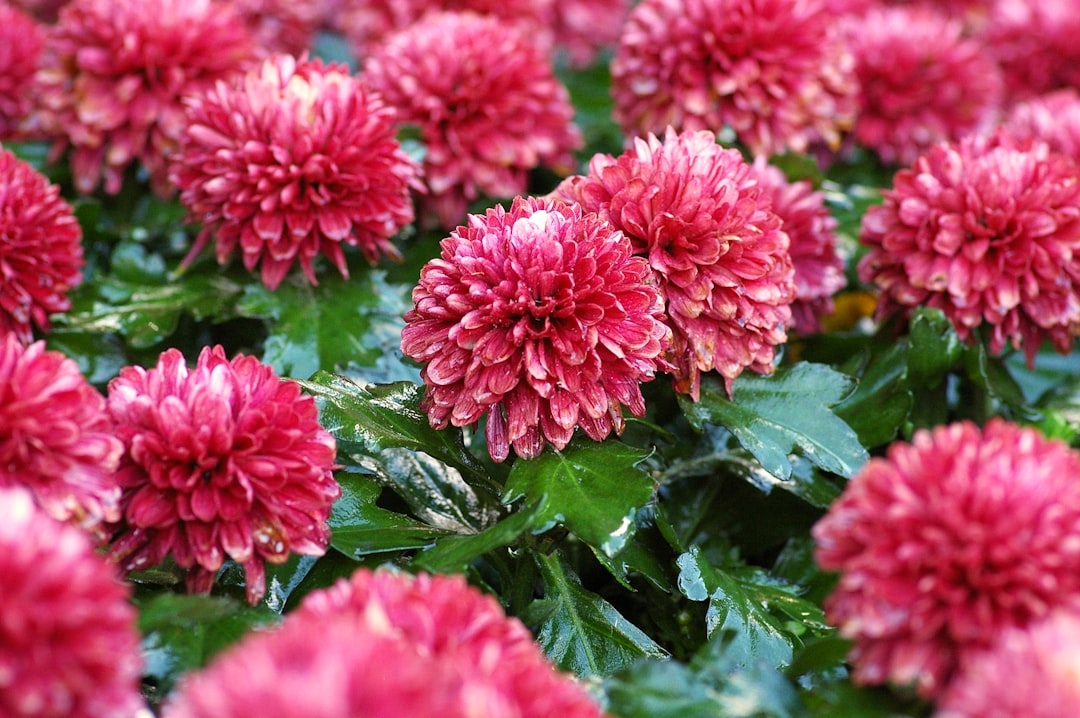
Potted mums for porch displays are typically grown in 6-inch, 10-inch, or 12-inch nursery containers. The size affects how long they stay attractive: a 6-inch pot with 40 blooms will exhaust its root resources and decline within 2–3 weeks. A 12-inch container with the same number of blooms can remain attractive for 4–6 weeks under the same conditions.
If your nursery pots are small, consider slipping them into decorative containers or grouping several small pots inside a larger basket or planter to pool moisture and moderate temperature swings. Pot insulation matters in fall — exposed nursery black plastic absorbs and releases heat rapidly, which stresses roots during frosty nights.
Water potted mums every 1–2 days once temperatures are consistently above 50°F, daily in warm spells. Pots dry out faster than in-ground plants, and water-stressed mums drop blooms prematurely. Stick your finger 1 inch into the growing medium — if it’s dry at that depth, water thoroughly until it drains from the bottom.
Extending Display Life
Buy mums with the most closed buds possible, not the most open flowers. A plant that’s 70–80% in bud when you purchase it will look spectacular for 3–4 weeks as buds continue to open. A plant already at peak bloom when you buy it has 1–2 weeks of display life left at best.
Light frost (28–32°F) will nip open blooms but often leave buds unharmed if the foliage is wet or the frost is brief. Cover plants on forecasted frost nights with a lightweight row cover or even an old bedsheet to extend your display by several weeks in Zones 5–6.
Common Chrysanthemum Diseases and Pests
Mums are generally tough plants, but a few problems show up reliably and are worth knowing before you encounter them.
Botrytis Blight (Gray Mold)
The most common disease problem on fall mums, especially in damp, cool conditions. Infected tissue turns brown and develops a fuzzy gray coating of fungal spores. Botrytis thrives when leaves stay wet overnight. Prevent it by watering at the base of the plant in the morning, spacing plants for airflow, and removing any dead or dying tissue promptly. Fungicides containing chlorothalonil or copper are effective if applied before the disease is established.
Powdery Mildew
White, powdery patches on upper leaf surfaces, most common in late summer when warm days follow cool nights. It’s rarely fatal but weakens plants and looks unsightly. Resistant cultivars exist — check with your nursery. Neem oil or potassium bicarbonate sprays suppress light infections. Severe cases warrant a conventional fungicide.
Chrysanthemum White Rust
A regulated disease (USDA quarantine pest) that produces cream or pale yellow pustules on leaf undersides, with corresponding yellow spots on top. Rare in garden settings but worth knowing. If you suspect it, contact your local Cooperative Extension office rather than attempting home treatment.
Aphids
Green peach aphids and melon aphids both target mums, clustering on new growth and the undersides of leaves. Infestations can be significant in warm, dry fall weather. A strong water spray knocks them off; insecticidal soap or neem oil handles larger populations. Avoid broad-spectrum insecticides during bloom period to protect pollinators.
Spider Mites
Tiny, barely visible mites that cause stippled, bronzed foliage. Most active in hot, dry conditions. Miticides are more effective than general insecticides; alternating products prevents resistance. Increasing humidity around plants and avoiding drought stress reduces susceptibility.
Chrysanthemum Leafminer
Larval tunnels create winding pale lines through leaf tissue. Rarely fatal but cosmetically damaging. Remove and destroy affected leaves. Spinosad-based insecticides are effective when larvae are active.
Common Mistakes to Avoid
- Planting fall-purchased mums in the ground and expecting them to overwinter. A mum planted in September has 4–6 weeks to establish roots before hard frost. That’s not enough time in Zones 5 or 6. Plant in spring for perennial performance.
- Skipping pinching entirely. Unpinched mums become leggy, sparse-blooming plants that flop by September. Pinching takes 10 minutes twice in June and transforms your outcome.
- Pinching too late. Pinching after July 15 in most US locations delays bloom set enough that flowers may not open before frost. Write “Stop pinching — July 4” on your garden calendar.
- Overwatering in containers. Saturated soil excludes oxygen from the root zone. Mums in waterlogged pots develop root rot faster than almost any other common garden plant. Ensure drainage holes are open and unobstructed.
- Fertilizing with high nitrogen in late summer. Nitrogen promotes lush foliage growth. In August and September, that’s exactly what you don’t want. Switch to a high-phosphorus formula by late July.
- Cutting stems all the way to the ground after frost. Short stubs (4–6 inches) protect the crown and trap insulating snow. Ground-level cuts leave the crown exposed and vulnerable.
- Planting in shade. Fewer than 6 hours of direct sun produces weak, stretched plants with minimal bloom set. If your front porch is shaded, use containers you can move to a sunnier staging area.
- Buying mums at peak bloom for a long display. A fully open mum at point of purchase has 1–2 weeks of display life left. Buy buds, not blooms.
Growing Chrysanthemums in Containers Year-Round
Container culture opens up chrysanthemum growing to gardeners without traditional beds and gives everyone more flexibility for fall displays. Here’s how to do it successfully.
Use containers at least 12 inches in diameter for a single specimen plant and 16–18 inches for a combination planting. Larger pots are not just aesthetic — they hold more soil mass, which buffers temperature extremes and holds moisture longer. Terracotta is traditional and breathable but heavy; consider lightweight composite or resin containers that are easier to move and better insulated in cold nights.
Potting mix should be high-quality and well-draining — not straight garden soil, which compacts in containers and drains poorly. Mix in 20–25% perlite by volume if your potting mix feels dense. A soil-less mix with a pH adjusted to 6.0–6.5 is ideal.
Container mums require more frequent fertilization than in-ground plants because nutrients leach out with each watering. Use a slow-release granular fertilizer at planting time (Osmocote or similar at the label rate) plus liquid fertilizer applications every 2–3 weeks through the growing season. Reduce to monthly in fall, then stop 6 weeks before expected first frost.
To overwinter container mums in cold climates, move them to an unheated garage or basement once the first hard frost kills the foliage. Water sparingly through winter — just enough to prevent the root ball from desiccating completely (roughly once every 3–4 weeks). Move them back outdoors after the last frost date in spring. Container overwintering extends the viable range for marginally hardy cultivars by one or two zones.
Buying Chrysanthemums: What to Look For
The average fall mum at a big-box garden center sells for $8–15 for a 6-inch pot and $18–35 for a gallon or larger container. Specialty nurseries and growers may charge $20–50 for named cultivars with superior cold hardiness or unusual bloom forms. Exhibition-type mums from specialty growers can run $15–40 per plant.
When selecting plants, look for:
- Compact, branching growth with short internodes (the distance between leaf nodes). Leggy, stretched plants have been grown in low light and will perform poorly.
- Dark green, unblemished foliage. Yellow leaves suggest nitrogen deficiency or root problems. Spotted leaves suggest disease.
- Mostly closed buds. As discussed — buy buds for a longer display.
- No visible insects on stems or leaf undersides. A quick lift of a few leaves before purchase takes 10 seconds and saves a lot of trouble later.
- Named cultivars when possible. A plant labeled only “fall mum — orange” gives you no information about cold hardiness, mature size, or bloom timing. Named cultivars have predictable, documented performance.
Mail-order chrysanthemum specialists — including White Flower Farm, Bluestone Perennials, and the Yoder/Dramm catalogs — offer a far wider selection of named, tested cultivars than any retail garden center. For serious perennial plantings, this is the better route. Spring ship dates allow proper establishment before fall bloom.
Your Complete Chrysanthemum Guide: FAQ
When should I plant chrysanthemums for fall blooms?
Plant chrysanthemums in spring after your last frost date — typically May through early June in most of the US. This gives plants 3–5 months to establish strong root systems before bloom season begins in September. Fall-planted mums can work for one-season display but rarely overwinter successfully in Zones 5–6.
How do I keep chrysanthemums blooming longer?
Purchase plants with mostly closed buds rather than open flowers. Water consistently (about 1 inch per week; daily for container plants in warm weather). Protect plants from hard frost with row cover on cold nights. Deadhead spent flowers to keep the plant tidy, though mums don’t reflower as aggressively as some annuals after deadheading.
Are chrysanthemums perennial or annual?
Hardy garden mums are perennial in USDA Zones 5–9 when planted in spring and given proper winter protection (mulching the crown after frost). Florist mums sold in grocery stores and garden centers in fall are typically not reliably cold-hardy and should be treated as annuals in Zones 5–6. The key variable is root establishment time before winter arrives.
Why are my chrysanthemums not blooming?
The most common reasons: (1) Too much shade — mums need 6+ hours of direct sun for strong bloom set. (2) Pinching too late — after July 15 in most of the US, late pinching delays bloom formation past the first frost. (3) Excessive nitrogen in late summer, which drives foliage growth at the expense of flowers. (4) Light pollution from street lights or porch lights disrupting the night-length signal that initiates bloom.
Can chrysanthemums grow in pots indoors?
Temporarily, yes — a potted florist mum makes an excellent indoor fall decoration for 2–4 weeks. Long-term indoor culture is difficult because mums require high light intensity (6+ hours), good airflow to prevent disease, and eventually an outdoor period to reset their photoperiod for bloom. They’re better suited to covered porches, patios, or sunny window boxes than true indoor growing.
Are chrysanthemums toxic to pets?
Yes. Chrysanthemums contain pyrethrins and sesquiterpene lactones, which are toxic to dogs, cats, and horses. Ingestion can cause vomiting, diarrhea, hypersalivation, incoordination, and dermatitis. Place mums out of reach of pets, and contact your veterinarian or the ASPCA Animal Poison Control Center (888-426-4435) if ingestion occurs.
Planning Ahead: Getting More From Your Chrysanthemums Next Season
The best fall display starts in the preceding April, not in September at the garden center. Order named hardy cultivars from a mail-order specialist in late winter, before stock sells out. Plan your color combinations now, while you still remember what worked and what didn’t this season. Note which plants survived your winter and which didn’t — that data is more valuable than any hardiness zone label on a plant tag.
If you’re serious about long-term mum performance, consider taking cuttings in spring from your overwintered plants. New growth from the base of overwintered mums roots easily in a 50/50 mix of perlite and peat, producing new plants identical to the parent at zero cost. A single vigorous perennial mum can yield 12–20 cuttings in a season.
This chrysanthemum guide covers the full arc from bare soil to peak fall bloom, but hands-on practice is still the best teacher. Start with two or three named hardy cultivars in a sunny spot, commit to the pinching schedule, and you’ll have a reference point for everything else. Mums reward attentive gardeners disproportionately — a little consistent care through summer pays off in spectacular color when most of the garden has given up for the season.