Contents:
- Why Sunflowers Deserve a Spot in Every Garden
- Sunflower Varieties: Choosing the Right Type for Your Goals
- Giant Varieties (for maximum wow factor)
- Cut Flower Varieties (for bouquets and arrangements)
- Dwarf and Patio Varieties (for small spaces)
- Specialty and Heirloom Varieties
- Sunflowers vs. Jerusalem Artichokes: Don’t Get Confused
- Your Complete Sunflower Growing Guide: From Seed to Soil
- When to Plant Sunflowers
- How to Choose and Prepare Your Planting Site
- How to Plant Sunflower Seeds
- Sunflower Care: Watering, Feeding, and Staking
- Watering
- Fertilizing
- Staking Tall Varieties
- Pest and Disease Management for Sunflowers
- Common Pests
- Common Diseases
- Common Mistakes to Avoid
- How to Harvest Sunflowers
- Harvesting for Cut Flowers
- Harvesting Seeds for Eating
- Saving Seeds for Next Year’s Garden
- Growing Sunflowers in Containers: A Practical Approach
- Frequently Asked Questions About Growing Sunflowers
- How long does it take for sunflowers to grow from seed to bloom?
- Can I grow sunflowers in pots or containers?
- Why are my sunflowers not blooming?
- Do sunflowers really follow the sun?
- How do I keep birds and squirrels from eating my sunflower seeds?
- Bringing It All Together: Your Sunflower Season Starts Now
Sunflowers are one of the easiest flowers you can grow — and one of the most rewarding. A single seed, pressed an inch into warm soil, can produce a stalk taller than your front door and a bloom the size of a dinner plate. This sunflower growing guide covers everything from choosing the right variety to knowing exactly when to cut your first stem, so whether you have a sprawling backyard or a few large containers on a balcony, you’re set up for a spectacular season.
Why Sunflowers Deserve a Spot in Every Garden
Sunflowers (Helianthus annuus) are native to North America and have been cultivated for more than 5,000 years. Indigenous peoples of the American Southwest grew them for food, dye, and oil long before European settlers arrived. Today, the United States ranks among the top sunflower-producing nations, with North Dakota, South Dakota, and Kansas leading commercial production.
Beyond agriculture, sunflowers pull serious weight in the home garden. They attract pollinators — especially native bees — at a rate that benefits surrounding plants. Their deep taproots break up compacted soil. And at the end of the season, their seed heads become a full-service bird feeder. You’re not just growing a pretty face; you’re building a mini ecosystem.
They’re also fast. Most varieties go from seed to bloom in 60 to 90 days, which means you can plant in late May and have flowers by August. For impatient gardeners — and aren’t we all, a little? — that’s deeply satisfying.
Sunflower Varieties: Choosing the Right Type for Your Goals
Walk into any seed shop and you’ll find dozens of options. Tall or short? Single stem or branching? Yellow, red, chocolate, or creamy white? The choice matters more than most beginners realize, because different varieties are built for different purposes.
Giant Varieties (for maximum wow factor)
Mammoth Russian is the classic giant, regularly reaching 10 to 12 feet tall with blooms 12 to 14 inches across. It’s a single-stem variety, meaning one plant produces one large flower — perfect for seed harvesting or impressing your neighbors. American Giant Hybrid pushes even further, with documented heights exceeding 16 feet in ideal conditions.
Cut Flower Varieties (for bouquets and arrangements)
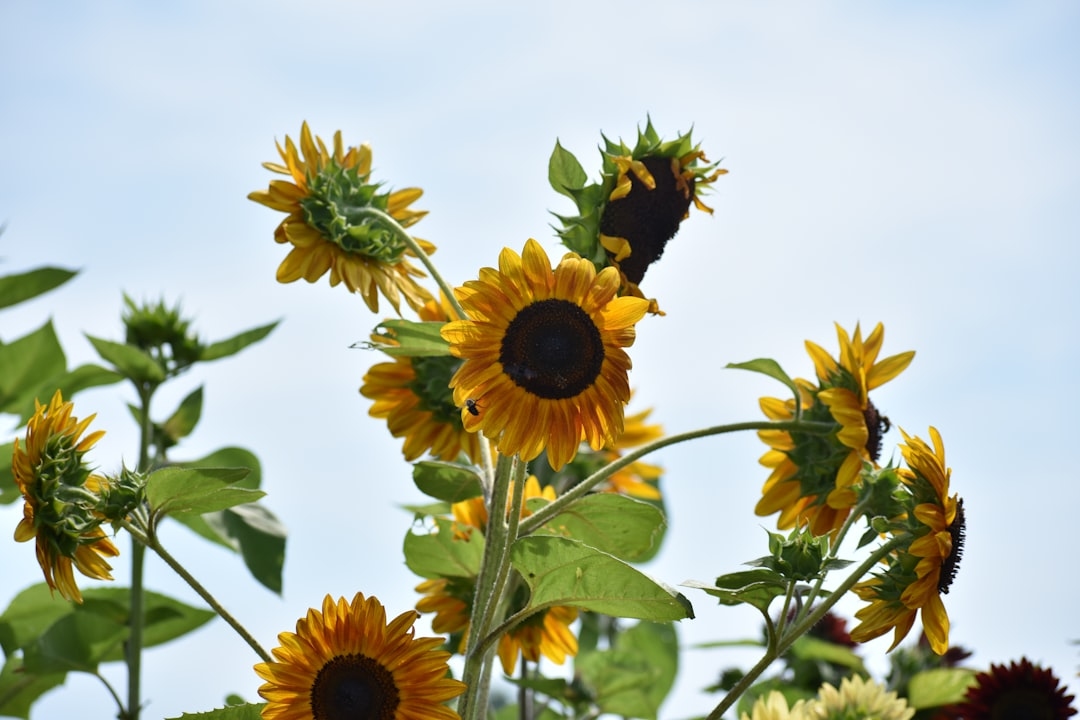
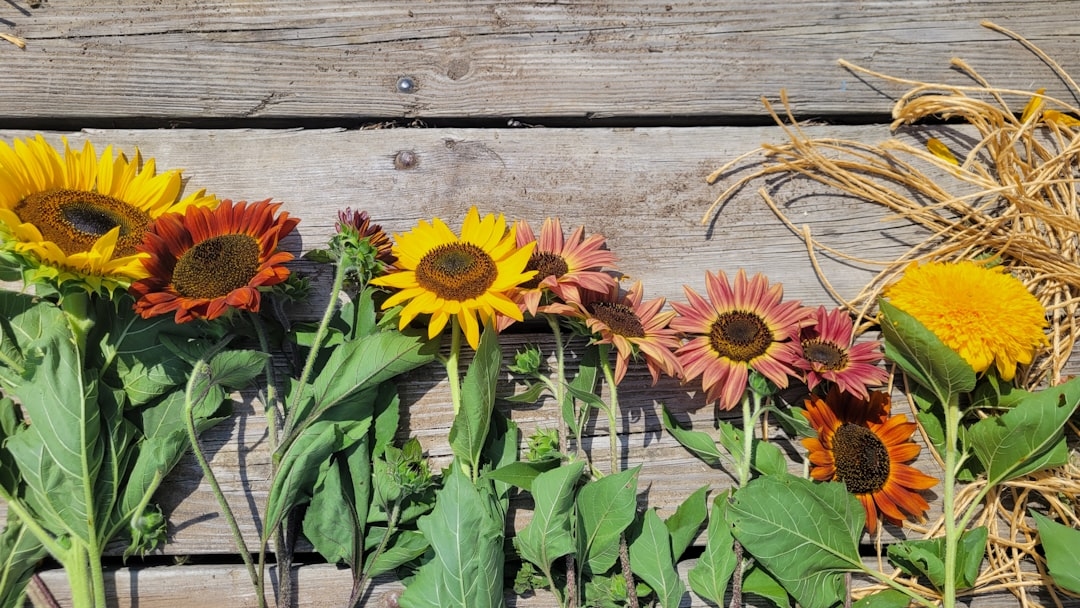
If vases are your goal, look for branching varieties that produce multiple blooms per plant over a longer season. Autumn Beauty is a standout — it branches freely and produces flowers in shades of yellow, orange, mahogany, and bi-color on 5- to 6-foot stems. ProCut Gold is the professional florist’s go-to: it’s a pollenless variety (no mess on tablecloths or shirt fronts) with straight 18- to 24-inch stems and a vase life of 10 to 14 days.
Dwarf and Patio Varieties (for small spaces)
Teddy Bear tops out at 24 inches and produces fluffy, double-petaled blooms that look almost like chrysanthemums. Sunspot stays around 2 feet tall but puts out full-sized 10-inch blooms — it’s almost comically oversized for the plant, which makes it genuinely fun to grow in containers. Use pots at least 12 inches in diameter for dwarf types.
Specialty and Heirloom Varieties
Velvet Queen produces deep burgundy-red blooms with dark centers on 5-foot branching plants — a dramatic choice for cutting gardens. Lemon Queen is a pale yellow heirloom beloved by pollinator gardeners; one study by the Royal Horticultural Society found it to be among the top 10 most bee-attractive plants tested. Chocolate Cherry offers near-black centers with petals that blend red, burgundy, and yellow — striking in mixed bouquets.
Sunflowers vs. Jerusalem Artichokes: Don’t Get Confused
Here’s a mix-up that trips up new gardeners more often than you’d think. Jerusalem artichokes (Helianthus tuberosus) are also in the Helianthus genus and look remarkably similar to common sunflowers when in bloom — cheerful yellow petals, tall stalks, same general vibe. The difference is underground. Jerusalem artichokes produce knobby, edible tubers (similar in flavor to water chestnuts) and are perennial, spreading aggressively year after year. Common sunflowers (Helianthus annuus) are annuals with no edible root, and they stay where you plant them.
If you’re planting something labeled “sunchoke” or “earth apple,” you’re growing a Jerusalem artichoke, not a traditional sunflower. Both are wonderful plants — just know what you’re getting into, because Jerusalem artichokes can take over a bed within two or three seasons if not managed.
Your Complete Sunflower Growing Guide: From Seed to Soil
When to Plant Sunflowers
Sunflowers are warm-season annuals that hate frost. Soil temperature needs to reach at least 50°F — ideally 65°F to 70°F — before seeds will germinate reliably. In most of the continental US, that means direct sowing between late April and mid-June, depending on your hardiness zone.
- Zones 3–4 (Minnesota, Maine, Montana): Late May to early June
- Zones 5–6 (Illinois, Pennsylvania, Oregon coast): Early to mid-May
- Zones 7–8 (Virginia, Tennessee, Pacific Northwest): Late April to early May
- Zones 9–10 (Southern California, Texas Gulf Coast, Florida): Late February to April; a second sowing in August works well for fall blooms
Succession planting — sowing a new batch of seeds every two to three weeks — extends your bloom window significantly. Three staggered plantings from May through June can keep flowers coming from late July through early October.
How to Choose and Prepare Your Planting Site
Sunflowers need full sun: a minimum of 6 hours per day, with 8 hours being ideal. They’ll lean toward the light source if they don’t get enough, so a south- or west-facing bed is your best starting point. Avoid planting near black walnut trees, which release juglone — a compound toxic to many plants, including sunflowers.
Soil preparation is straightforward. Sunflowers prefer well-drained, slightly acidic to neutral soil with a pH between 6.0 and 7.5. They’re not heavy feeders, but they respond well to compost. Work 2 to 3 inches of compost into the top 8 inches of soil before planting. Avoid over-fertilizing with nitrogen: it produces lush green foliage at the expense of blooms.
How to Plant Sunflower Seeds
Direct sowing is almost always better than transplanting. Sunflowers develop a deep taproot quickly, and disturbing it stunts growth. Here’s the process:
- Sow seeds 1 inch deep in loosened soil.
- Space giant varieties 24 inches apart; dwarf types can go 12 inches apart; branching cut-flower types do well at 6 inches apart for fuller coverage and more stems per square foot.
- Water gently but thoroughly after sowing.
- Expect germination in 7 to 14 days at soil temperatures of 65°F to 85°F.
- Once seedlings reach 6 inches tall, thin to final spacing by snipping (not pulling) the weaker plants at soil level.
If you’re growing in containers, fill pots to within 2 inches of the rim with a quality potting mix blended with 20 to 25% perlite for drainage. One dwarf variety per 12-inch pot; one branching variety per 5-gallon container minimum.
Sunflower Care: Watering, Feeding, and Staking
Watering
Young seedlings need consistent moisture — about 1 inch of water per week. Once plants are established and over 1 foot tall, they become impressively drought-tolerant. At that stage, deep watering once a week (2 to 3 gallons for large varieties) is better than frequent shallow watering, because it encourages the taproot to grow down rather than sideways. Water at the base, not on the foliage, to reduce the risk of fungal disease.
Fertilizing
A balanced slow-release fertilizer (10-10-10) applied at planting time gives seedlings a good start. Once buds begin to form, switch to a low-nitrogen, high-phosphorus fertilizer (something like 5-10-10) to support bloom development. Avoid heavy fertilization mid-season — it’s a fast track to tall, floppy plants with mediocre flowers.
Staking Tall Varieties
Any variety expected to exceed 4 feet should be staked in windy locations. Drive a 6-foot wooden stake 12 inches into the ground 6 inches from the base of the plant (to avoid piercing the taproot), and use soft garden ties — never wire — to loosely support the stem at two or three points. Stake early, before the plant needs it. Trying to stake a mature, wind-damaged stem rarely works well.
⭐ What the Pros Know
Professional cut flower growers plant sunflowers in high-density rows — as tight as 4 to 6 inches apart — and skip staking entirely. The close spacing forces plants to compete for light, which drives them to grow taller and straighter with stronger stems. The plants essentially stake each other. Try this in a dedicated cutting row or raised bed for noticeably better stems than you’d get from wide-spaced garden plants.
Pest and Disease Management for Sunflowers
Sunflowers are generally tough, but a few problems crop up regularly.
Common Pests
Sunflower moths (Homoeosoma electellum) lay eggs in developing flower heads, and their larvae feed on seeds. If you notice webbing in the center of your blooms, this is the likely culprit. Hand-removal of larvae works on a small scale; spinosad-based organic sprays are effective for larger plantings. Aphids tend to cluster on stems and under leaves — a strong jet of water dislodges most colonies. Introduce or encourage ladybugs and lacewings, which are voracious aphid predators.
Deer and squirrels are the bane of many sunflower gardeners. Deer will eat foliage and blooms; squirrels go straight for the seed heads. A 4-foot wire fence keeps deer out during the seedling stage (when they’re most vulnerable). For mature seed heads, netting the flower head loosely with hardware cloth or a mesh produce bag deters squirrels without harming pollinators.
Common Diseases
Downy mildew appears as yellow angular spots on upper leaf surfaces with gray-purple fuzz beneath. It thrives in cool, wet conditions. Improve air circulation, avoid overhead watering, and remove infected leaves promptly. Sclerotinia stem rot (white mold) causes wilting and a white cottony growth at the stem base — most common in dense plantings with poor drainage. Rotate sunflowers to a different bed each year as a preventive measure.
Common Mistakes to Avoid
- Planting too early. Soil temperature below 50°F means seeds rot rather than germinate. Patience pays off — two weeks of waiting for the right conditions beats replanting from scratch.
- Overwatering seedlings. Soggy soil causes damping off, a fungal condition that kills young plants at soil level almost overnight. Let the top inch of soil dry out slightly between waterings.
- Planting in part shade and hoping for the best. Sunflowers in insufficient light grow tall and spindly, lean awkwardly, and produce small, disappointing blooms. Six hours of direct sun is the real minimum.
- Over-fertilizing with nitrogen. More nitrogen = more leaves, fewer flowers. Go easy, especially mid-season.
- Skipping succession planting. One planting date gives you one flush of blooms, often lasting only two to three weeks. Three staggered sowings give you three months of color.
- Harvesting cut flowers too late. For the longest vase life, cut sunflowers when the petals are just beginning to open but the center disk is still tight and firm. A fully open bloom lasts 5 to 7 days in a vase; a bud-stage cut lasts 10 to 14 days.
How to Harvest Sunflowers
Harvesting for Cut Flowers
Timing is everything. Cut stems in the early morning, when water content in the plant is highest and temperatures are coolest. Use clean, sharp shears or a knife — a dull blade crushes the stem’s vascular tissue. Cut at a 45-degree angle to maximize water uptake surface area, and immediately place stems in a bucket of cool water. Strip any leaves that will sit below the water line, as decomposing foliage shortens vase life dramatically.
Add a commercial floral preservative to the vase water, or make your own: 1 tablespoon of sugar, 1 tablespoon of white vinegar, and ¼ teaspoon of bleach per quart of water. Change the water every two days. Placed out of direct sunlight and away from fruit (which emits ethylene gas that accelerates aging), cut sunflowers will last 10 to 14 days.
Harvesting Seeds for Eating
Wait until the back of the flower head turns from green to yellow-brown and the petals have dropped or dried. The seeds should be plump and the seed hulls firm. Cut the head with 12 to 18 inches of stem attached and hang it upside down in a dry, well-ventilated space — a garage or shed works perfectly — for two to four weeks.
Once fully dry, rub the seed heads over a bucket or sheet to release seeds. To shell them, place seeds in a zip-lock bag and roll a rolling pin over them firmly — the hulls crack while the seeds mostly stay intact. Rinse in water to separate the hulls (they float), and dry the seeds on a towel before roasting.
For roasting: toss seeds with olive oil and salt (about 1 teaspoon of oil and ½ teaspoon of salt per cup of seeds), spread in a single layer on a baking sheet, and roast at 300°F for 30 to 40 minutes, stirring every 10 minutes. Cool completely before eating or storing — they’ll keep in an airtight jar for up to three months at room temperature, or six months in the refrigerator.
Saving Seeds for Next Year’s Garden
Only save seeds from open-pollinated or heirloom varieties — hybrids won’t grow true from seed. Mark your best plants early in the season with a stake. Allow the seed head to dry completely on the plant, then harvest and store seeds in a paper envelope (not plastic — seeds need to breathe) in a cool, dark, dry location. Properly stored sunflower seeds remain viable for up to 7 years, though germination rates decline after year 3.
Growing Sunflowers in Containers: A Practical Approach
Container growing is genuinely viable for dwarf and mid-sized varieties. The keys are pot size, drainage, and consistent feeding. Use pots with drainage holes — non-negotiable. Terra cotta pots dry out faster than plastic or glazed ceramic, which can work in your favor since sunflowers dislike sitting in wet soil.
Because container plants can’t access nutrients in ground soil, they need more regular feeding. A balanced liquid fertilizer applied every two weeks from germination through bud formation keeps container sunflowers performing well. Once buds appear, switch to a bloom-boosting formula (higher phosphorus and potassium).
In hot climates, large dark-colored containers absorb heat and can cook roots. Light-colored or insulated containers, or placing dark pots inside larger decorative planters with air space between them, keeps root zones cooler and plants healthier through summer heat spikes.
Frequently Asked Questions About Growing Sunflowers
How long does it take for sunflowers to grow from seed to bloom?
Most sunflower varieties take between 60 and 90 days from seed to first bloom, depending on the variety and growing conditions. Dwarf varieties like Sunspot can bloom in as few as 55 days. Giant varieties like Mammoth Russian typically need 80 to 90 days. Soil temperature, sunlight hours, and watering consistency all influence the timeline.
Can I grow sunflowers in pots or containers?
Yes. Dwarf varieties (Teddy Bear, Sunspot, Little Becka) grow well in containers 12 inches in diameter or larger. Mid-sized branching varieties need a minimum 5-gallon container. Use quality potting mix with good drainage, water consistently, and fertilize every two weeks. Avoid placing dark pots in full sun without insulation, as roots can overheat in summer.
Why are my sunflowers not blooming?
The most common causes are insufficient sunlight (less than 6 hours per day), excessive nitrogen fertilizer (promotes foliage over flowers), and planting too late in the season. If your plants are tall and leafy but flowerless, reduce nitrogen and ensure maximum sun exposure. Buds may still form as day length shortens in late summer.
Do sunflowers really follow the sun?
Young sunflowers do track the sun — a process called solar tracking or heliotropism — moving from east in the morning to west by evening. This stops once plants reach maturity and begin to flower. Mature sunflower heads typically face east, which warms them quickly in the morning and attracts more pollinators. So yes, they follow the sun — but only while they’re young.
How do I keep birds and squirrels from eating my sunflower seeds?
The most effective method is to loosely cover ripening seed heads with a mesh produce bag, nylon stocking, or piece of hardware cloth secured with a rubber band or twist tie. This lets air circulate while blocking access. If you want to harvest seeds for yourself, do this as soon as petals drop. If you want to attract birds intentionally, skip the netting and let wildlife enjoy the heads as a natural feeder — a great strategy for the end of the season.
Bringing It All Together: Your Sunflower Season Starts Now
The beauty of a solid sunflower growing guide is that it flattens the learning curve without removing the fun. You don’t need experience, special equipment, or perfect soil to grow impressive sunflowers. You need the right variety for your goals, seeds in warm ground at the right time, full sun, and a little patience.
Start small if this is your first season: a single packet of seeds, a prepared bed in your sunniest spot, and a plan to succession plant every three weeks through June. By late summer, you’ll have an embarrassment of blooms — for vases, for birds, for roasting, or just for standing in your garden and feeling genuinely pleased with yourself. Once you see what’s possible, scaling up next year becomes the obvious move.
Pick your variety, check your last frost date, and get those seeds in the ground. The season is shorter than it feels right now.