Contents:
- What Are Snapdragons? A Quick Background
- Snapdragon Colors: Choosing the Right Palette for Your Garden
- Solid and Bicolor Varieties
- Novelty and Specialty Colors
- Color Combinations That Actually Work
- Snapdragon Growing Guide: Soil, Sun, and Site Selection
- Sunlight Requirements
- Soil Preparation
- Spacing and Bed Layout
- When to Plant Snapdragons: Seasonal Calendar and Timing
- Spring Planting Timeline
- Fall Planting Timeline
- Regional Planting Dates (US)
- How to Plant Snapdragons: Seeds vs. Transplants
- Starting from Seed
- Buying and Planting Transplants
- Snapdragon Care: Watering, Fertilizing, and Deadheading
- Watering
- Fertilizing
- Deadheading and Pinching
- Snapdragon Companion Plants: What to Grow Alongside Them
- Best Flowering Companions
- Foliage and Texture Companions
- Plants to Avoid Nearby
- Common Snapdragon Problems and How to Fix Them
- Snapdragon Rust
- Aphids
- Leggy Growth
- Summer Decline
- Budget Breakdown: Growing Snapdragons Without Overspending
- Snapdragons as Cut Flowers
- Saving Seeds and Overwintering
- Frequently Asked Questions About Growing Snapdragons
- Do snapdragons come back every year?
- Why are my snapdragons not blooming?
- How tall do snapdragons grow?
- Are snapdragons deer resistant?
- Can snapdragons grow in containers?
- Planning Your Best Snapdragon Season Yet
Snapdragons perplex a lot of gardeners. You see them spilling out of nursery trays every spring, bold and architectural, and you think: how hard can this be? Then summer hits, the plants go limp, and you wonder what went wrong. The answer, almost always, comes down to timing — and a few details most growing guides skip. This snapdragon growing guide covers everything: when to plant, which colors actually perform, what to grow alongside them, and how to keep your budget under $30 for a full bed that blooms for months.
What Are Snapdragons? A Quick Background
Snapdragons (Antirrhinum majus) are cool-season flowering plants native to the Mediterranean region, particularly rocky hillsides in Spain and Italy. They earned their common name from the hinged, mouth-like blooms that “snap” open and closed when squeezed — a feature children (and plenty of adults) find irresistible.
In the US, snapdragons are treated as cool-season annuals in most regions, though in USDA Hardiness Zones 9–11, they can overwinter and behave more like short-lived perennials. They bloom in spring and fall, go dormant or decline in summer heat, and then frequently rebound in September. That two-flush blooming cycle is one of their most underrated traits.
Plants typically reach 6 to 36 inches tall, depending on the variety. Dwarf types (6–12 inches) suit containers and edging. Intermediate varieties (12–24 inches) are the workhorses of most home gardens. Tall cultivars (24–36 inches) are prized by cut flower growers and work beautifully as vertical accents in mixed borders.
Snapdragon Colors: Choosing the Right Palette for Your Garden
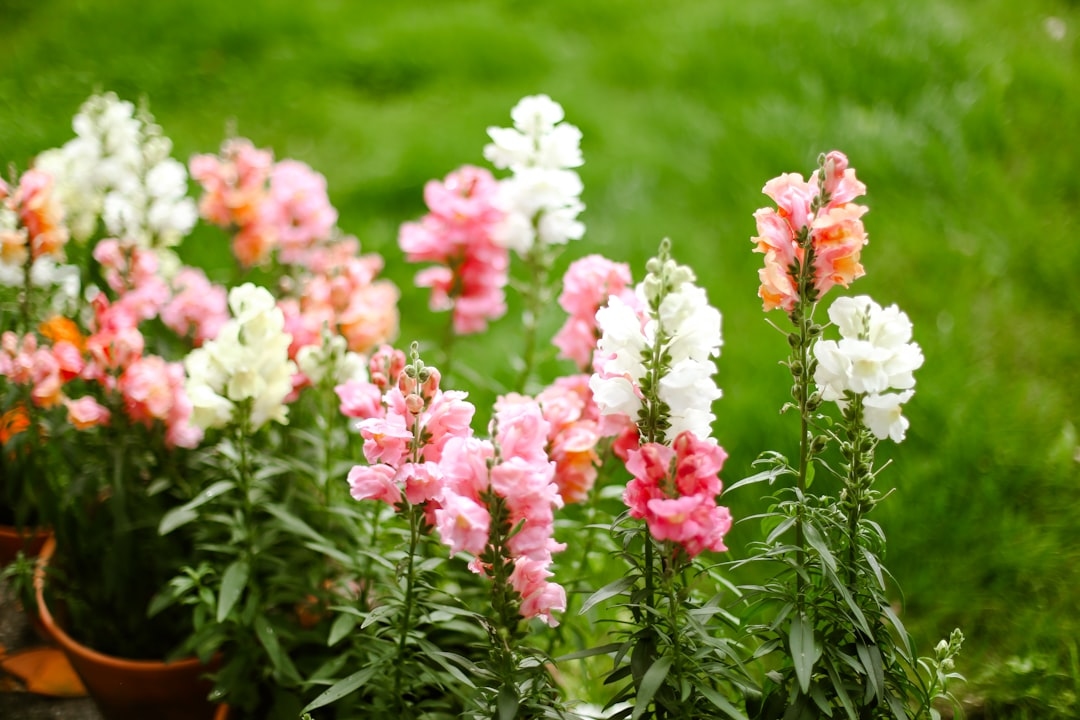
Few annuals offer the color range that snapdragons do. You can find solid colors, bicolors, and even picotee forms (petals edged in a contrasting shade). Understanding the categories helps you plan cohesive combinations rather than buying whatever looks prettiest at the nursery.
Solid and Bicolor Varieties
Classic solid snapdragons come in white, yellow, orange, red, pink, lavender, burgundy, and nearly every shade between. The ‘Rocket’ series remains one of the most reliable tall varieties for solid colors — plants hit 30–36 inches and produce long, straight stems ideal for cutting. For bicolors, the ‘Candy Showers’ trailing series offers soft two-tone combinations that cascade beautifully from containers.
Novelty and Specialty Colors
If you want something beyond the standard palette, a few varieties stand out. ‘Black Prince’ produces deep burgundy-crimson flowers on bronze-tinted foliage — one of the most striking dark-flowered annuals available. ‘Madame Butterfly’ series features open-faced, azalea-like blooms in peachy, salmon, and coral tones that look nothing like traditional snapdragons. These specialty types typically cost $0.50–$1.00 more per plant at nurseries but provide genuinely different visual effects.
Color Combinations That Actually Work
Rather than mixing every available color, commit to a two- or three-color scheme. Some proven combinations:
- White + deep purple: Clean, high-contrast, works in both formal and cottage gardens
- Peach + burgundy: Warm and rich, pairs beautifully with bronze or copper foliage plants
- Yellow + orange: Cheerful and pollinator-friendly, pairs well with blue salvia
- Soft pink + white: Classic cottage aesthetic, especially with silver dusty miller as a filler
Snapdragon Growing Guide: Soil, Sun, and Site Selection
Getting the site right makes everything downstream easier. Snapdragons have specific preferences — get these wrong and no amount of fertilizer will save the planting.
Sunlight Requirements
Snapdragons need a minimum of 6 hours of direct sun per day. In hotter climates (Zones 7–9), afternoon shade during peak summer extends the bloom period by several weeks. Morning sun with dappled afternoon shade is the sweet spot for gardeners in the South and Southwest.
Soil Preparation
These plants demand well-draining soil. Standing water kills them within days. Ideal soil pH sits between 6.2 and 7.0 — slightly acidic to neutral. Before planting, work 2–3 inches of compost into the top 8 inches of your bed. If your native soil is clay-heavy, adding perlite or coarse sand (1 part to every 3 parts soil) dramatically improves drainage without requiring raised beds.
A basic soil amendment kit costs $15–$25 at any garden center and covers a 4×8 foot bed. That’s a worthwhile investment compared to replacing dead plants mid-season.
Spacing and Bed Layout
Space dwarf varieties 6–9 inches apart, intermediate types 9–12 inches, and tall varieties 12–15 inches. Tighter spacing encourages the plants to support each other — useful in windy areas — but restricts airflow and increases the risk of fungal diseases. Err toward the wider end of spacing if your summers are humid.
When to Plant Snapdragons: Seasonal Calendar and Timing
Timing is where most snapdragon failures originate. These are cool-season plants. They thrive in temperatures between 45°F and 65°F and begin to struggle when daytime highs consistently exceed 80°F.
Spring Planting Timeline
- 8–10 weeks before last frost: Start seeds indoors under grow lights. Germination takes 10–14 days at 65–70°F. Do not cover seeds — they need light to germinate.
- 2–4 weeks before last frost: Transplant hardened-off seedlings outdoors. Snapdragons tolerate light frost (down to 28°F briefly) once established.
- At last frost date: Set out nursery transplants. This is the latest comfortable planting window for spring bloom.
Fall Planting Timeline
Fall planting is underused and underrated. In Zones 6–9, planting snapdragons in late August through September produces a second, often superior flush of blooms in October and November, when cool nights intensify flower color.
- Zone 6: Plant by September 1 for blooms before hard frost
- Zones 7–8: Plant September through October; blooms often continue into December
- Zones 9–10: Plant October through November; plants may bloom all winter
- Zone 11: Plant November through February for cool-season color
Regional Planting Dates (US)
As a quick reference by region:
- Pacific Northwest (Zone 8): March–April outdoors; September–October for fall
- Mid-Atlantic (Zone 6–7): April outdoors; August–September for fall
- Deep South (Zone 8–9): February–March outdoors; October–November for fall/winter
- Midwest (Zone 5–6): Late April–May outdoors; skip fall planting
- Southwest (Zone 9–10): January–February or October–November
How to Plant Snapdragons: Seeds vs. Transplants
Starting from Seed
Growing from seed costs roughly $2–$4 per packet (yielding 50–200 seeds) versus $3–$5 per four-pack of transplants. For large plantings, seed is significantly more economical. The tradeoff is time — seeds need 10–12 weeks from sowing to garden-ready transplant size.
Sow seeds on the surface of a moistened, fine-textured seed-starting mix. Press them gently — don’t bury them. Cover the tray with a clear plastic dome to retain humidity. Once germinated, remove the dome and move seedlings under grow lights (keep lights 2–3 inches above the foliage). Thin to one seedling per cell once they reach 1 inch tall.
Buying and Planting Transplants
Nursery transplants cost $3–$6 for a four-pack of small starts or $5–$8 for larger 4-inch pots. Choose plants with compact, bushy growth and healthy green foliage. Avoid anything root-bound (roots circling out of the drainage holes), yellowing, or already in bloom — heavily blooming transplants take longer to establish than those in bud.
Plant at the same depth as the nursery container. Water in with a diluted liquid fertilizer — half-strength balanced fertilizer (10-10-10) at planting helps reduce transplant shock. Pinch the top 1–2 inches of each plant at planting time. This feels counterintuitive but produces 3–5 more branching stems and dramatically increases total flower count.
Snapdragon Care: Watering, Fertilizing, and Deadheading
Watering
Snapdragons need consistent moisture but not saturated soil. Aim for 1 inch of water per week, either from rain or irrigation. Water at the base of the plant, not overhead — wet foliage promotes botrytis (gray mold), the most common disease problem these plants face. A soaker hose or drip irrigation setup solves this problem permanently and pays for itself in healthier plants.
Fertilizing
Feed every two weeks with a balanced liquid fertilizer (10-10-10 or similar) during the growing season. Once flower buds form, switch to a bloom-booster formula higher in phosphorus (such as 5-10-5 or 10-30-10) to support flower development. Stop fertilizing when temperatures climb above 80°F and the plant naturally declines — pushing growth during heat stress wastes fertilizer and doesn’t help.
A quart of liquid fertilizer concentrate costs $8–$12 and lasts an entire season for a small garden. That’s an easy line item to keep in any gardening budget.
Deadheading and Pinching
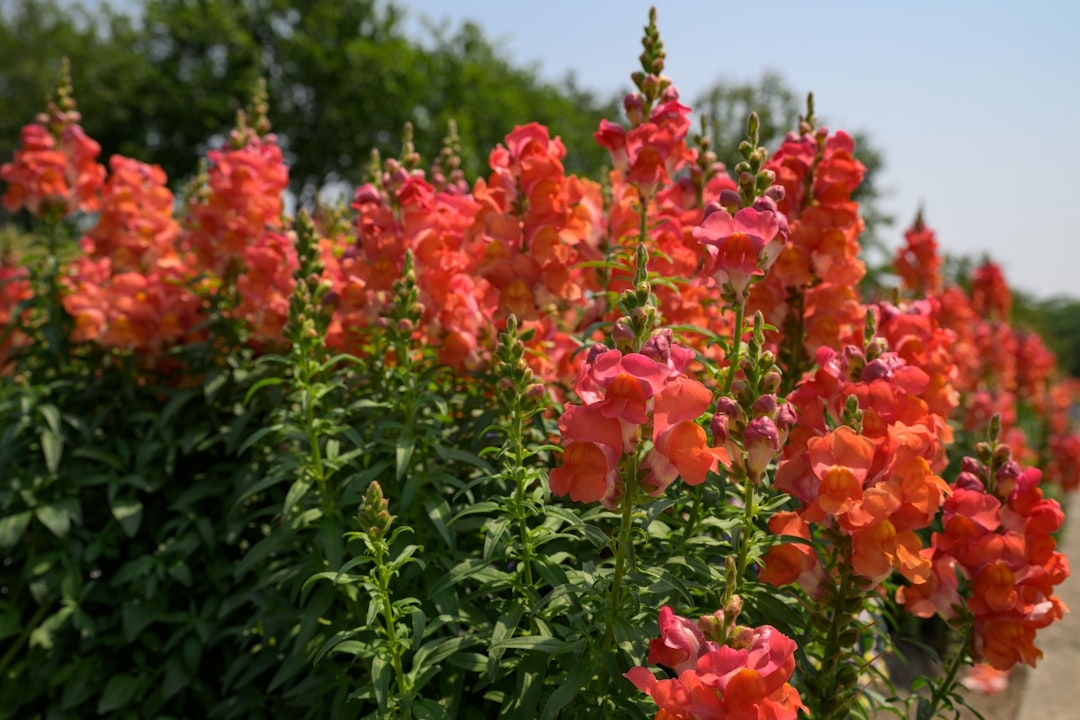
Remove spent flower spikes by cutting back to the nearest side shoot or leaf node. This redirects energy to new bloom production instead of seed set. For tall varieties, this cut can be 6–10 inches below the spent spike. Regular deadheading extends the bloom period by 3–4 weeks compared to plants left unattended. In mid-summer heat, cut the entire plant back by one-third — this “summer haircut” prepares it for a strong fall rebound.
Snapdragon Companion Plants: What to Grow Alongside Them
Snapdragons play well with other cool-season plants and provide excellent structural contrast in mixed borders. Strategic companion planting also deters pests, attracts pollinators, and fills gaps as snapdragons fade in summer heat.
Best Flowering Companions
- Pansies (Viola × wittrockiana): Fellow cool-season annuals that bloom simultaneously. Low-growing pansies work as a ground cover beneath taller snapdragons. Plant 6–8 inches apart.
- Sweet alyssum (Lobularia maritima): Fragrant, low-growing white or purple flowers that attract beneficial insects. Alyssum self-seeds prolifically and fills gaps as snapdragons decline.
- Dianthus (Dianthus spp.): Shares the same cool-season preference and color palette. Combines well aesthetically and practically.
- Blue salvia (Salvia farinacea): One of the best color contrasts with warm-toned snapdragons. ‘Victoria Blue’ hits 18–24 inches and bridges the cool-to-warm season transition since it tolerates summer heat better than snapdragons.
- Larkspur (Consolida ajacis): Direct-sow alongside snapdragons for a cottage garden look. Both prefer cool conditions and bloom roughly simultaneously.
Foliage and Texture Companions
- Dusty miller (Senecio cineraria): Silver foliage provides a stunning neutral backdrop that makes every snapdragon color pop. Drought-tolerant once established. Average cost: $1.50–$2.00 per plant.
- Ornamental kale (Brassica oleracea): Bold, textural foliage in purple and cream tones. Peak appearance in fall and early winter — perfectly timed with snapdragons’ fall flush.
- Parsley (Petroselinum crispum): Edging parsley between snapdragons adds fine-textured green foliage, deters aphids (a common snapdragon pest), and gives you a useful herb harvest as a bonus.
Plants to Avoid Nearby
Avoid planting snapdragons directly alongside rust-susceptible plants like hollyhocks and geraniums. Snapdragon rust (Puccinia antirrhini) can spread between susceptible hosts. Also steer clear of tall, aggressive plants like sunflowers or large dahlias immediately adjacent — they’ll shade out your snapdragons and compete heavily for nutrients.
Common Snapdragon Problems and How to Fix Them
Snapdragon Rust
Rust appears as orange or brown powdery pustules on leaf undersides. It spreads rapidly in humid conditions. Remove and dispose of (don’t compost) infected leaves immediately. Apply a sulfur-based fungicide every 7–10 days as a preventive treatment in humid climates. Resistant varieties like the ‘Floral Showers’ series significantly reduce rust problems.
Aphids
Aphids cluster on new growth and flower buds, distorting stems and spreading viral diseases. Knock them off with a strong stream of water every few days, or apply insecticidal soap spray (mix 1 tablespoon of pure liquid soap per quart of water) directly to infested areas. Repeat every 4–5 days until populations collapse.
Leggy Growth
Leggy, floppy stems usually indicate insufficient light or skipped pinching at planting. If the plant is already in the ground, stake tall varieties with bamboo stakes (available for $2–$4 per bundle of 25) and tie loosely with soft garden twine. Cut the plant back by one-third to encourage a more compact, branching habit going forward.
Summer Decline
This is not a disease — it’s normal behavior. Snapdragons are genetically programmed to slow down or stop flowering when temperatures exceed 80°F consistently. Cut plants back, reduce watering slightly, stop fertilizing, and wait for cooler fall temperatures. Most established plants rebound within 3–4 weeks of cooler weather.
Budget Breakdown: Growing Snapdragons Without Overspending
One of snapdragons’ genuine advantages over other showy annuals is their affordability. Here’s a realistic cost estimate for a 4×4 foot bed (16 square feet) with intermediate varieties spaced 10 inches apart — approximately 20–25 plants.
- Seed starting route: 1–2 seed packets ($3–$6) + seed-starting mix ($5) + tray/dome ($5–$8) = $13–$19 total
- Transplant route: 6 four-packs of transplants at $4 each = $24 total
- Soil amendment (compost + perlite): $10–$15
- Fertilizer (liquid concentrate, season supply): $8–$12
- Companion plants (sweet alyssum six-pack + dusty miller four-pack): $6–$10
Total estimated budget: $37–$61 for the seed-starting route or $48–$61 for transplants, covering an entire season including soil prep and companions. That’s significantly less than most perennial plantings and delivers color for 3–4 months across two bloom flushes.
To cut costs further: start from seed, save seeds at season’s end (though F1 hybrid seeds won’t breed true), and divide any perennial companions like dianthus each spring.
Snapdragons as Cut Flowers
Snapdragons are among the best cutting garden annuals available to home growers. A single tall variety plant can yield 8–12 cuttable stems per season. Cut stems when the bottom third of the spike has opened, early in the morning when stems are fully hydrated. Recut stems at a 45-degree angle underwater before placing in a vase. Change the water every two days. Expected vase life: 7–14 days, depending on variety and room temperature.
At a local florist, a single stem of snapdragon runs $1.50–$3.00. Growing your own means a $4 four-pack investment pays back in $12–$36 worth of cut flowers over a season — a return that makes the economics undeniable for anyone who buys flowers regularly.
Saving Seeds and Overwintering
Open-pollinated (non-hybrid) snapdragon varieties like ‘Maryland True Pink’ or heirloom types sold by specialty seed companies produce viable seeds you can save and replant. Allow a few seed pods to fully mature and dry on the plant in late spring. Collect the small, dark seeds and store in a paper envelope in a cool, dry location. Seed viability remains high for 2–3 years when stored properly.
In Zones 8–10, established plants often survive winter with light mulching around the root zone. Cut plants back to 4–6 inches in late fall, apply 2–3 inches of straw or shredded leaf mulch, and they frequently push new growth in late winter ahead of self-sown nursery-grown plants.
Frequently Asked Questions About Growing Snapdragons
Do snapdragons come back every year?
In most of the US (Zones 3–8), snapdragons are grown as cool-season annuals and do not reliably overwinter. In Zones 9–11, they can behave as short-lived perennials, returning for 2–3 seasons if not killed by summer heat or hard frost. Many gardeners also find that snapdragons self-seed readily, with volunteer seedlings appearing each spring.
Why are my snapdragons not blooming?
The three most common causes are: insufficient sunlight (less than 6 hours daily), planting too late in spring so heat arrives before buds set, and skipping the initial pinching at transplanting. If plants are healthy but not blooming during summer, heat dormancy is the likely explanation — they’ll resume flowering when temperatures drop below 75°F in fall.
How tall do snapdragons grow?
Snapdragon height depends on variety. Dwarf types reach 6–12 inches, intermediate types 12–24 inches, and tall cutting-garden varieties 24–36 inches. The variety name or seed packet should indicate the expected mature height. Most nursery transplants sold in spring are intermediate types in the 12–18 inch range.
Are snapdragons deer resistant?
Snapdragons are considered moderately deer resistant. Deer occasionally browse them, particularly young transplants, but generally prefer other plants. In areas with heavy deer pressure, plant snapdragons alongside strongly scented companions like lavender or salvia, or use a temporary wire cage around new transplants for the first 2–3 weeks after planting.
Can snapdragons grow in containers?
Yes — dwarf and trailing varieties perform excellently in containers. Use a pot at least 8 inches deep with drainage holes. Fill with a quality potting mix (not garden soil, which compacts in containers). Container-grown snapdragons dry out faster than in-ground plants and typically need watering every 1–2 days during active growth. Feed weekly at half-strength with a liquid fertilizer, since frequent watering flushes nutrients from the container quickly.
Planning Your Best Snapdragon Season Yet
The gardeners who get the most from snapdragons treat them as a two-season crop, not a one-and-done spring planting. Mark your calendar now: set a spring planting date based on your last frost, and schedule a fall planting date 10–12 weeks before your first fall frost. Those two windows are where the real payoff lives.
Start with one variety you love, learn its habits in your specific microclimate, and expand from there next season. Order a few seed packets of an open-pollinated tall variety for cutting, pick up a six-pack of sweet alyssum for the front edge, and invest the remaining budget in good soil preparation. That’s the formula — modest, targeted, and repeatable every year.