Contents:
- The Great Geranium Confusion: Two Plants, One Name
- True Geraniums: The Hardy Cranesbills
- Pelargoniums: The “Geraniums” at Every Garden Center
- Geranium Varieties Worth Growing: A Selective Guide
- Best True Geranium (Cranesbill) Varieties
- Best Pelargonium Varieties for American Gardens
- Geranium Growing Guide: Soil, Sun, and Planting Basics
- Soil Requirements
- Sunlight Needs
- When and How to Plant
- Watering and Fertilizing for Maximum Blooms
- Watering: Less Is Often More
- Fertilizing for Continuous Color
- Deadheading, Pruning, and Encouraging Rebloom
- Deadheading Pelargoniums
- Cutting Back True Geraniums
- Fall and Winter Pruning
- Overwintering Pelargoniums: Don’t Throw Money Away
- The Dormant Storage Method
- The Active Growing Method
- Propagating Geraniums: Free Plants for Your Garden
- Stem Cuttings (Pelargoniums)
- Division (True Geraniums)
- Eco-Friendly Geranium Growing: Better for Your Garden and the Planet
- Common Geranium Problems and How to Fix Them
- Yellowing Leaves
- Leggy, Stretched Growth
- Gray Mold (Botrytis cinerea)
- Geranium Budworm
- Rust
- Geraniums in the Landscape: Design Ideas That Actually Work
- Hardy Geraniums as Ground Covers
- Pelargoniums in Mixed Container Plantings
- Cut Flower Production
- Frequently Asked Questions About Growing Geraniums
- Are geraniums annuals or perennials?
- How much sun do geraniums need?
- Why are my geranium leaves turning yellow?
- Can you grow geraniums from seed?
- How do I get my geraniums to bloom more?
Here’s a myth that trips up gardeners every single season: “Geraniums are just geraniums.” Walk into any garden center in May and you’ll see two completely different plants wearing the same name tag. One is a cold-hardy perennial that comes back faithfully each spring. The other is a sun-loving tender plant that was never a true geranium to begin with. Confuse them, and you’ll make planting decisions that cost you money, time, and a whole lot of frustration. This geranium growing guide sets the record straight — and then takes you all the way from soil prep to overwintering, so you can grow both types with confidence.
The Great Geranium Confusion: Two Plants, One Name
Blame 18th-century botanists for the mix-up. For centuries, plants from South Africa in the genus Pelargonium were lumped together with the European genus Geranium because of their similar seed pods. In 1789, botanist Charles L’Héritier formally separated them — but by then, the common name “geranium” had already stuck to Pelargonium in popular culture, and it hasn’t budged since.
The result? Two totally different plants sharing one name in every nursery, garden catalog, and flower bed in America.
True Geraniums: The Hardy Cranesbills
True geraniums belong to the genus Geranium and are cold-hardy perennials. Most varieties are rated for USDA Hardiness Zones 4–9, meaning they survive winter underground and return each year. They typically grow 6–24 inches tall, spread enthusiastically as ground covers, and produce five-petaled flowers in shades of violet, pink, magenta, blue, and white. The common name “cranesbill” comes from their distinctive elongated seed pods, which resemble a crane’s beak.
Pelargoniums: The “Geraniums” at Every Garden Center
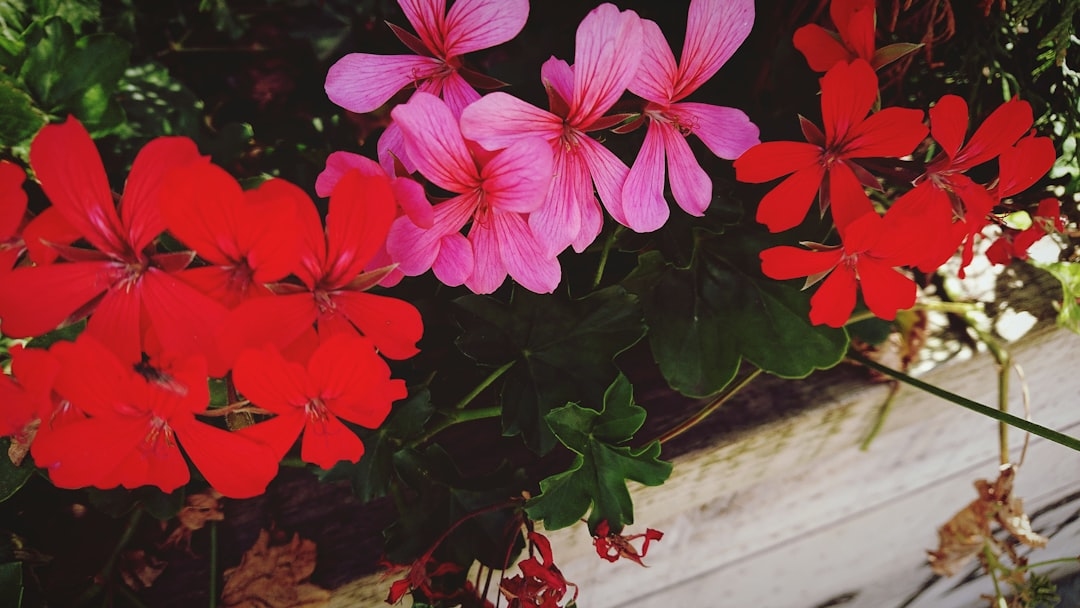
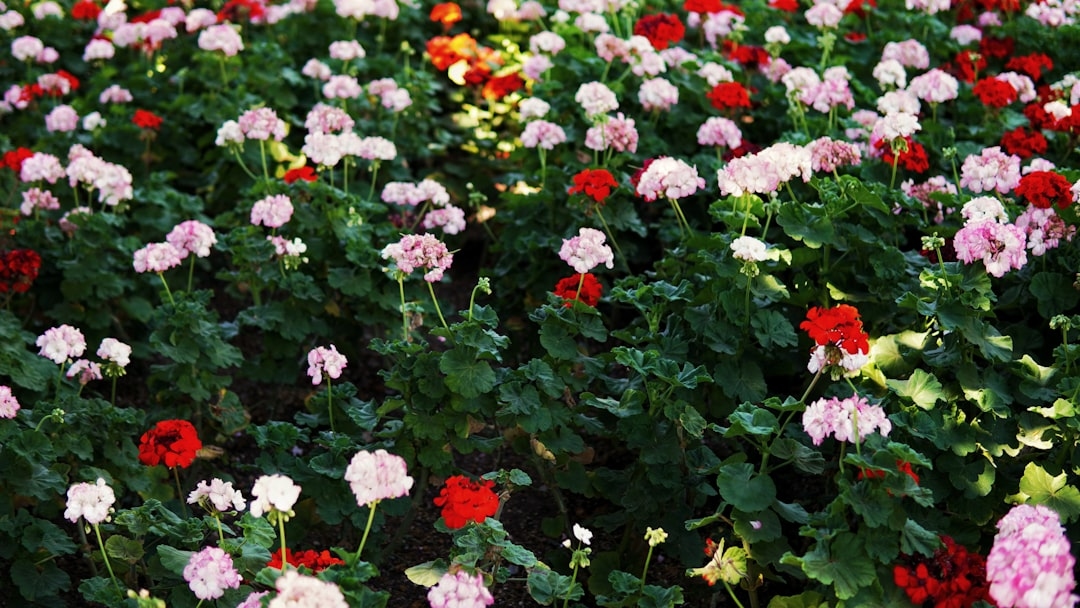
Pelargonium species are native to South Africa and cannot survive freezing temperatures. In most of the US, they are grown as annuals — planted after the last frost and composted or brought indoors before the first fall freeze. These are the bright, bold plants you see spilling out of window boxes, filling patio pots, and lining walkways all summer. They thrive in heat, tolerate drought better than many flowers, and bloom prolifically from May through October in most regions.
For the purposes of this geranium growing guide, we’ll cover both thoroughly — because both deserve a place in your garden.
Geranium Varieties Worth Growing: A Selective Guide
Not all geraniums are created equal. With hundreds of cultivars across both genera, narrowing down your choices makes sense. Here are the standouts, selected for performance, beauty, and availability at US garden centers.
Best True Geranium (Cranesbill) Varieties
- Geranium ‘Rozanne’ — The undisputed superstar of hardy geraniums. This 2008 Perennial Plant of the Year winner produces violet-blue flowers with white centers from late spring until frost — an unusually long bloom period. It spreads 24–36 inches and tolerates partial shade. Zones 5–8.
- Geranium sanguineum (Bloody Cranesbill) — A tough, drought-tolerant species that forms a tidy 12-inch mound. Magenta-pink flowers appear in late spring, with attractive foliage turning red in fall. Zones 4–8.
- Geranium macrorrhizum — Possibly the best ground cover in the genus. Aromatic foliage, excellent drought tolerance once established, and semi-evergreen in mild winters. Grows 12–18 inches tall. Zones 3–8.
- Geranium ‘Orion’ — A large-flowered hybrid reaching 20 inches with deep violet-blue blooms. Repeat-blooms if cut back after the first flush. Zones 5–7.
- Geranium phaeum (Mourning Widow) — One of the few hardy geraniums that genuinely thrives in deep shade. Dark maroon flowers on 24-inch stems. Zones 4–8.
Best Pelargonium Varieties for American Gardens
- Pelargonium × hortorum (Zonal Geranium) — The classic garden geranium. Look for the ‘Maverick’ series for exceptional heat tolerance or the ‘Calliope’ series for vigorous trailing growth. Available in red, salmon, coral, pink, lavender, and white.
- Pelargonium × domesticum (Regal Geranium) — Showstopping large blooms in bicolor patterns. Prefers cooler temperatures (below 75°F to set buds), making it better suited to coastal or northern gardens than to the deep South.
- Pelargonium peltatum (Ivy Geranium) — Trailing growth habit makes this the go-to for hanging baskets and window boxes. The ‘Tornado’ series is particularly heat-resistant — important for gardeners in the Southeast and Southwest.
- Scented Pelargoniums — These are grown more for their aromatic foliage than their modest flowers. P. graveolens smells of roses, P. crispum of lemon, and P. tomentosum of peppermint. They’re edible, useful in the kitchen, and make extraordinary container plants.
Geranium Growing Guide: Soil, Sun, and Planting Basics
Get the fundamentals right and geraniums practically grow themselves. Neglect them and even the most vigorous cultivars will sulk and underperform.
Soil Requirements
Both true geraniums and pelargoniums share one non-negotiable requirement: excellent drainage. Standing water around roots — even for 24 hours — can trigger root rot that kills plants outright. Aim for a soil pH between 5.8 and 6.5. If your native soil is heavy clay, amend it with 2–3 inches of compost and coarse perlite before planting. For containers, use a high-quality potting mix with added perlite at a ratio of roughly 3:1 (potting mix to perlite).
A soil test from your local cooperative extension office costs around $15–$25 and takes the guesswork out of amendment. It’s one of the most overlooked investments a serious gardener can make.
Sunlight Needs
Pelargoniums need at least 6 hours of direct sun daily. In hot climates (Zones 8–10), afternoon shade actually improves performance and prevents heat stress during peak summer. True geraniums are more flexible — most prefer full sun to partial shade, but species like G. phaeum and G. nodosum thrive in deep shade where few flowering perennials survive.
When and How to Plant
Plant pelargoniums outdoors after the last frost date for your area — typically late April in Zone 6, early April in Zones 7–8, and mid-May in Zones 4–5. Space zonal geraniums 12–18 inches apart in beds, or allow one plant per 10–12 inch container for a full, lush look.
True geraniums are best planted in spring or early fall. Fall planting gives roots time to establish before the ground freezes, often resulting in stronger, faster-flowering plants the following spring. Space most species 18–24 inches apart — they’ll fill in within one to two seasons.
When planting from nursery pots, set plants at the same depth they were growing in their containers. Planting too deep — even by an inch — invites crown rot, especially in heavy soils.
Watering and Fertilizing for Maximum Blooms
Watering: Less Is Often More
Geraniums — both types — are famously drought-tolerant once established, but they still need consistent moisture during their first growing season. Water deeply and infrequently: aim to wet the soil to a depth of 6 inches, then let the top 1–2 inches dry out before watering again. This typically means watering once or twice per week during summer, depending on your climate and soil type.
Overhead watering increases the risk of fungal diseases like botrytis (gray mold), which spreads rapidly in humid conditions. A soaker hose or drip irrigation system delivers water directly to the root zone and keeps foliage dry — a simple change that dramatically reduces disease pressure.
Fertilizing for Continuous Color
Pelargoniums are heavy feeders during the growing season. Apply a balanced, water-soluble fertilizer — 10-10-10 or 20-20-20 — every 4–6 weeks from planting through late August. Switching to a low-nitrogen, high-phosphorus formula (like 5-10-10) in late summer encourages flower production over leafy growth as days shorten.
True geraniums are far less demanding. An application of slow-release granular fertilizer in spring — about 1 tablespoon of 10-10-10 per plant worked into the soil surface — is often sufficient for the entire season. Over-fertilizing perennial geraniums produces lush foliage at the expense of flowers.
Gardeners using compost as a soil amendment can often skip or reduce synthetic fertilizer inputs entirely — a practice that’s both economical and better for soil biology.
Deadheading, Pruning, and Encouraging Rebloom
This is where a lot of gardeners leave performance on the table. Geraniums respond dramatically to proper grooming.
Deadheading Pelargoniums
Remove spent flower clusters — the entire stem, not just the petals — as soon as blooms fade. Left in place, seed development signals the plant to slow flower production. Snapping off the whole stalk by hand is faster and cleaner than scissors, and causes less damage to surrounding stems. Deadhead every 7–10 days during peak bloom season for the most continuous color.
Cutting Back True Geraniums
Many hardy geraniums, including ‘Rozanne’ and G. × magnificum, benefit from a hard cutback after their first flush of bloom. Shear the entire plant back by about one-third to one-half its height in early to mid-July. Within 3–4 weeks, fresh foliage emerges, and a second (sometimes third) flush of flowers follows in late summer and fall. This technique — sometimes called the “Chelsea chop” in reference to the RHS Chelsea Flower Show timing — rejuvenates tired plants and eliminates the mid-summer sprawl that can make cranesbills look untidy.
Fall and Winter Pruning
For true geraniums, leave the foliage in place through fall — it provides some insulation for the crown and supports beneficial insects. Cut back to 2–3 inches above the ground in late winter or early spring before new growth emerges. For pelargoniums being overwintered indoors, cut back by about half before bringing them inside to reduce water demand and help the plant adjust to lower light levels.
Overwintering Pelargoniums: Don’t Throw Money Away
At $4–$8 per plant at most garden centers, pelargoniums seem disposable. But established, multi-year plants develop woody, well-rooted structures that produce far more blooms than first-year transplants. Overwintering them indoors is simpler than it sounds.
The Dormant Storage Method
Before the first frost, dig up plants and shake off the soil. Allow roots to air dry for 24 hours, then store the bare-root plants in paper bags or hang them upside down in a cool (40–50°F), dark location — an unheated basement or garage works well. Check monthly; if roots appear shriveled, mist lightly with water. In late March or early April, pot them up in fresh potting mix, place in a sunny window, and begin watering. Most will break dormancy within 2–3 weeks.
The Active Growing Method
Pot up plants before frost in fresh potting mix, cut back by half, and place in the sunniest window available — ideally a south-facing window receiving 4+ hours of direct sun. Supplement with a grow light if necessary. Water sparingly (roughly every 10–14 days) and do not fertilize from November through February. Resume regular watering and feeding in March as day length increases.
Both methods save you the cost of replacing plants each spring and give you a head start on the blooming season.
Propagating Geraniums: Free Plants for Your Garden
Propagation is where geranium growing becomes genuinely addictive. A single healthy plant can produce dozens of offspring in a single season.
Stem Cuttings (Pelargoniums)
Take 3–4 inch tip cuttings in late summer (August is ideal) or early spring. Remove the lower leaves, leaving 2–3 leaves at the top. Allow the cut end to callous in open air for 1–2 hours — this reduces the risk of rot. Insert into a 50/50 mix of perlite and potting mix, water once, and place in bright indirect light. Roots develop in 3–4 weeks. No rooting hormone is strictly necessary, though dipping the cut end in gel-form rooting hormone speeds the process by roughly a week.
Division (True Geraniums)
Hardy cranesbills are best divided in early spring or early fall, every 3–4 years, when clumps become crowded or the center begins to die out. Dig the entire clump, use two garden forks back-to-back to split it into sections, and replant divisions at the same depth. Each division should have at least 3–5 healthy shoots and a good root system. Water thoroughly and keep divisions consistently moist for the first 2–3 weeks.
Eco-Friendly Geranium Growing: Better for Your Garden and the Planet
Geraniums are already a relatively sustainable garden choice — they require less water than many flowering annuals, attract pollinators (particularly hardy geraniums, which are beloved by bumblebees), and can be propagated indefinitely from cuttings instead of purchased new each year. A few additional practices push their eco-credentials further.
- Choose open-pollinated or species varieties when possible. Many hybrid pelargoniums are sterile, which means insects visiting them receive pollen but no nectar — essentially a nutritional dead end for foraging bees. Species pelargoniums and scented varieties tend to be more pollinator-friendly.
- Make your own liquid fertilizer by steeping compost in water for 24–48 hours to create compost tea. Applied every 3–4 weeks, it provides a gentle nutrient boost without synthetic inputs and introduces beneficial microorganisms to the soil.
- Collect and store seeds from true geranium species (not hybrids, which don’t breed true). Geranium sanguineum seeds are particularly easy to collect — watch for the catapult-like seed pods and collect just as they begin to turn brown.
- Use peat-free potting mixes for container growing. Peat harvesting degrades carbon-storing bogs that took thousands of years to form. Coconut coir-based mixes perform comparably and have a significantly lower environmental footprint.
- Mulch around perennial geraniums with 2–3 inches of shredded bark or leaf mold. Mulching reduces water use by up to 50%, suppresses weeds without herbicides, and improves soil structure as it decomposes.
Common Geranium Problems and How to Fix Them
Geraniums are tough, but they’re not invincible. Here’s what to watch for and how to respond before small problems become serious ones.
Yellowing Leaves
The most common culprit is overwatering, especially in containers. Check that drainage holes are unobstructed and that the soil dries somewhat between waterings. If yellowing starts with lower leaves and works upward, nitrogen deficiency is the more likely cause — apply a balanced liquid fertilizer and the plant typically recovers within 2–3 weeks.
Leggy, Stretched Growth
Insufficient light is almost always responsible. Move container plants to a sunnier location and pinch growing tips to encourage branching. Plants that are already severely leggy can be cut back by half — they’ll regrow compact and bushy within 4–6 weeks if light is corrected.
Gray Mold (Botrytis cinerea)
This fungal disease appears as fuzzy gray patches on stems, leaves, and flowers, typically during cool, humid weather. Remove and dispose of (do not compost) all affected plant parts immediately. Improve air circulation around plants, avoid overhead watering, and apply a copper-based fungicide if the infection spreads. Prevention through proper spacing — at least 12 inches between plants — is far more effective than treatment.
Geranium Budworm
If you notice ragged holes in flower buds or buds that fail to open, geranium budworm (Helicoverpa virescens) is the likely culprit. The small caterpillars feed inside buds and are difficult to spot. Bacillus thuringiensis (Bt) — an organic, soil-derived bacterial insecticide — applied in the evening every 7–10 days is highly effective and safe for pollinators. Bt breaks down quickly in sunlight, which is why evening application matters.
Rust
Pelargonium rust (Puccinia pelargonii-zonalis) appears as orange-yellow pustules on the undersides of leaves, with corresponding pale spots on top. It spreads rapidly in humid conditions. Remove affected leaves promptly, avoid wetting foliage, and apply a sulfur-based fungicide. Severely infected plants should be destroyed, not composted.
Geraniums in the Landscape: Design Ideas That Actually Work
Beyond the window box and the patio pot, geraniums have enormous untapped design potential. Here are approaches that go beyond the obvious.
Hardy Geraniums as Ground Covers
Geranium macrorrhizum planted 18 inches apart will form a weed-suppressing carpet within two growing seasons. It tolerates dry shade under trees — one of the most challenging planting situations in any garden — and the semi-evergreen foliage provides year-round interest. Plant it under deciduous shrubs or at the front of a mixed border for a low-maintenance solution that outcompetes most weeds without intervention.
Pelargoniums in Mixed Container Plantings
The classic “thriller, filler, spiller” container formula works brilliantly with pelargoniums as the thriller. Pair upright zonal geraniums with trailing sweet potato vine (Ipomoea batatas) as the spiller and compact Calibrachoa as filler. Use a container at least 16 inches in diameter for a combination planting — smaller pots dry out too quickly in summer heat and restrict root growth.
Cut Flower Production
Pelargonium flowers last 5–7 days in a vase when cut in the morning with stems submerged immediately in water. The blooms are particularly effective in loose, naturalistic arrangements. Grow several plants in a dedicated cutting bed — spaced 12 inches apart in rows — to ensure a steady supply through summer without stripping your display containers.
Frequently Asked Questions About Growing Geraniums
Are geraniums annuals or perennials?
It depends on the type. True geraniums (genus Geranium), also called cranesbills, are cold-hardy perennials that return each year in USDA Zones 4–9. Pelargonium species — the brightly colored plants most people call geraniums — are tender perennials native to South Africa. They cannot survive frost and are grown as annuals in most of the US, though they can be overwintered indoors and replanted the following spring.
How much sun do geraniums need?
Pelargoniums (common garden geraniums) require a minimum of 6 hours of direct sunlight daily for best flowering. In hot climates (Zones 8–10), afternoon shade improves performance. Most true geraniums (cranesbills) thrive in full sun to partial shade, with some species like Geranium phaeum tolerating deep shade.
Why are my geranium leaves turning yellow?
Yellowing leaves in geraniums are most commonly caused by overwatering or poor drainage. Let the soil dry out between waterings and ensure containers have adequate drainage holes. If lower leaves yellow first and the pattern moves upward, nitrogen deficiency may be the cause — apply a balanced fertilizer. Yellowing combined with wilting in moist soil typically indicates root rot, which requires repotting into fresh, well-drained mix.
Can you grow geraniums from seed?
Yes, but it requires patience. Pelargonium seeds need 12–16 weeks to reach transplant size, so start them indoors by January for late-May planting. Germination takes 7–21 days at soil temperatures of 70–75°F. F1 hybrid seeds are widely available and produce uniform, vigorous plants, but they are more expensive (roughly $0.50–$1.00 per seed) than cuttings. True geranium species are easier from seed and can be sown directly outdoors in fall for spring germination.
How do I get my geraniums to bloom more?
Five factors drive geranium bloom production: adequate sunlight (minimum 6 hours for pelargoniums), consistent deadheading of spent flower stalks, appropriate fertilization with a balanced or phosphorus-rich formula, proper watering (consistent moisture without waterlogging), and — for true geraniums — a hard cutback after the first bloom flush to stimulate repeat flowering.
Geraniums reward attentive gardeners with months of color, surprisingly low maintenance once established, and the kind of versatility that makes them useful in almost any garden style. The real opportunity now — whether you’re choosing your first flat of zonals or dividing a mature ‘Rozanne’ clump — is to think beyond the basics. Try a scented pelargonium on a kitchen windowsill. Establish a cranesbill ground cover under your problem shade tree. Overwinter your favorites and start your own cutting collection. Each step builds knowledge that compounds season after season, turning a simple geranium purchase into a long-term garden practice that saves money, reduces waste, and deepens your connection to how plants actually grow.